
Antoni Gaudí’s Basílica de la Sagrada Família is a monumental, unfinished church in Barcelona that has been under construction since 1882. Its fame and prominence have only grown in recent decades as the rate of construction has accelerated with support from technological improvements and a surge in funding from visitor fees. The building is already a central symbol of Catalonia and a major draw for (over)tourism in Barcelona, Spain.
As with the older Gothic Cathedrals found throughout Europe, construction was always expected to take a century or more. Gaudí directed the erection sequence to progress horizontally, with entire facades and towers rising to their final heights before foundations were laid in other sections. This approach allows successive generations to understand the design vision in sections complete to the fine ornamental details, garnering support for ongoing progress toward the eventual completion. A traditional vertical sequence, by contrast, could struggle to maintain interest amidst changing economic and cultural contexts.

The cyrpt, apse, and Nativity Facade were nearly completed within Gaudí’s lifetime. The Passion Facade was completed next, in the 1970s, followed by the transept and nave, finally enclosing the main space in 2010. Work on the towers and cloisters has continued since. While the style of each element could be read as directly associated with its construction era, photographs and reconstructions of Gaudí’s original drawings and models (which were destroyed in 1936 at the outset of the Spanish Civil War) reveal that these differences were intended, and the built style reflects his original intent.
Gaudí’s design blends the traditional late-gothic cathedral with new elements suggestive of Art Nouveau. The unifying geometric logic of hyperbolic forms derives from inverted tensile models tracing the natural flow of gravity and exploring ways to shape light. The interior is particularly suggestive of early modernism in its selective use of ornament.
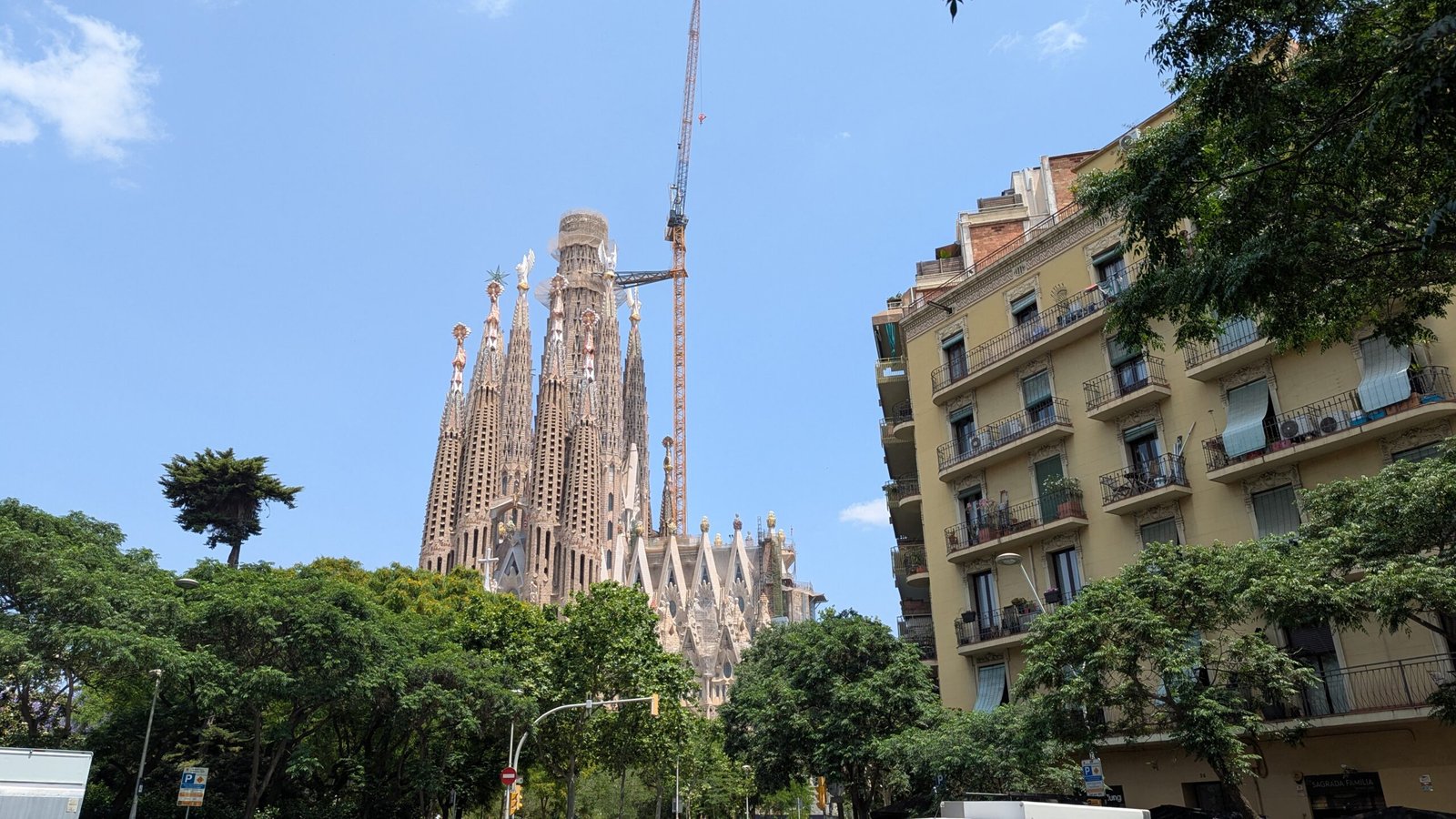
As of this visit in June 2025, construction work is focused on the central Christ Tower, which is nearing its final height. The pinnacle spire, an illuminated cross, is scheduled to be placed late this year, bringing the structure to its final height of 566 ft by the 100th anniversary of Gaudí’s death. A smaller crane is also working on the Chapel of the Assumption, followed by the northern Sacristy and completion of the northern cloister bays. After the central crane and access is removed, the roof pinnacles and lanterns over the nave will be completed.
The final stage of construction will occur on the southern Glory Façade. Its current function is as a simple enclosure of the nave with exposed concrete walls and column bases with exposed reinforcing cages. Eventually, these will rise into four towers and a suspended portico of stone lanterns framing the main entry to the basilica. Final completion including the main entry steps over Carrer de Mallorca is anticipated for 2034. Installation of tubular bells in all of the towers, additional organ sections, and additional lighting may continue beyond that timeframe. Maintenance and restoration will also continue indefinitely as the focus shifts from constructing to preserving one of the most unique buildings in the world.

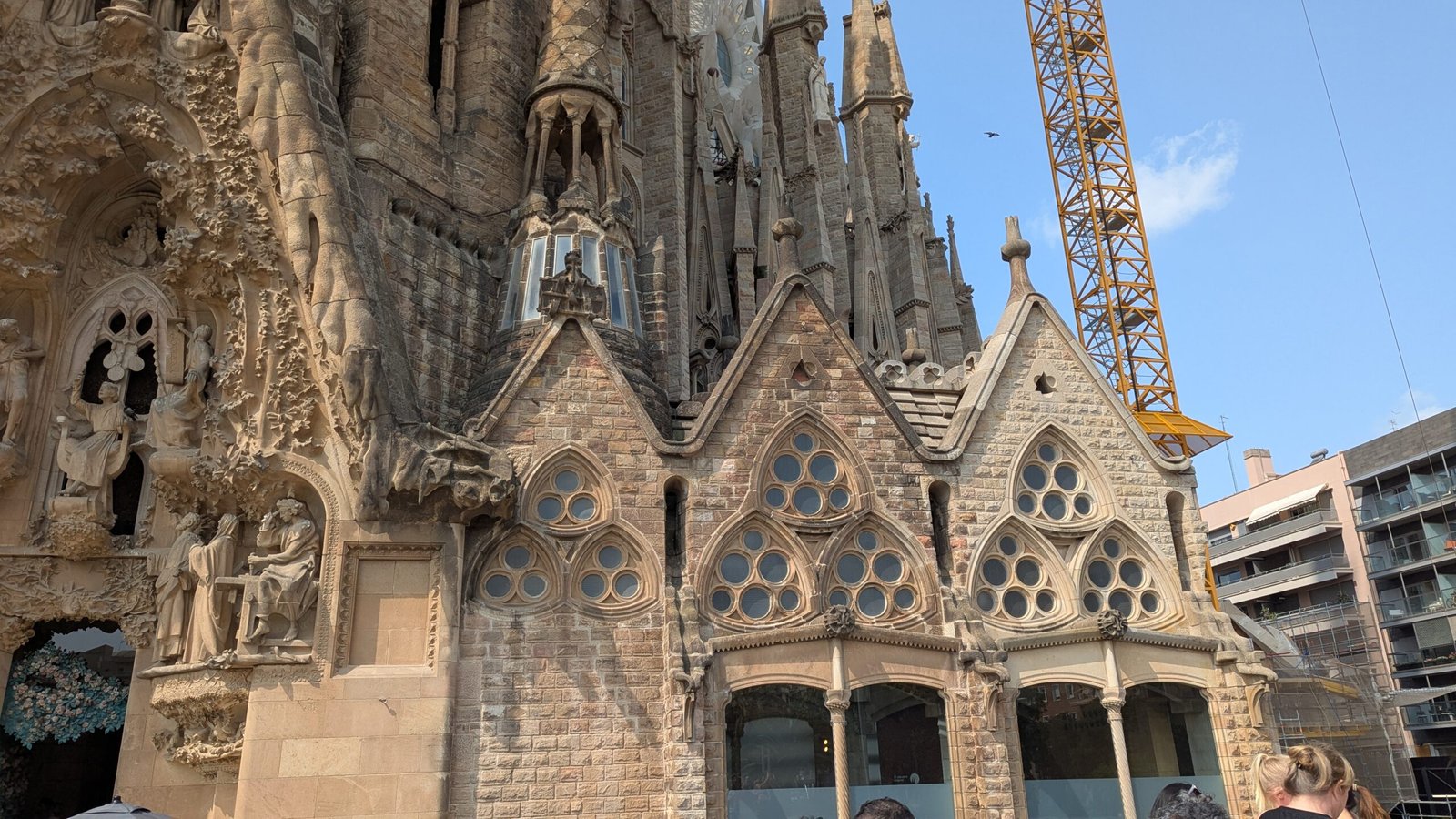
The Nativity Facade
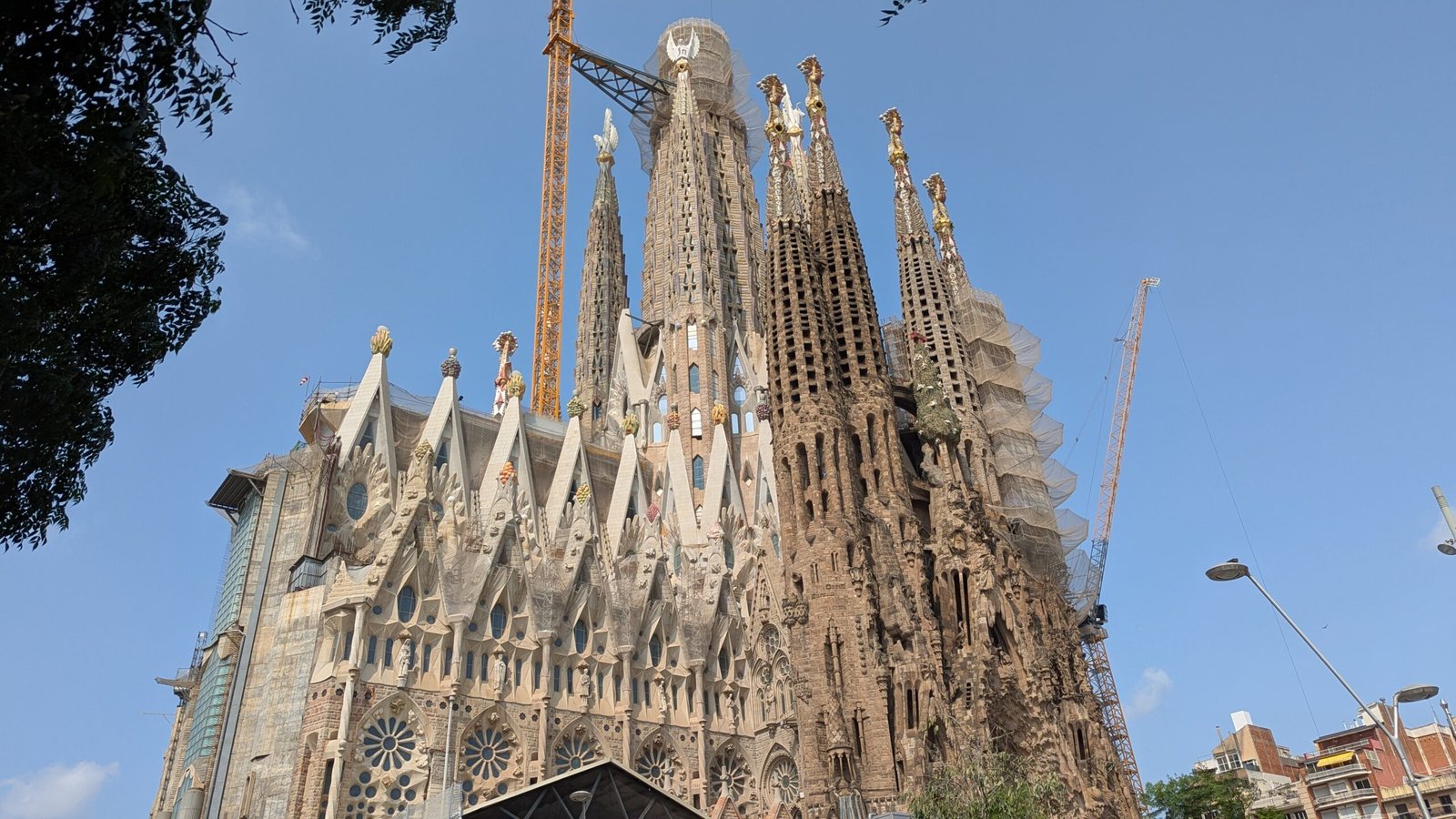
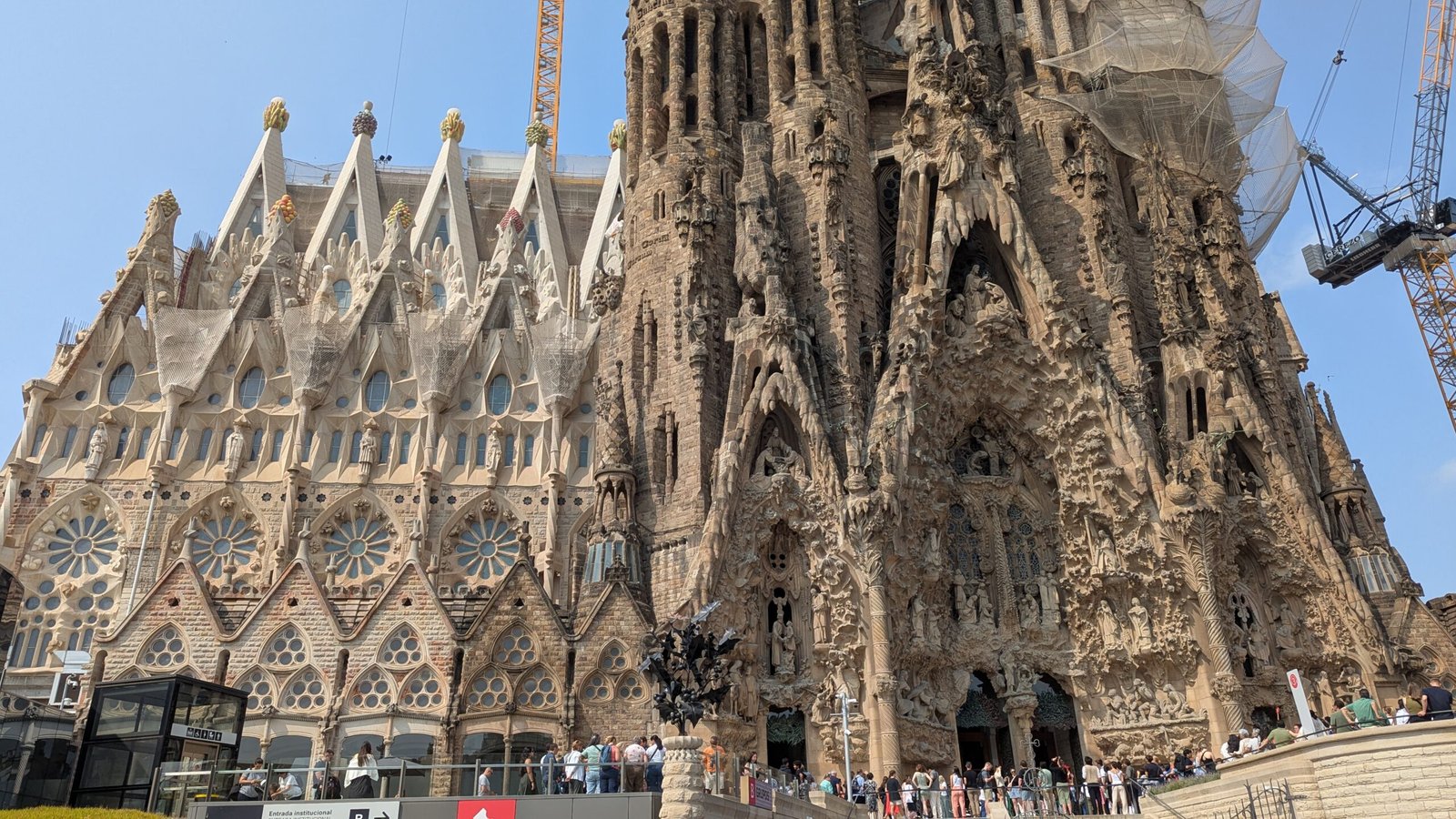
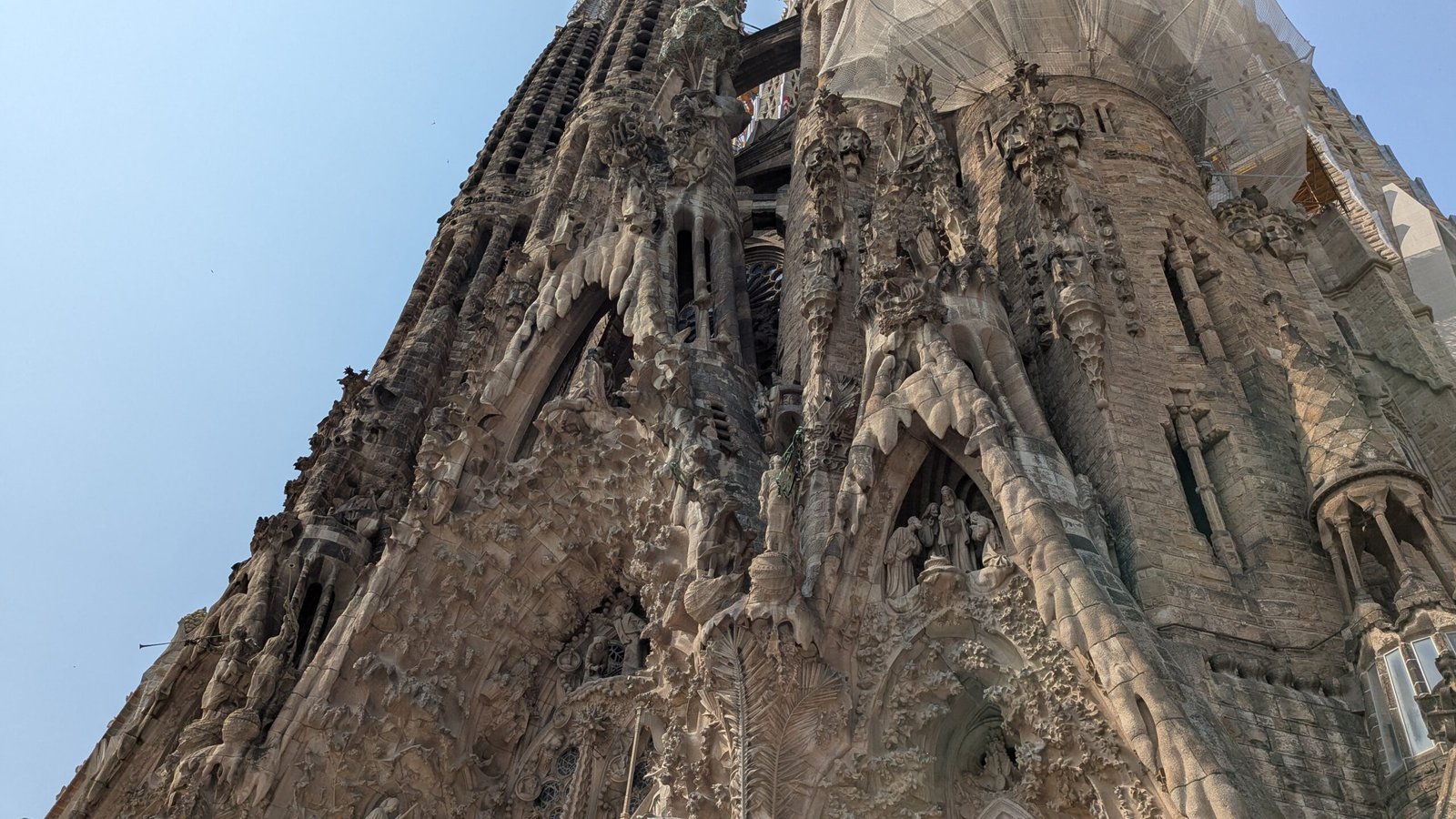
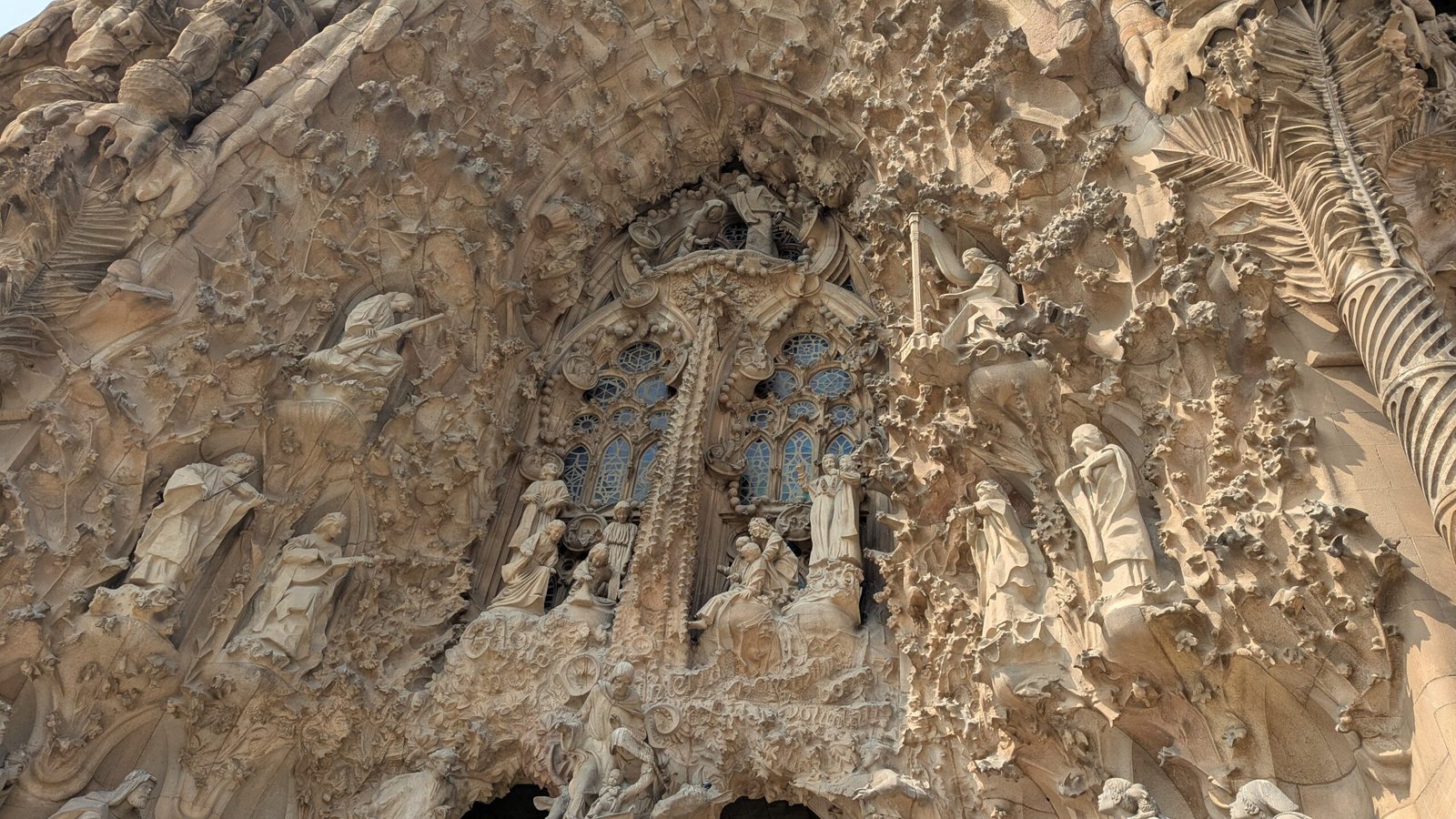
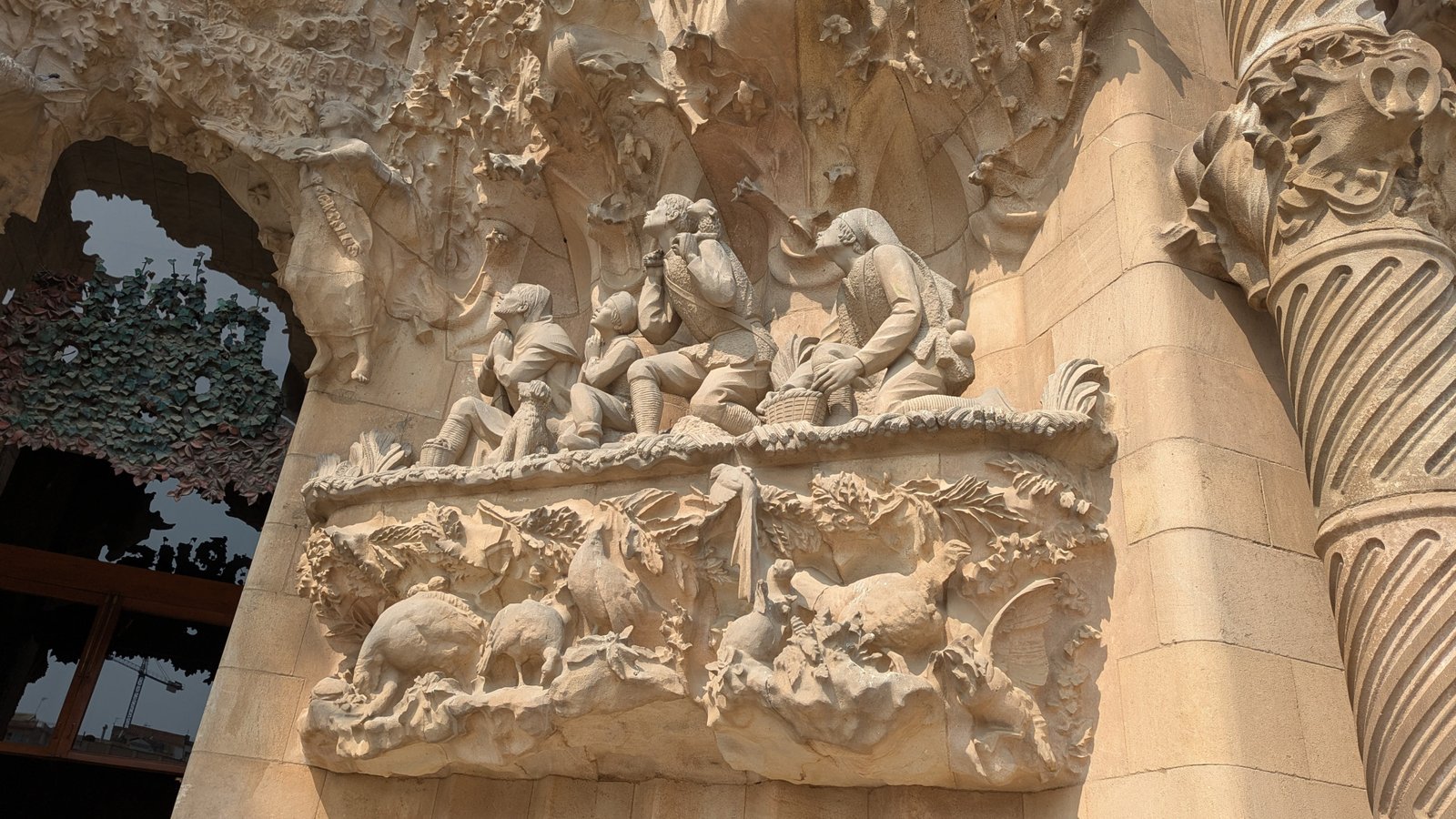
The east-facing nativity facade, completed around 1930, welcomes the morning sun and themes of birth in a highly ornamented arrangement of stone sculpture topped with four towers.


Interior Transept
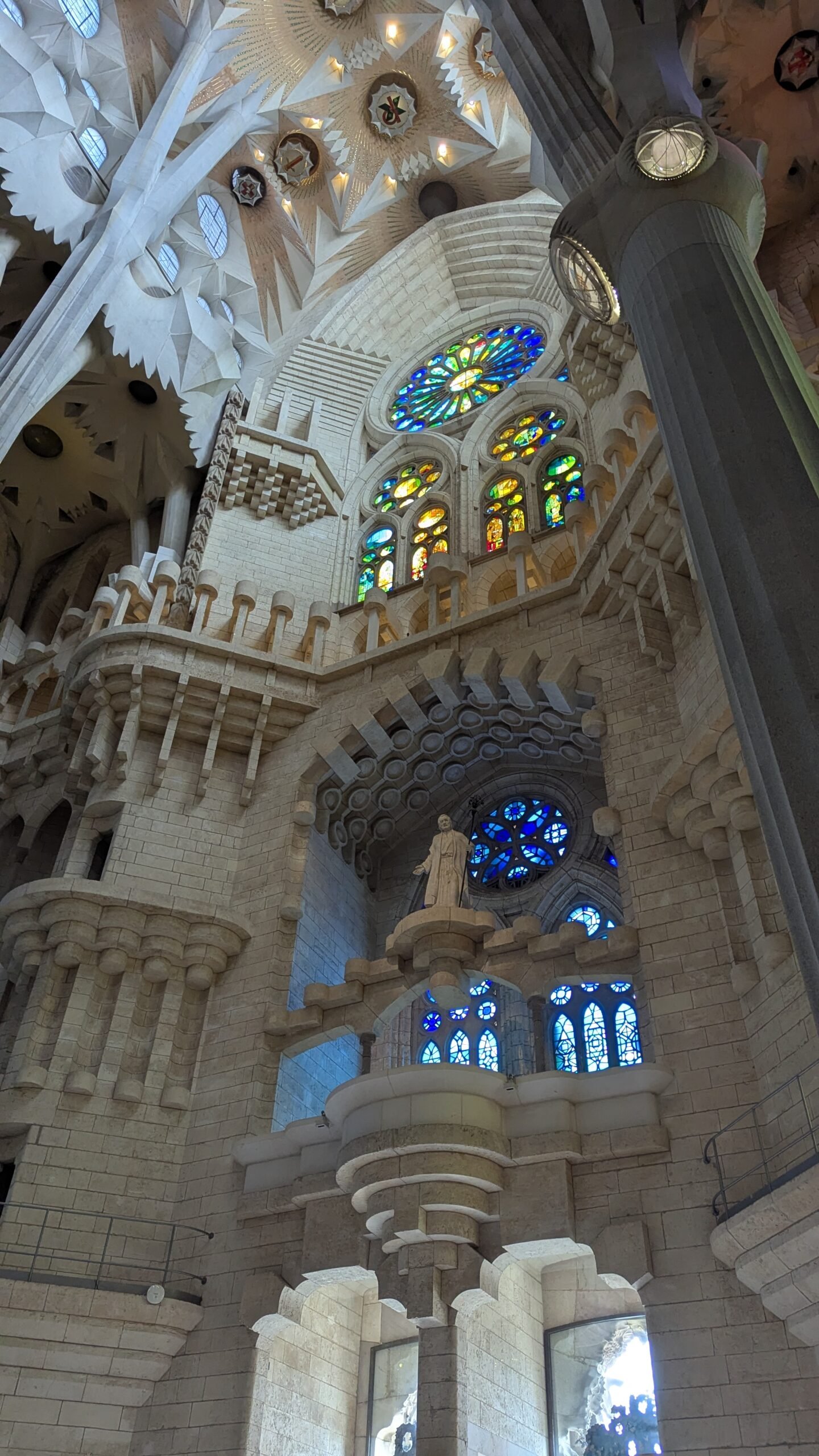
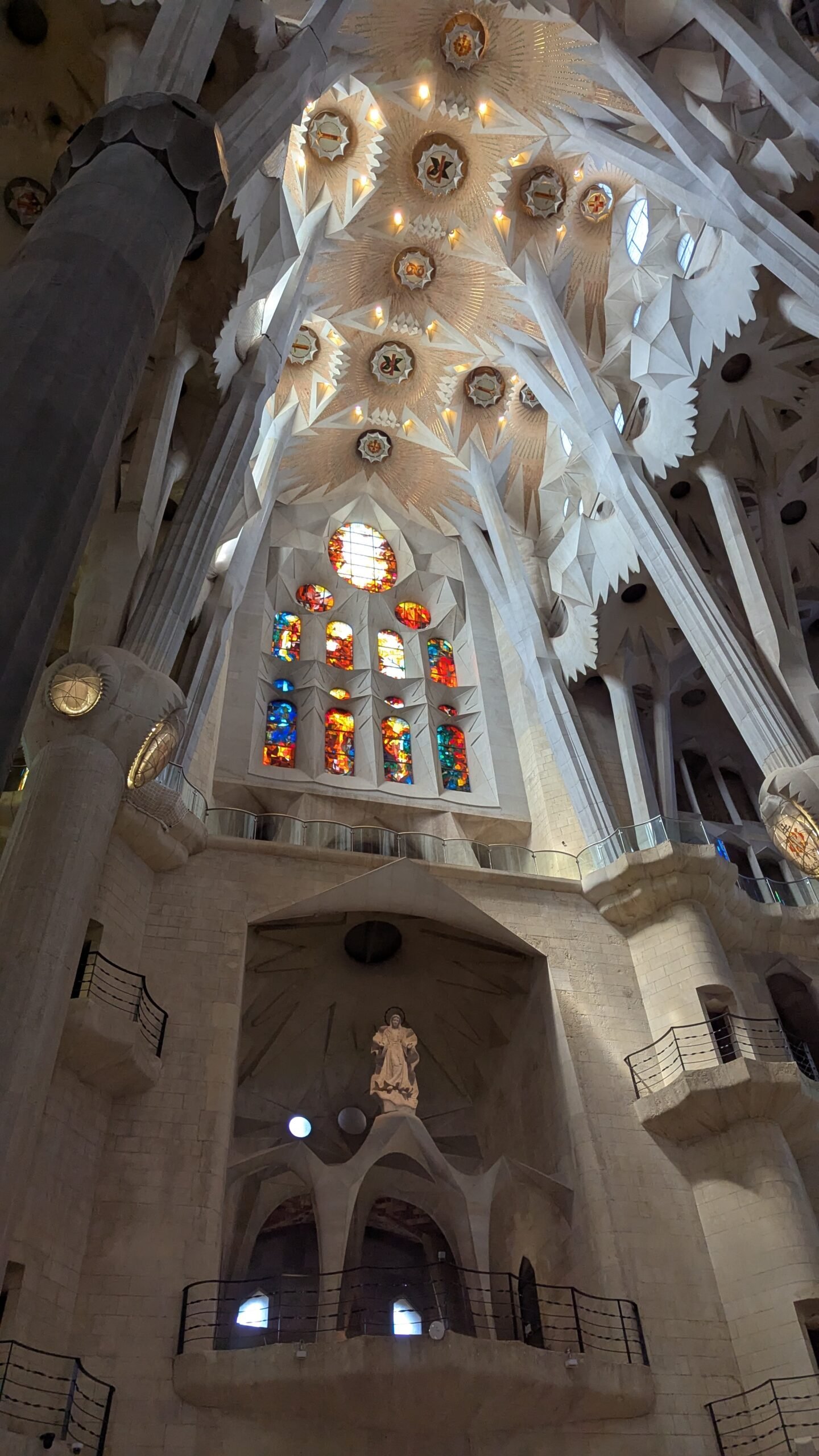
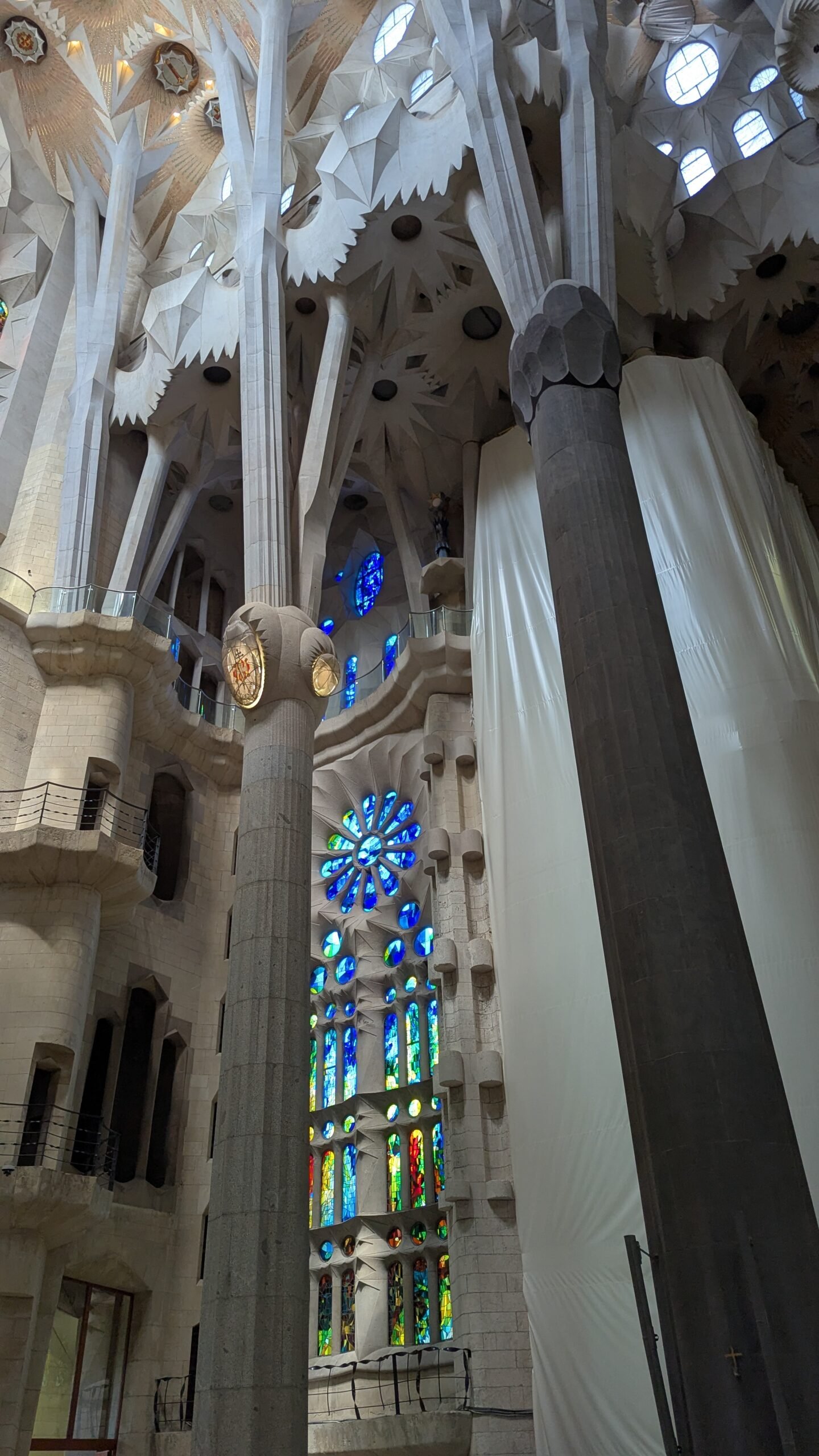
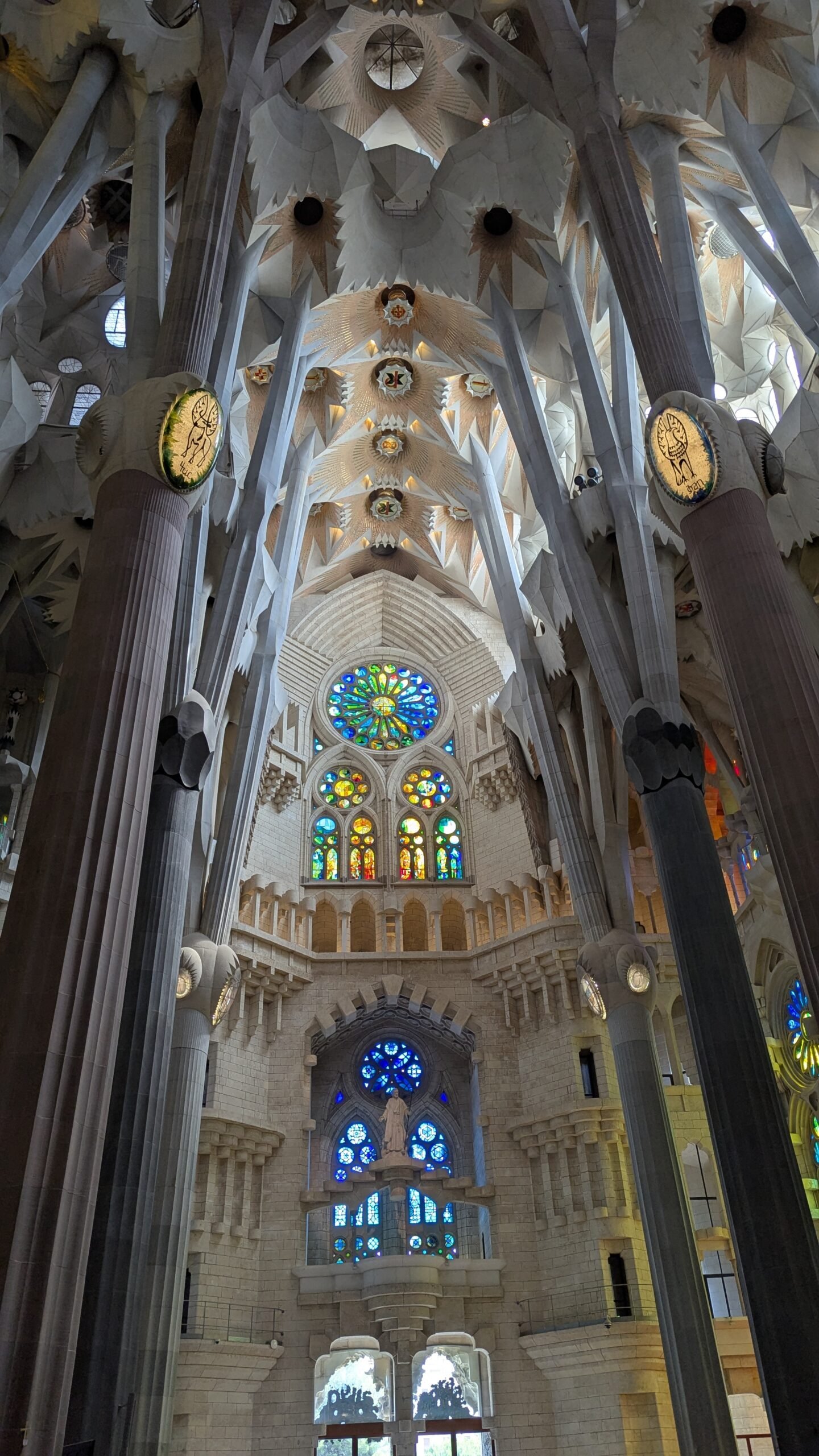
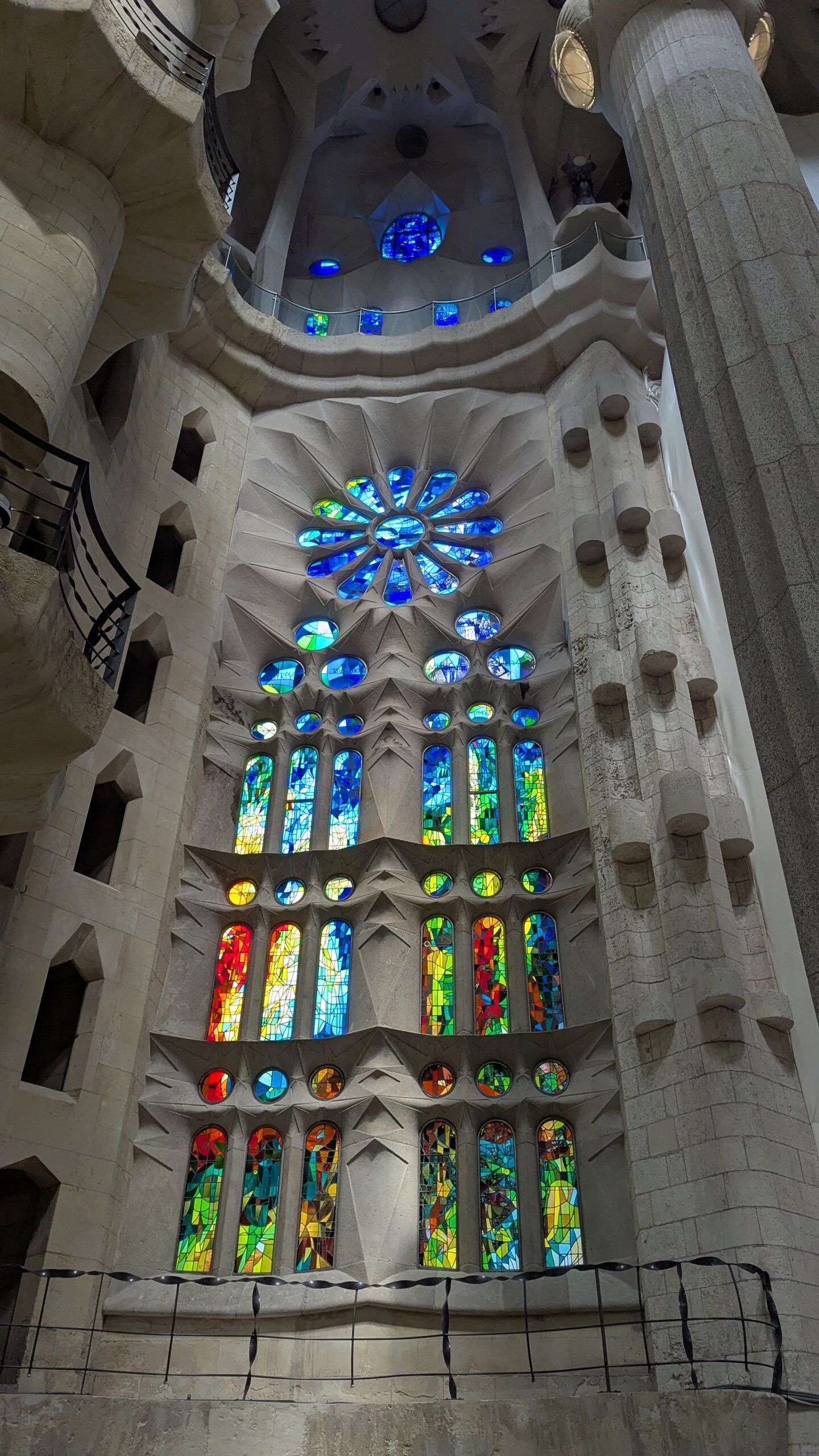
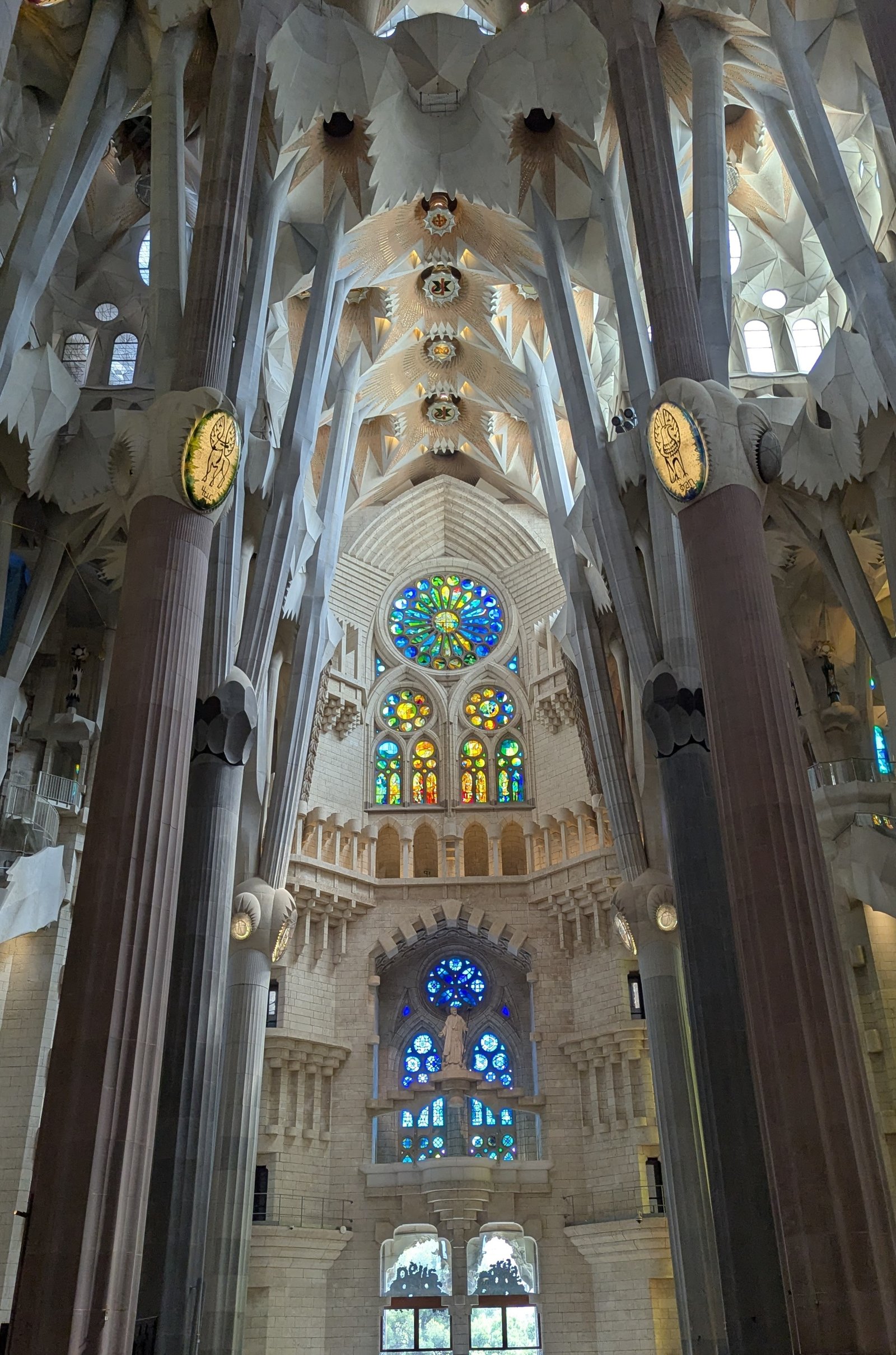
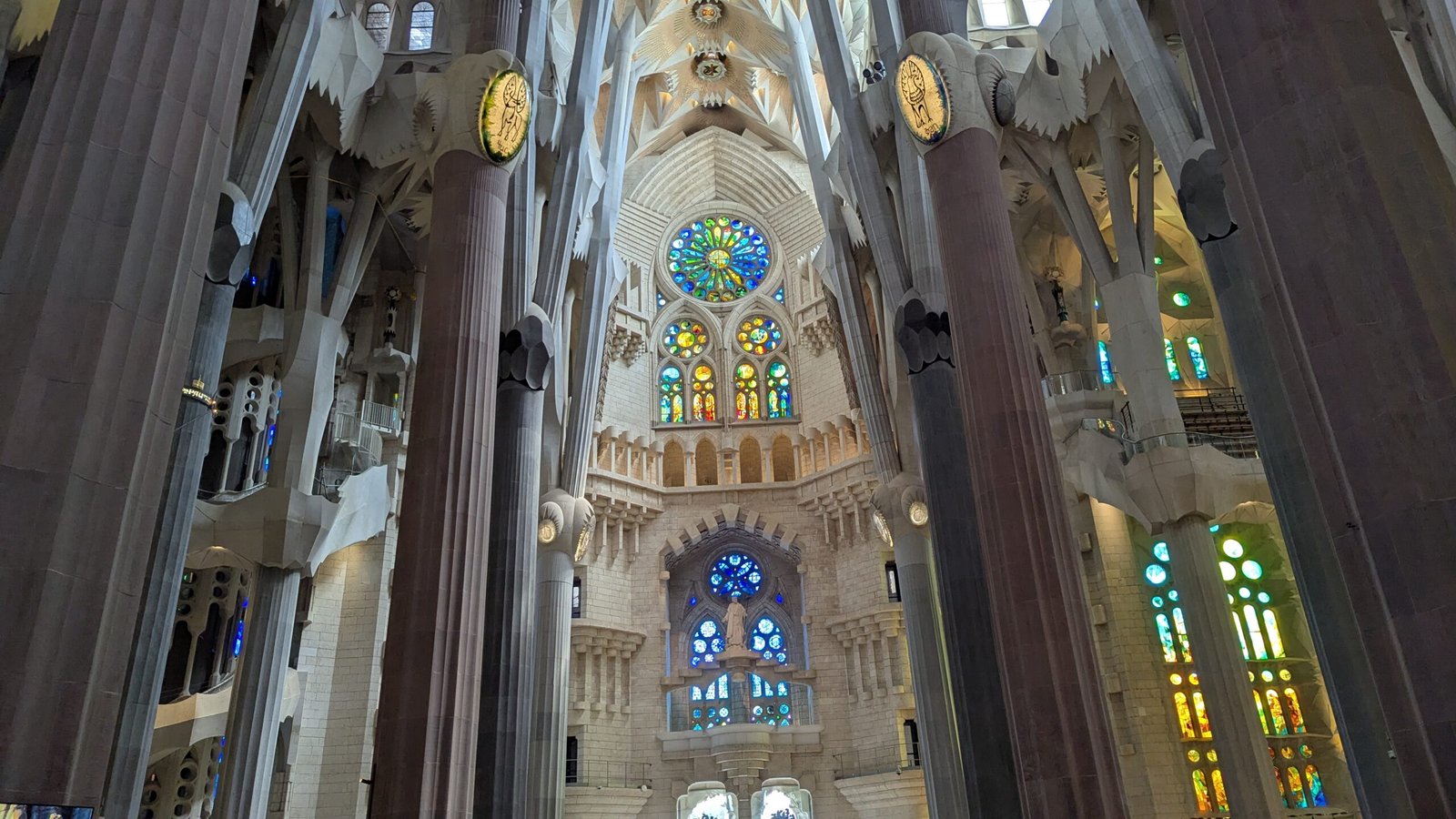
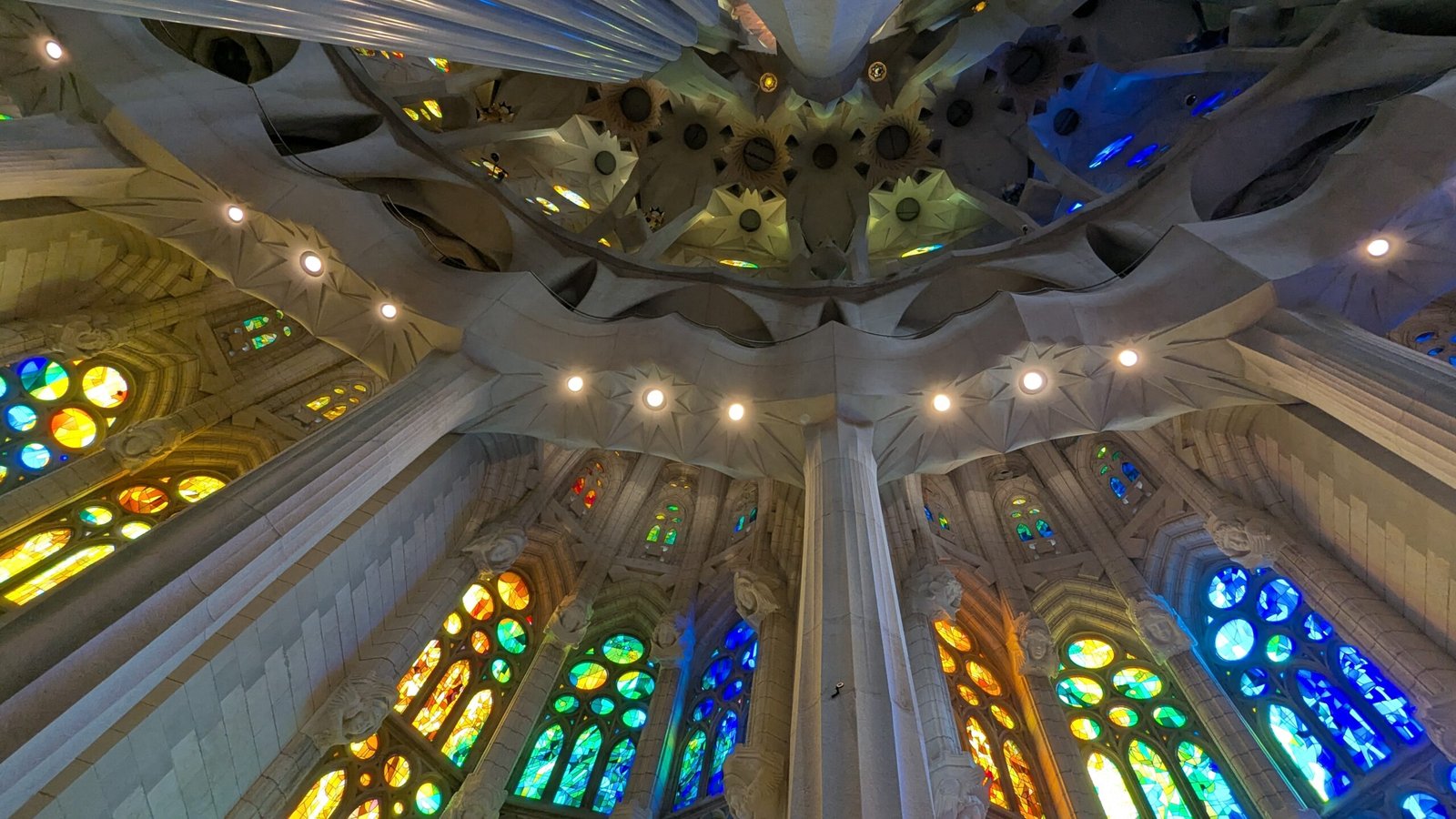
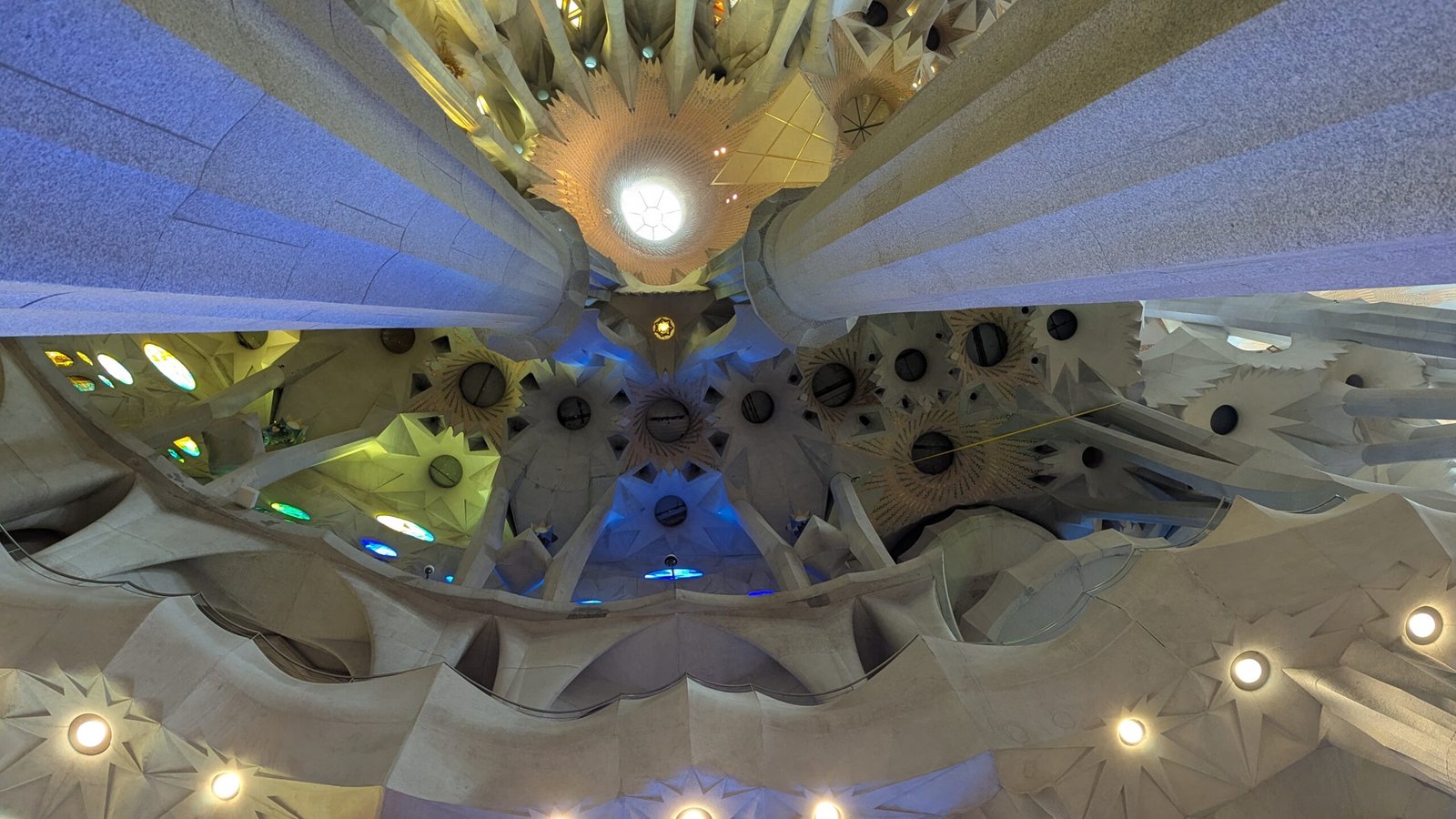
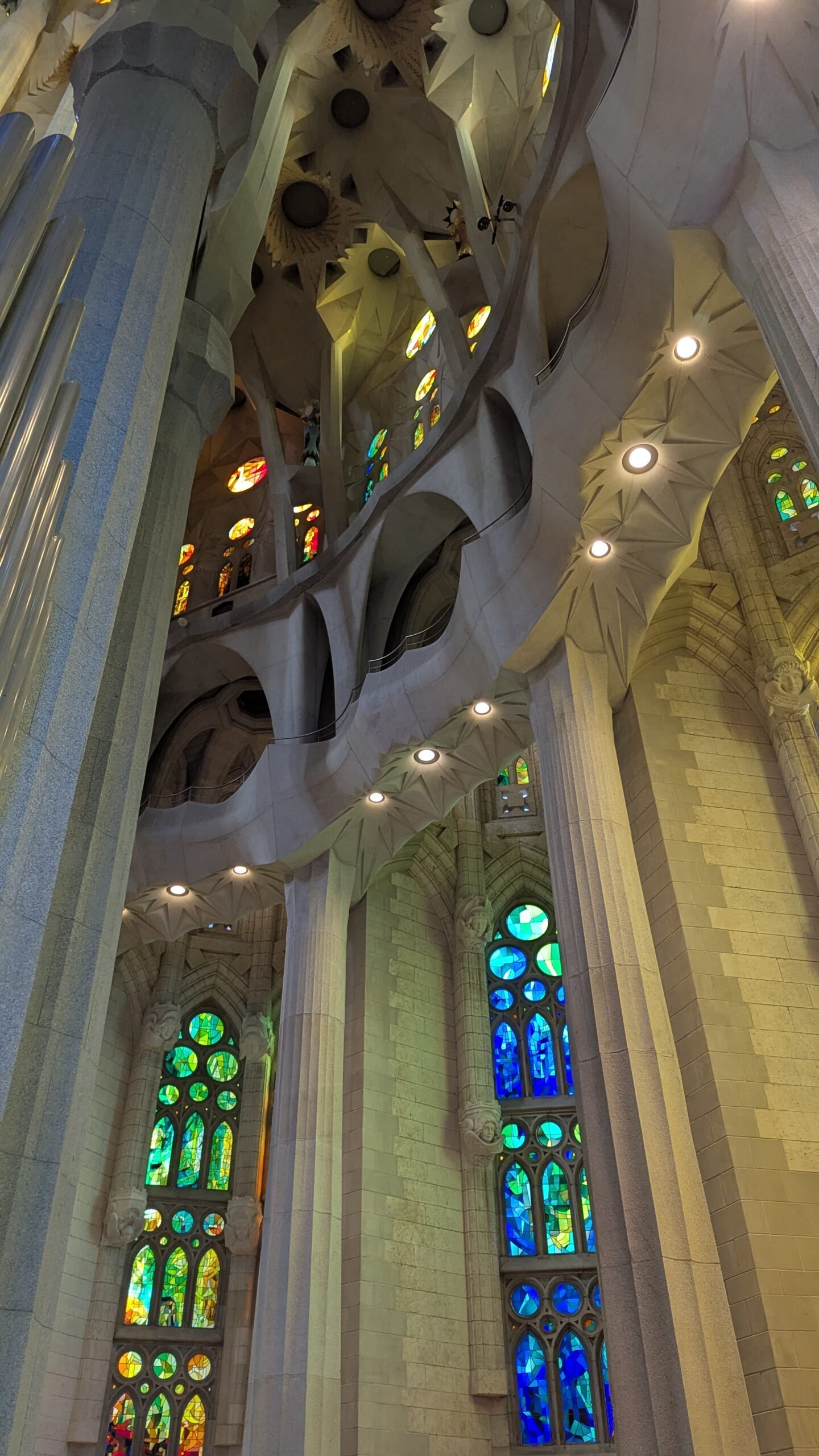
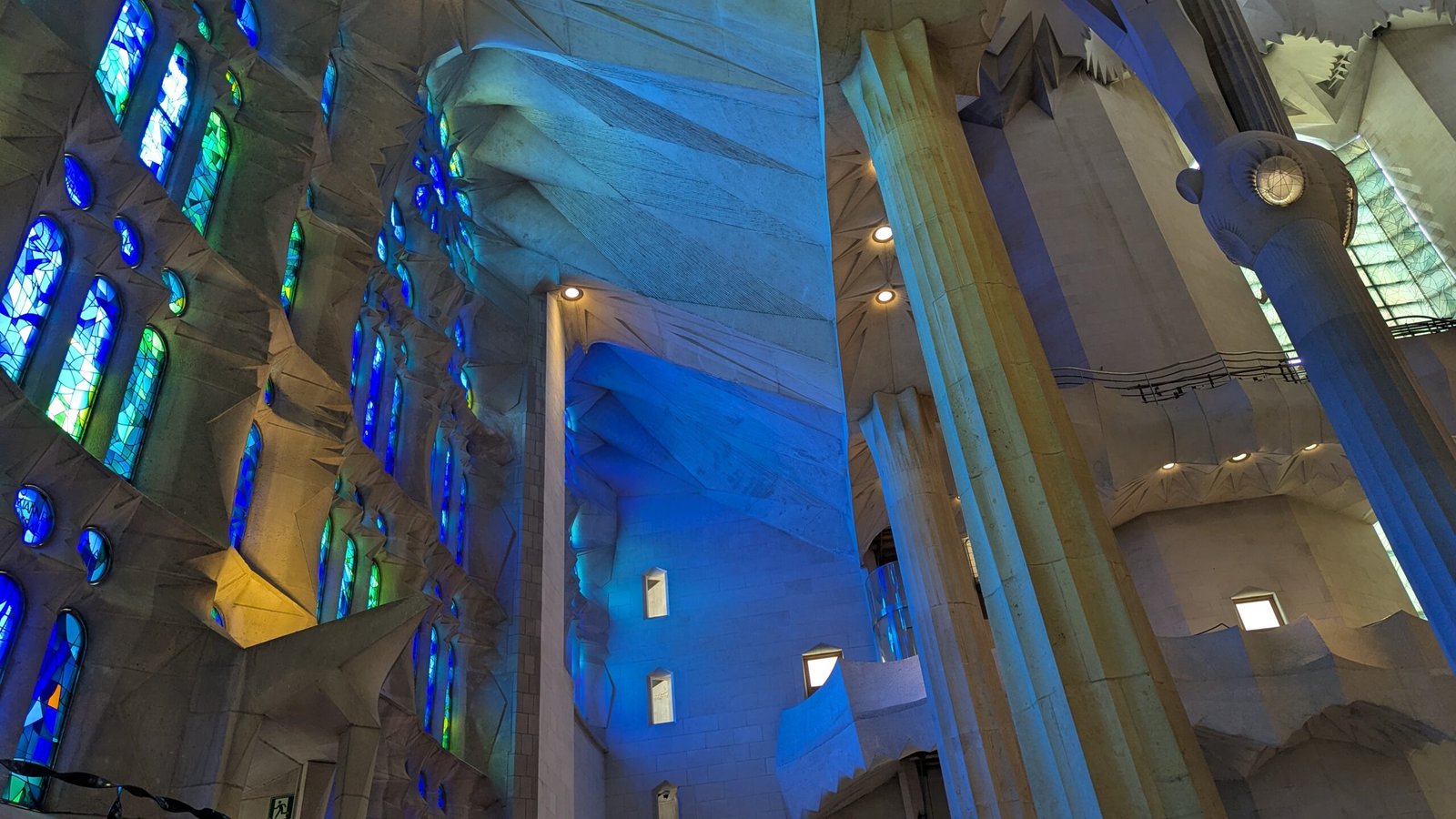
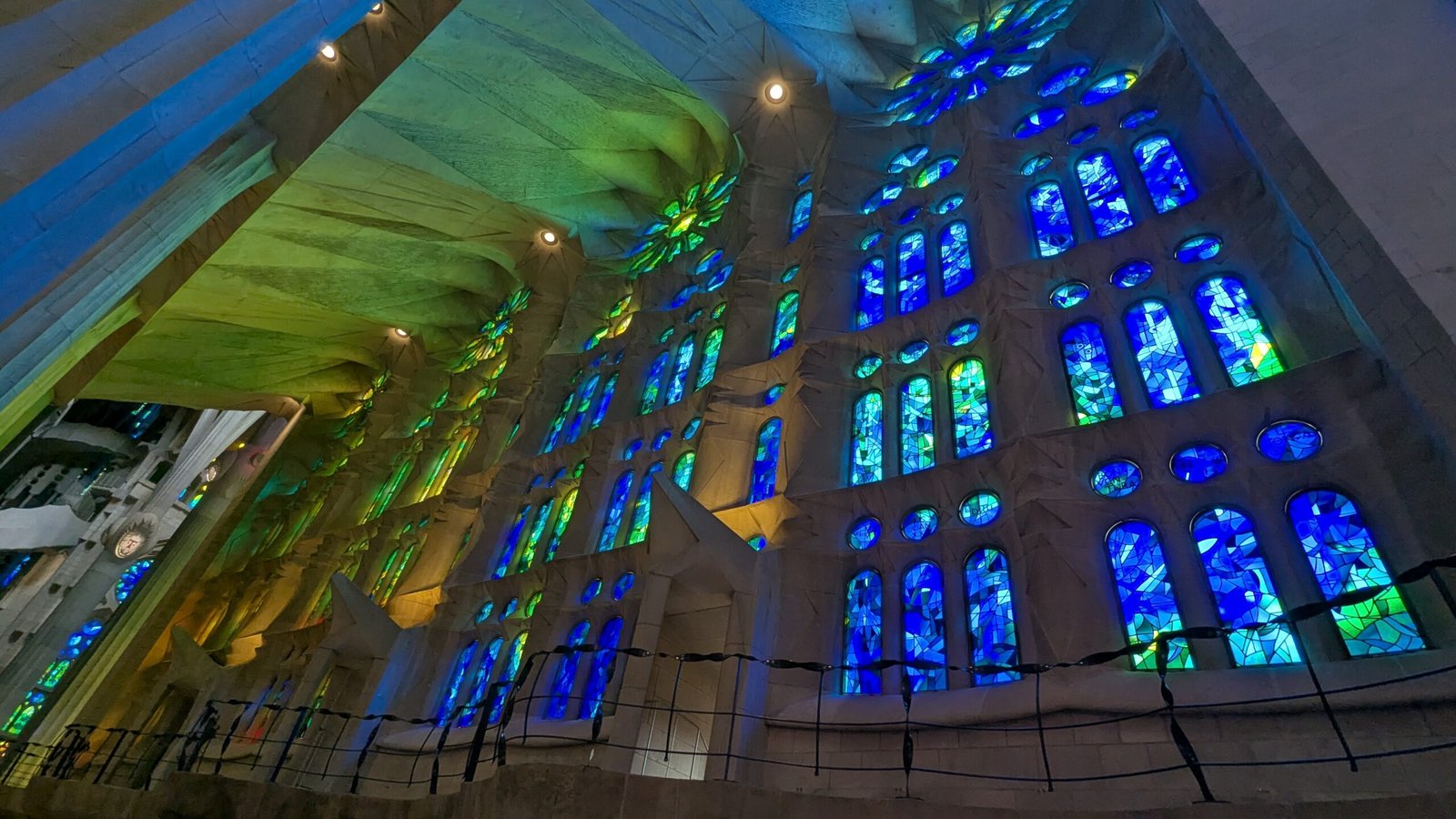
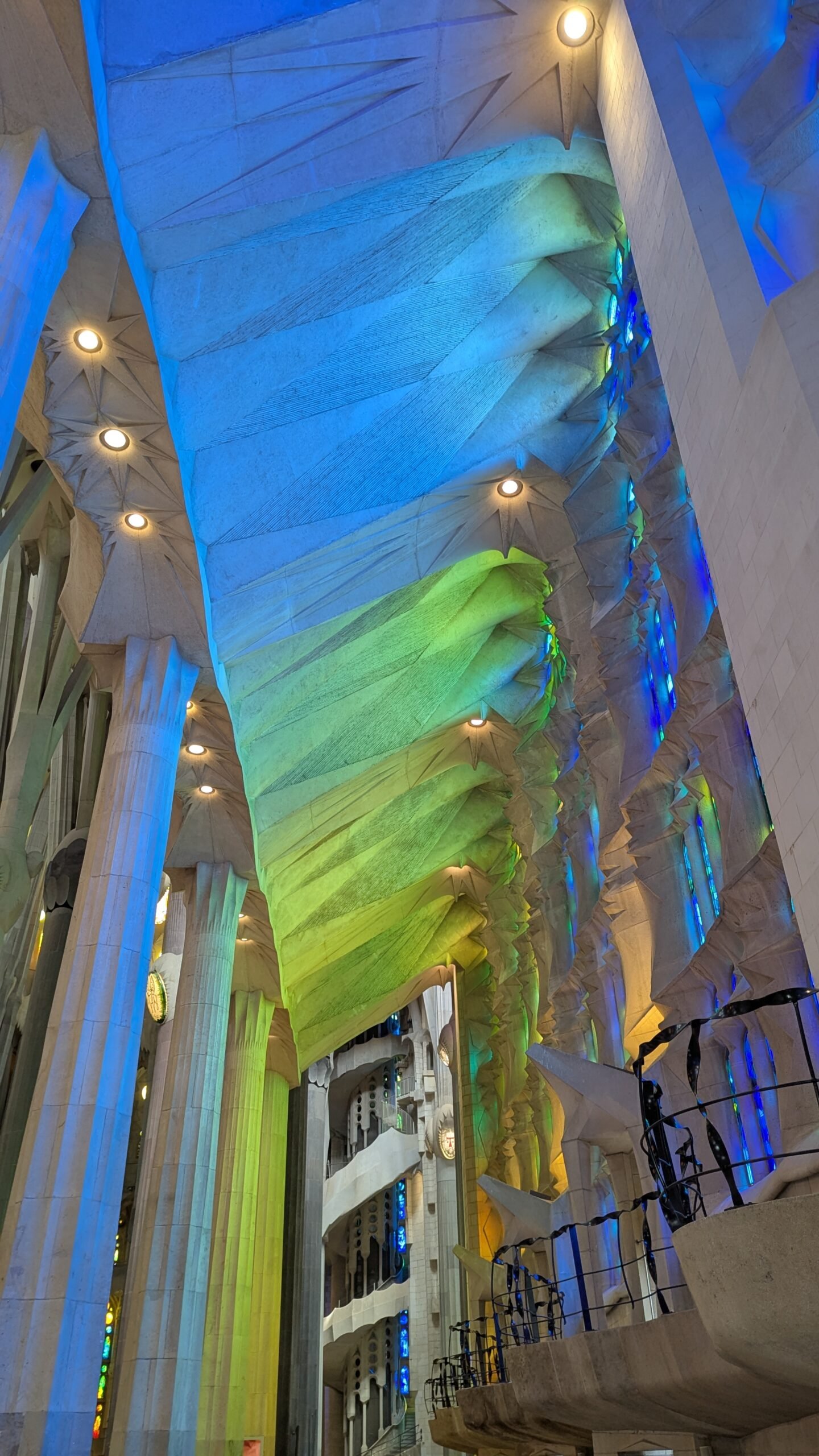
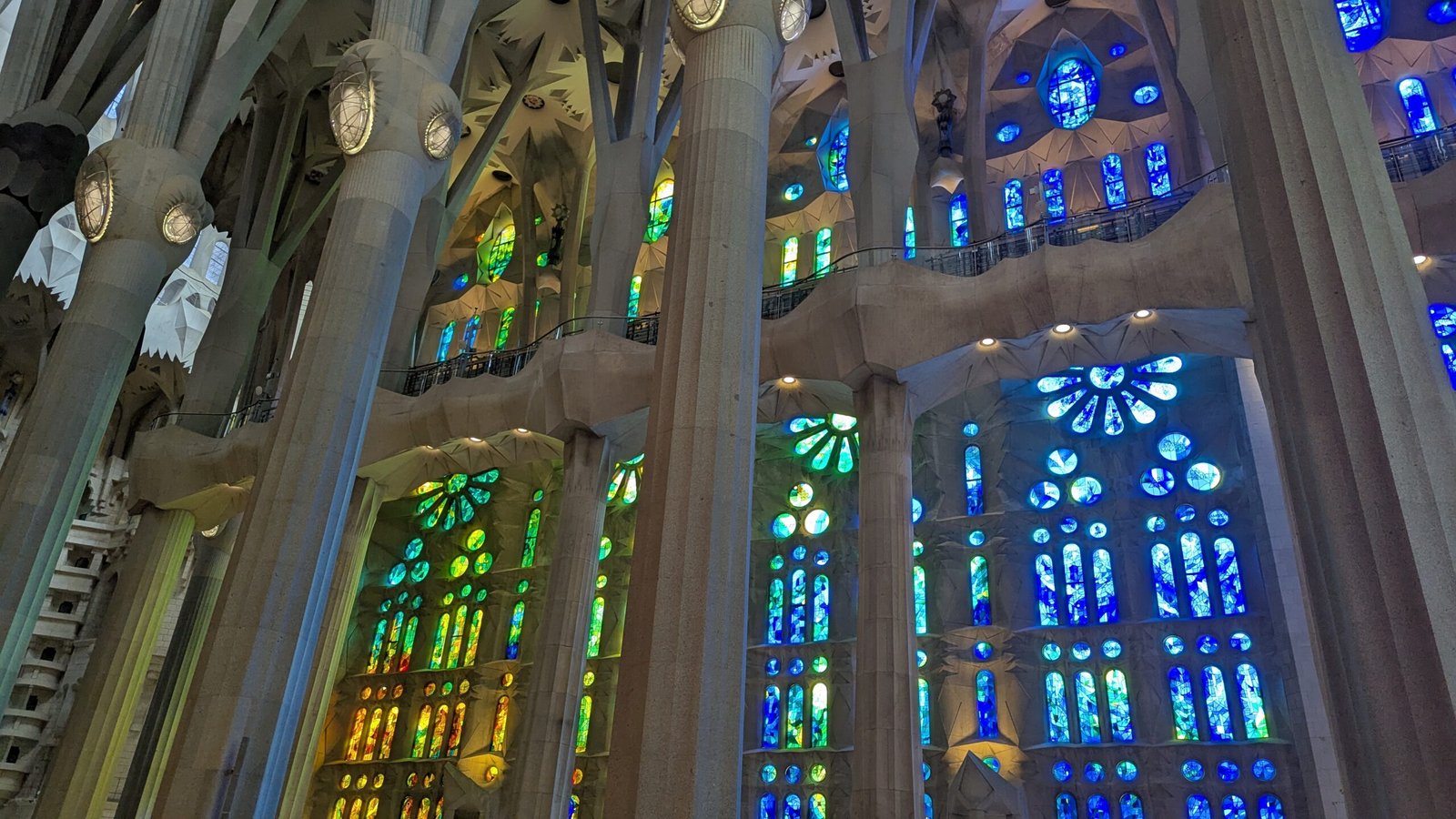
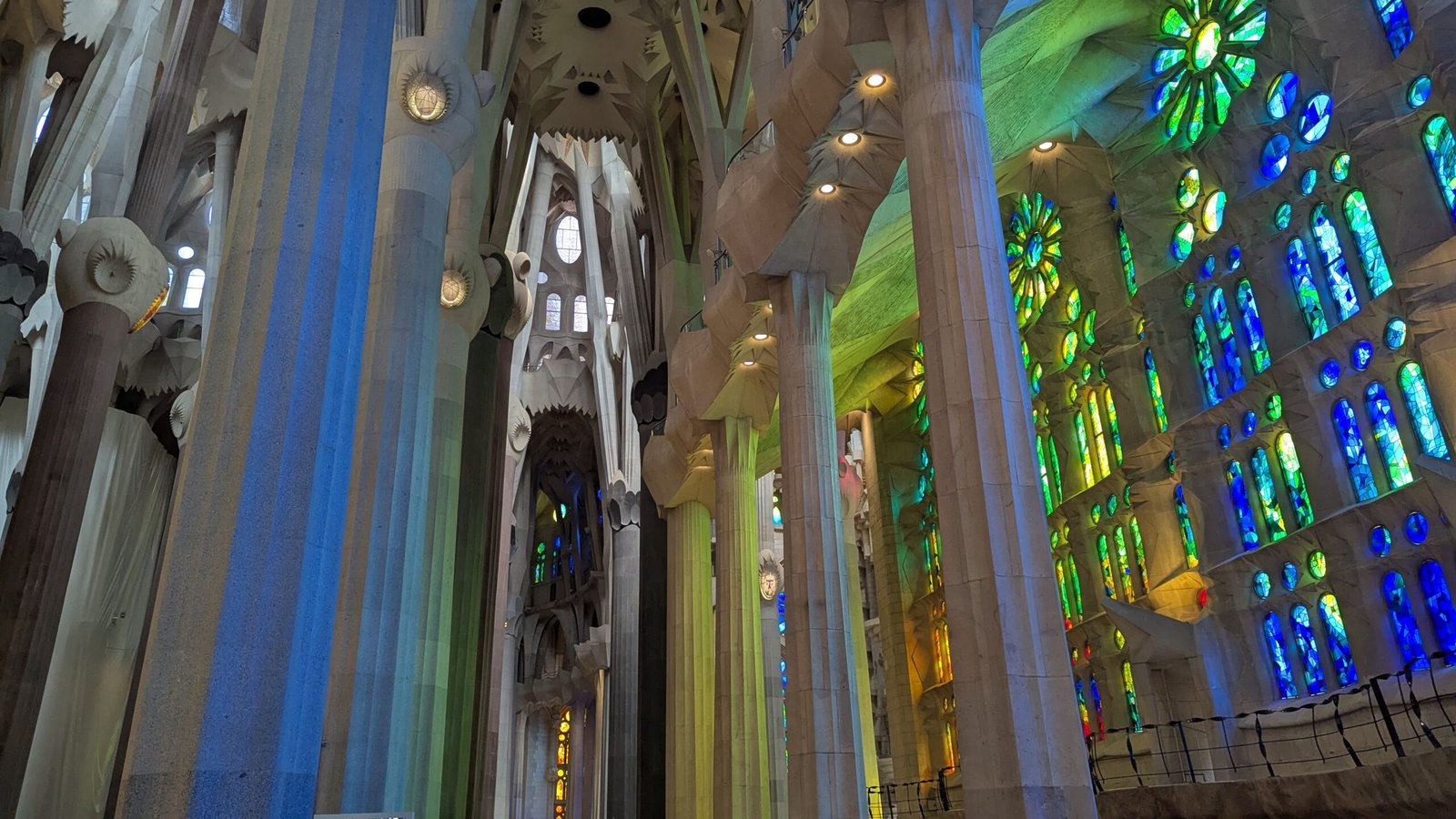
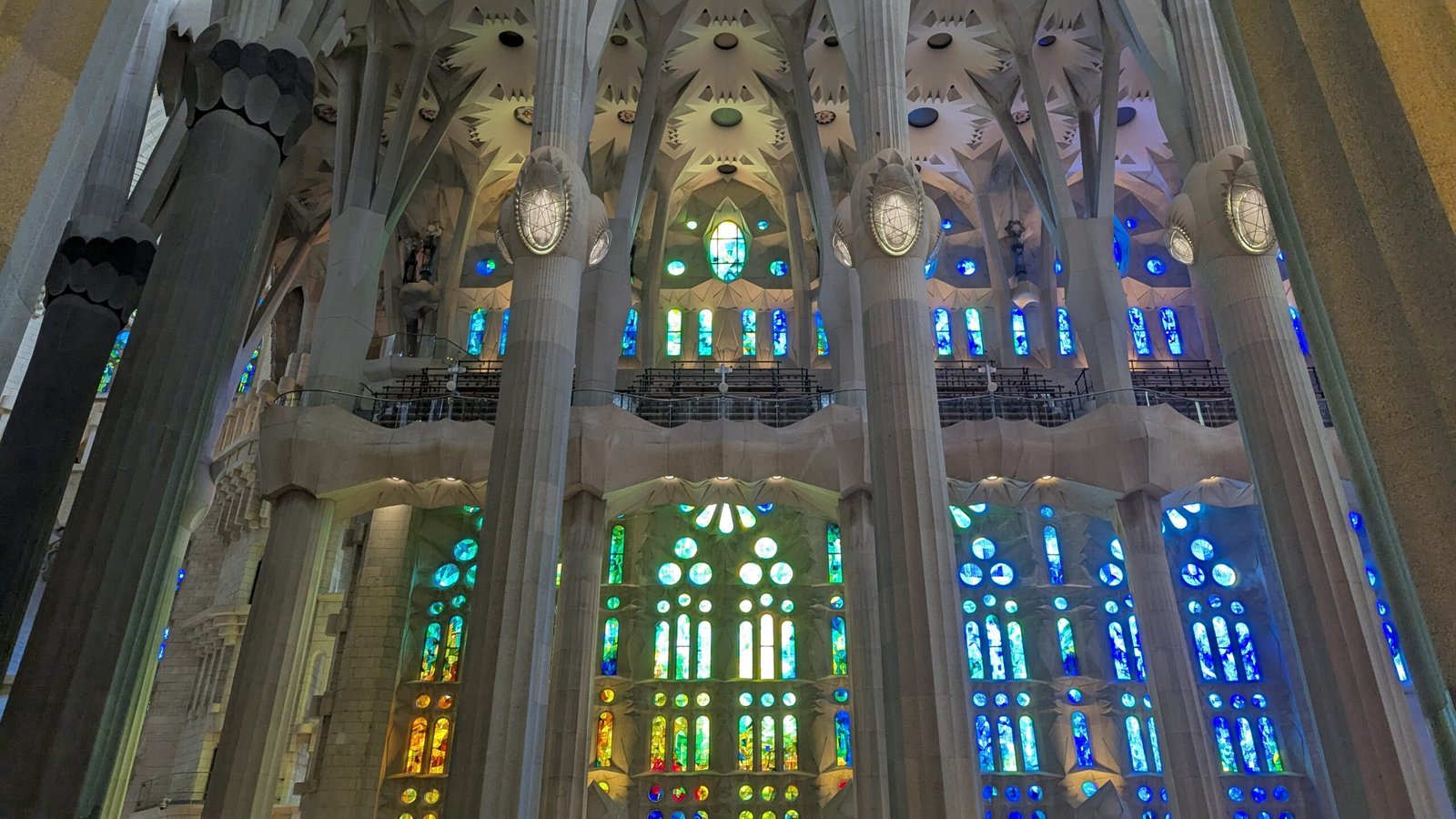
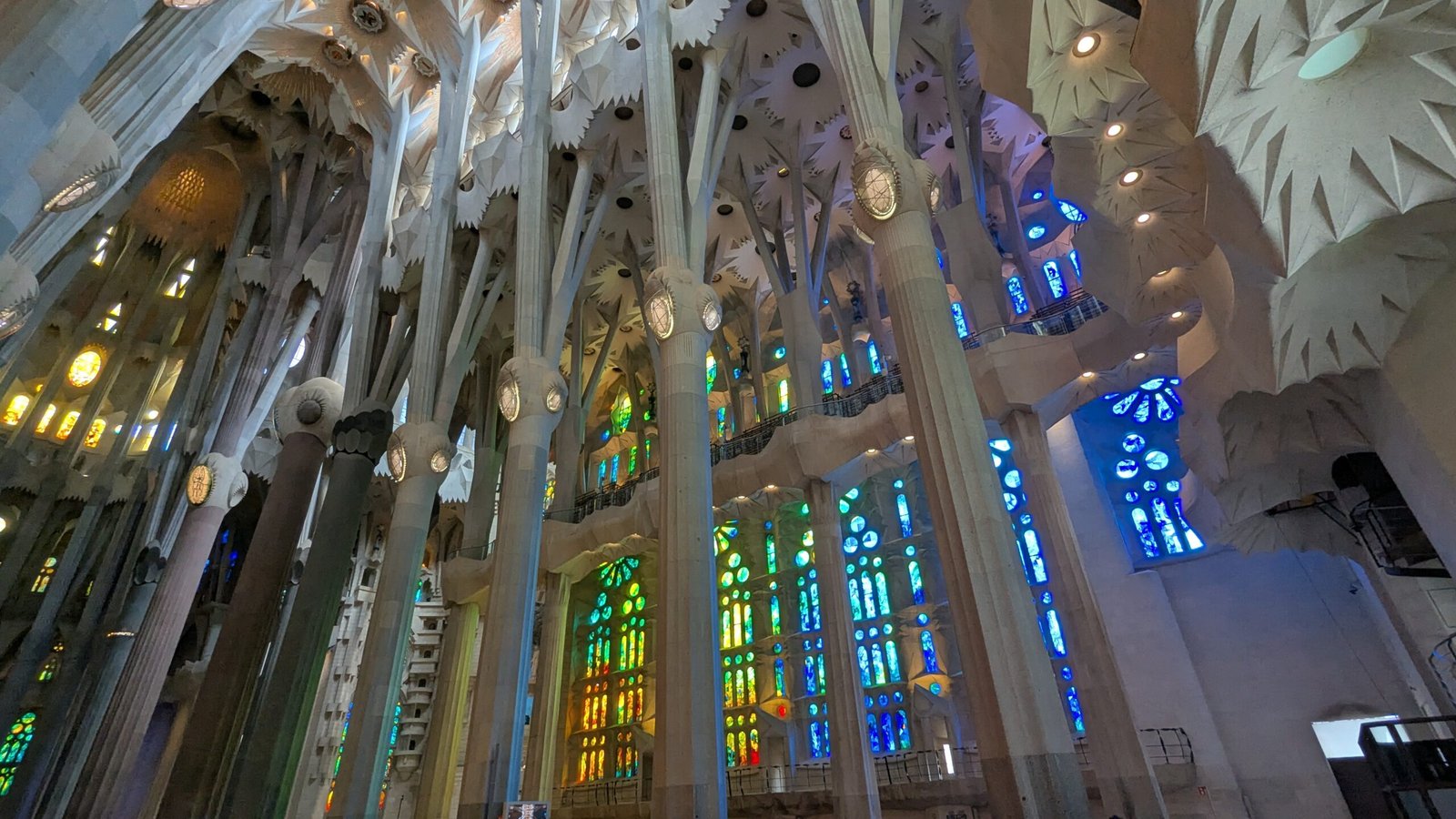
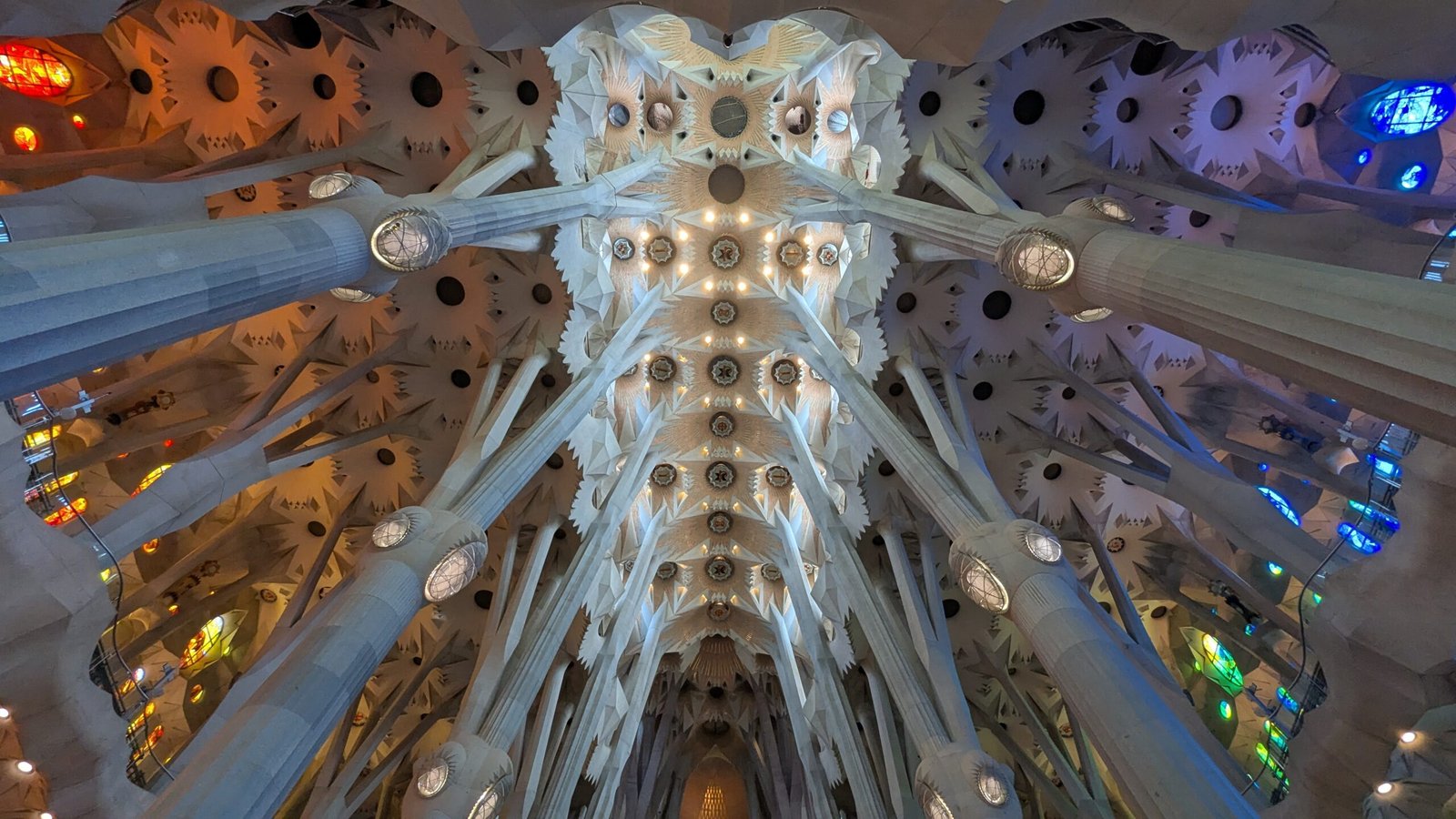
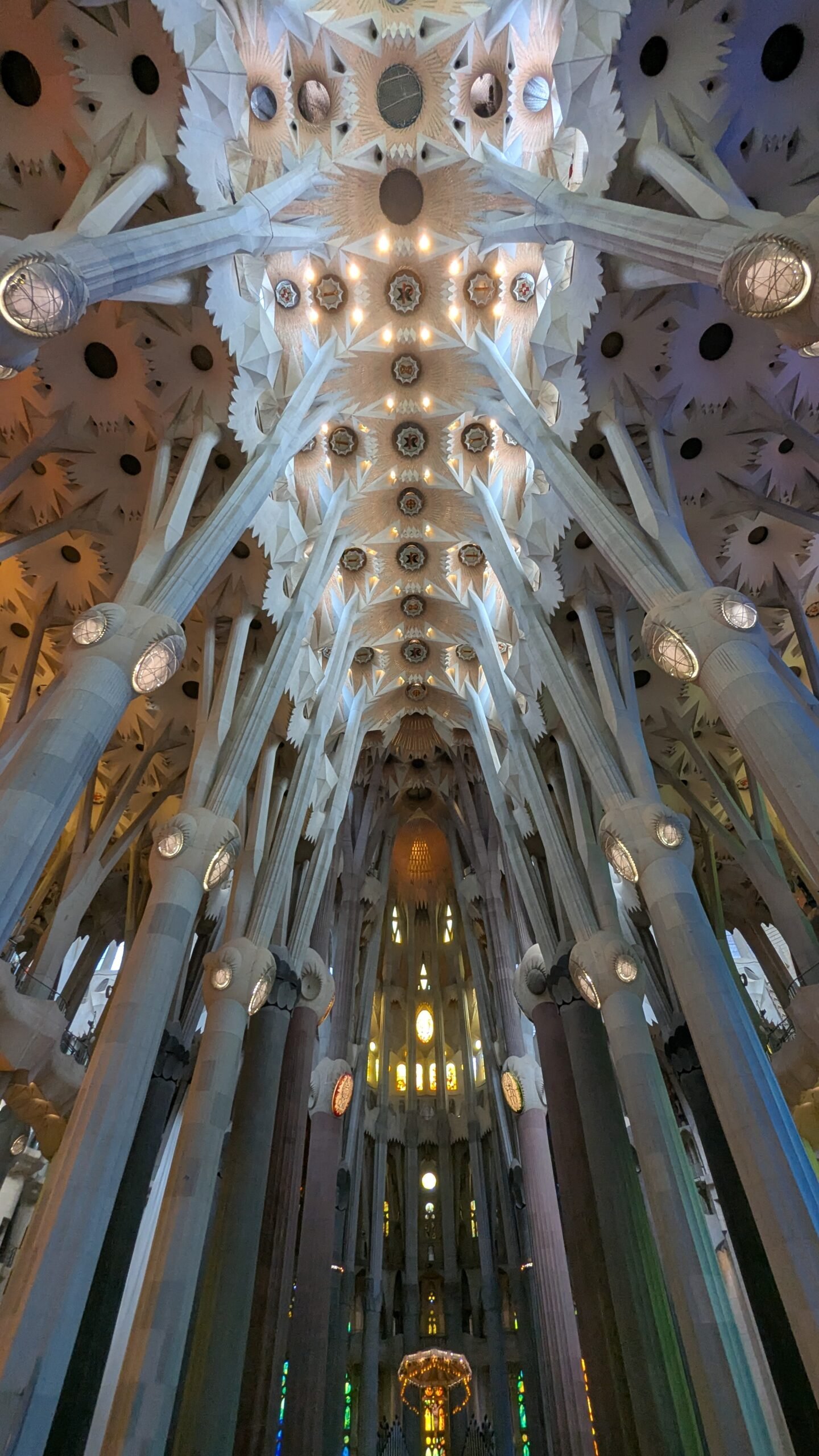
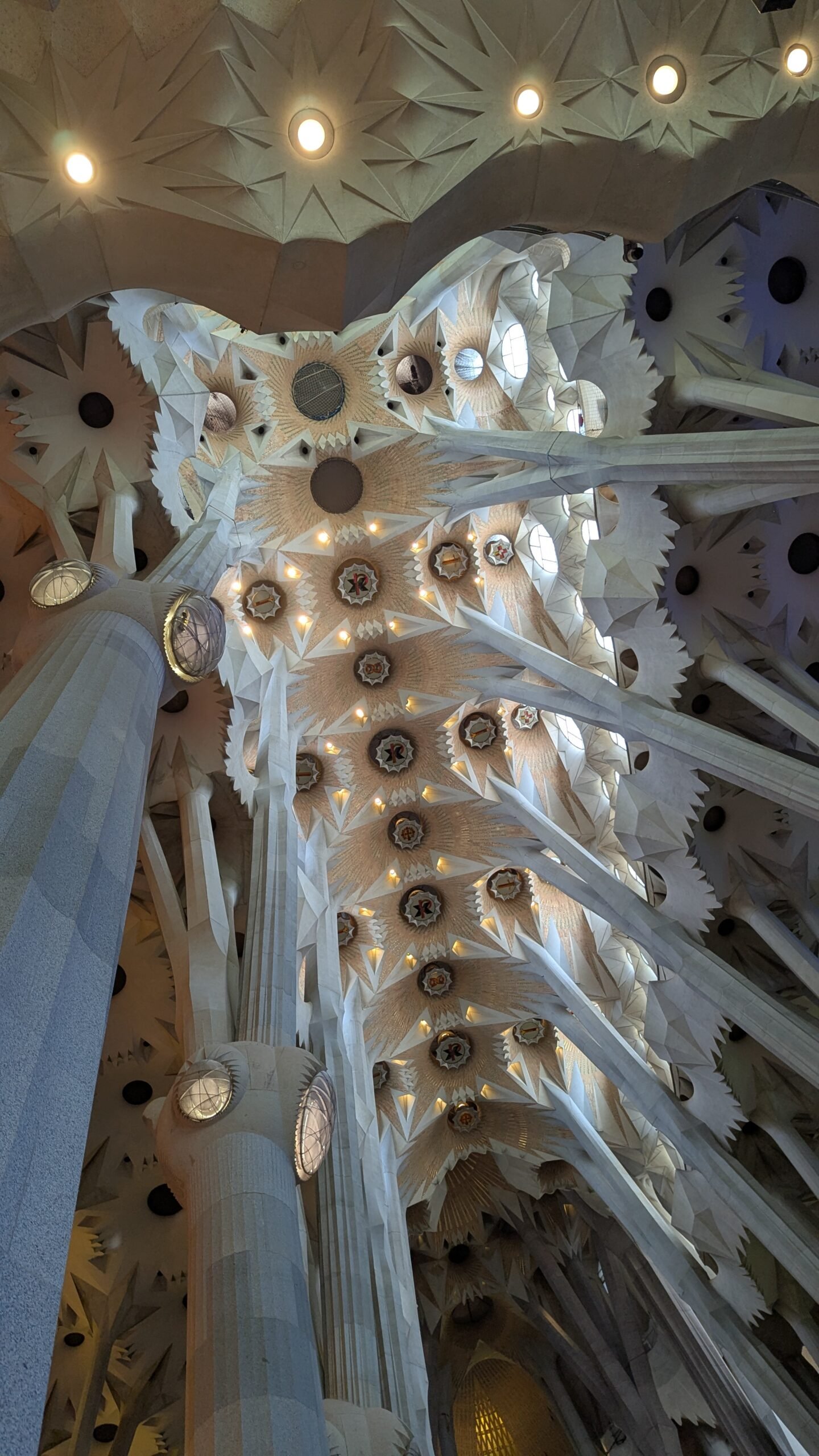
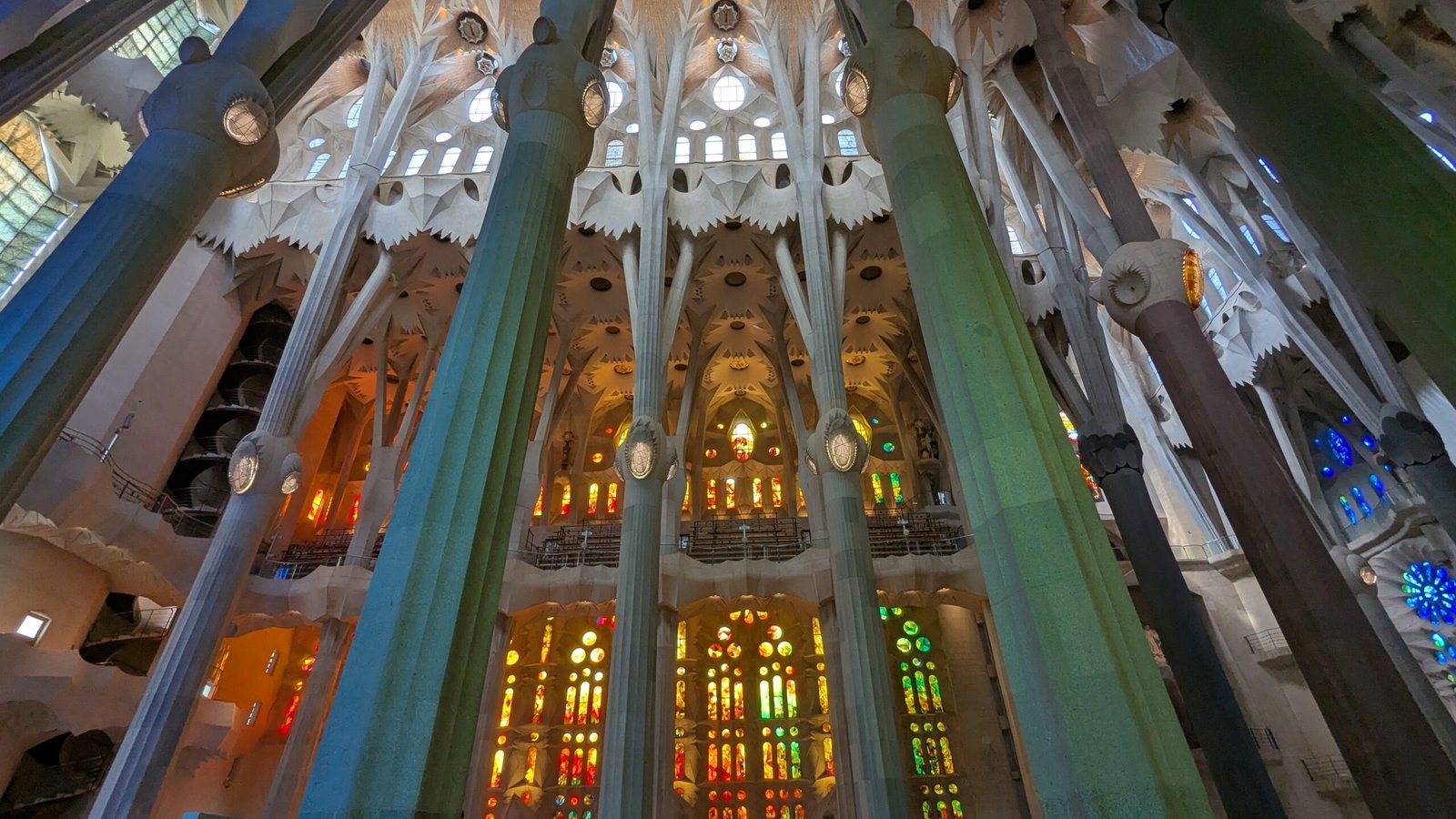
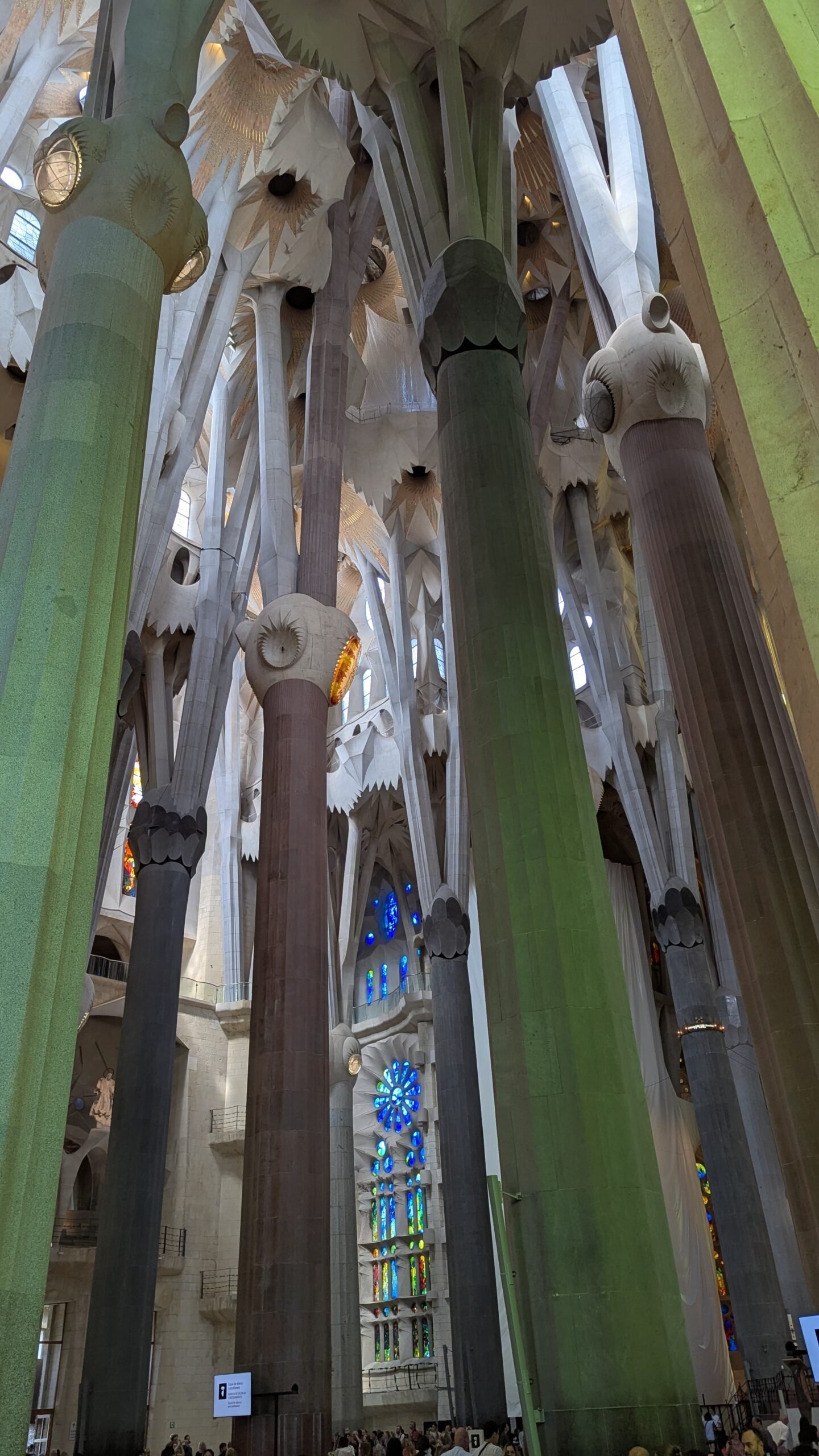
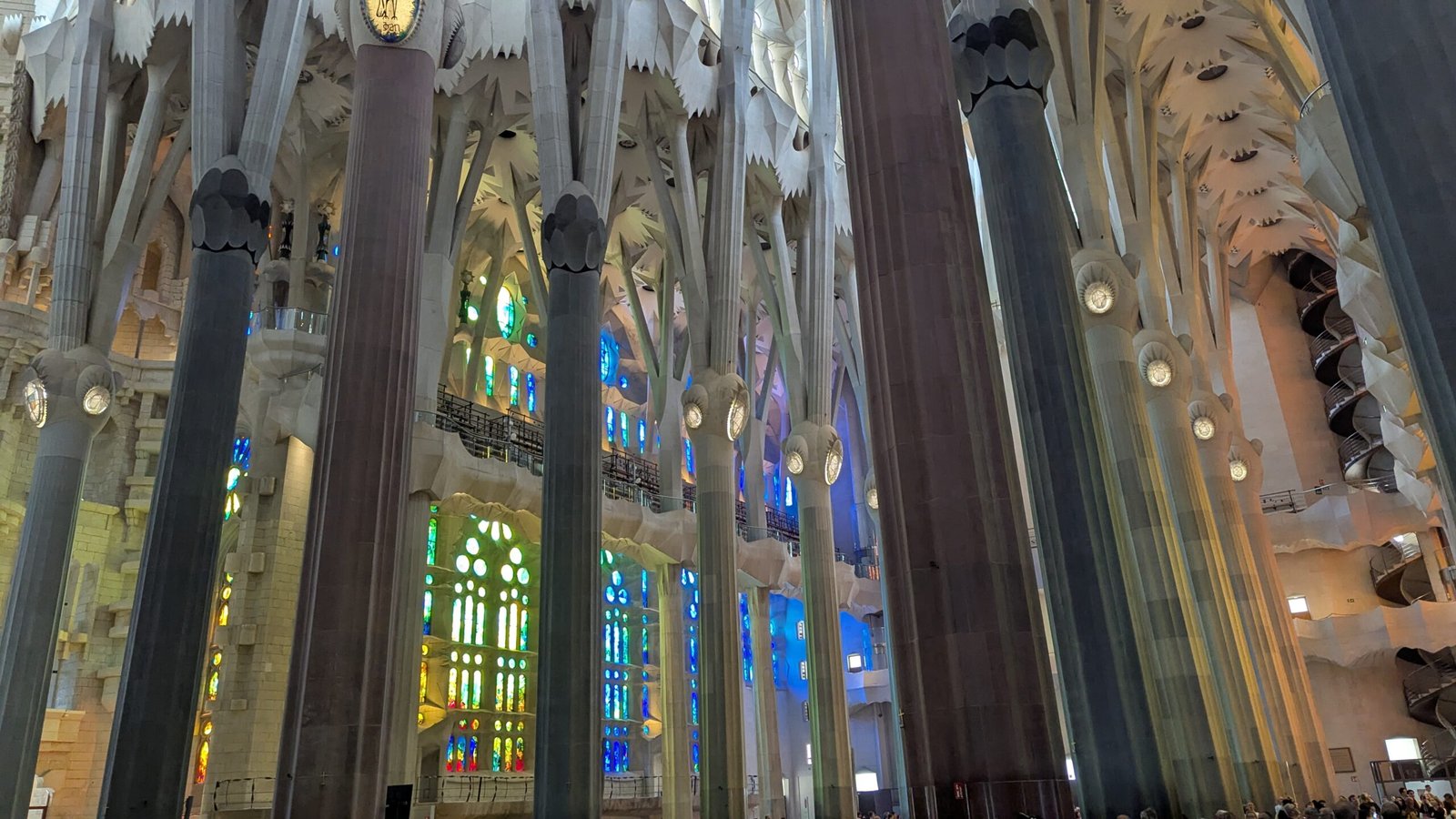
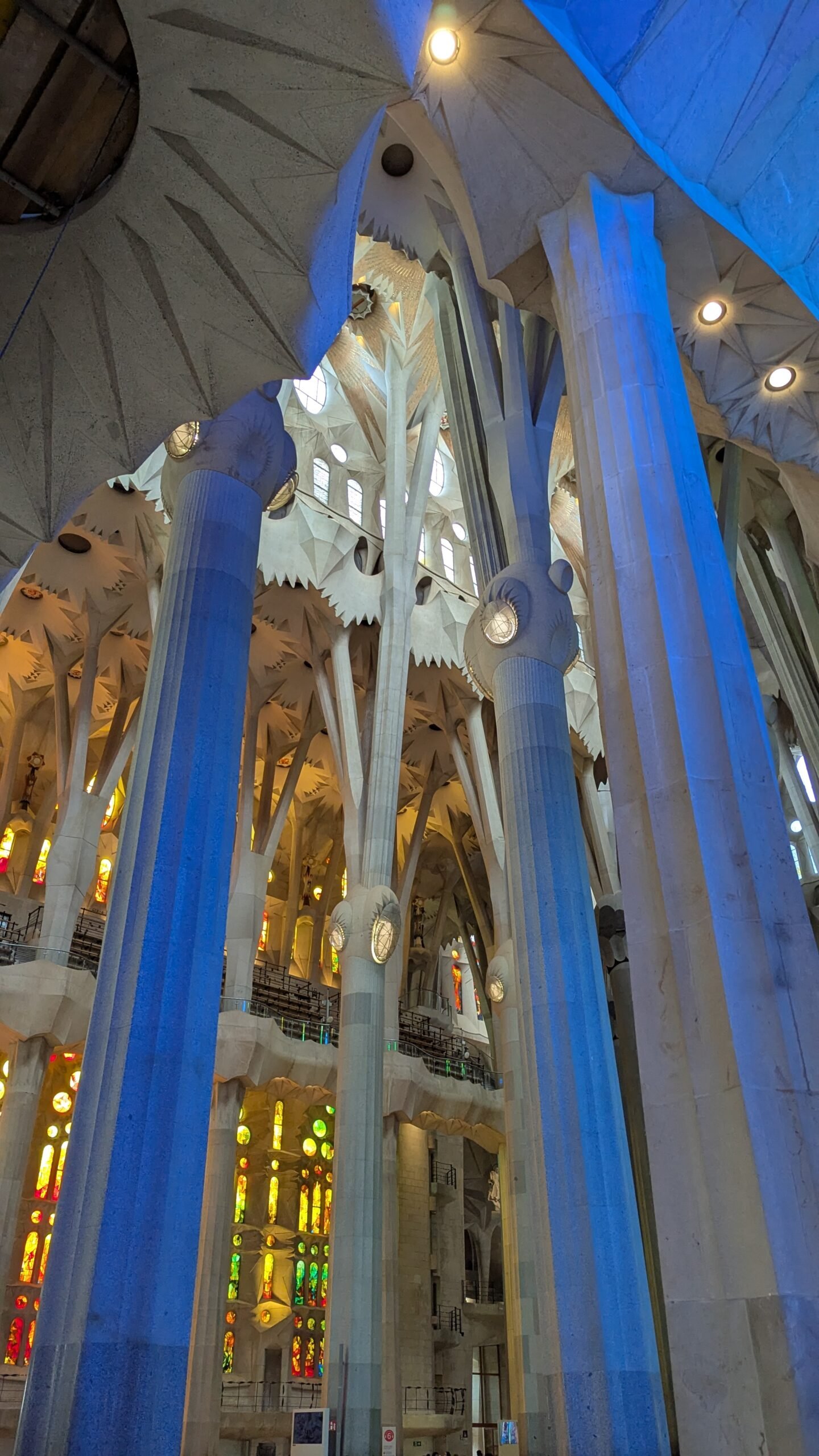
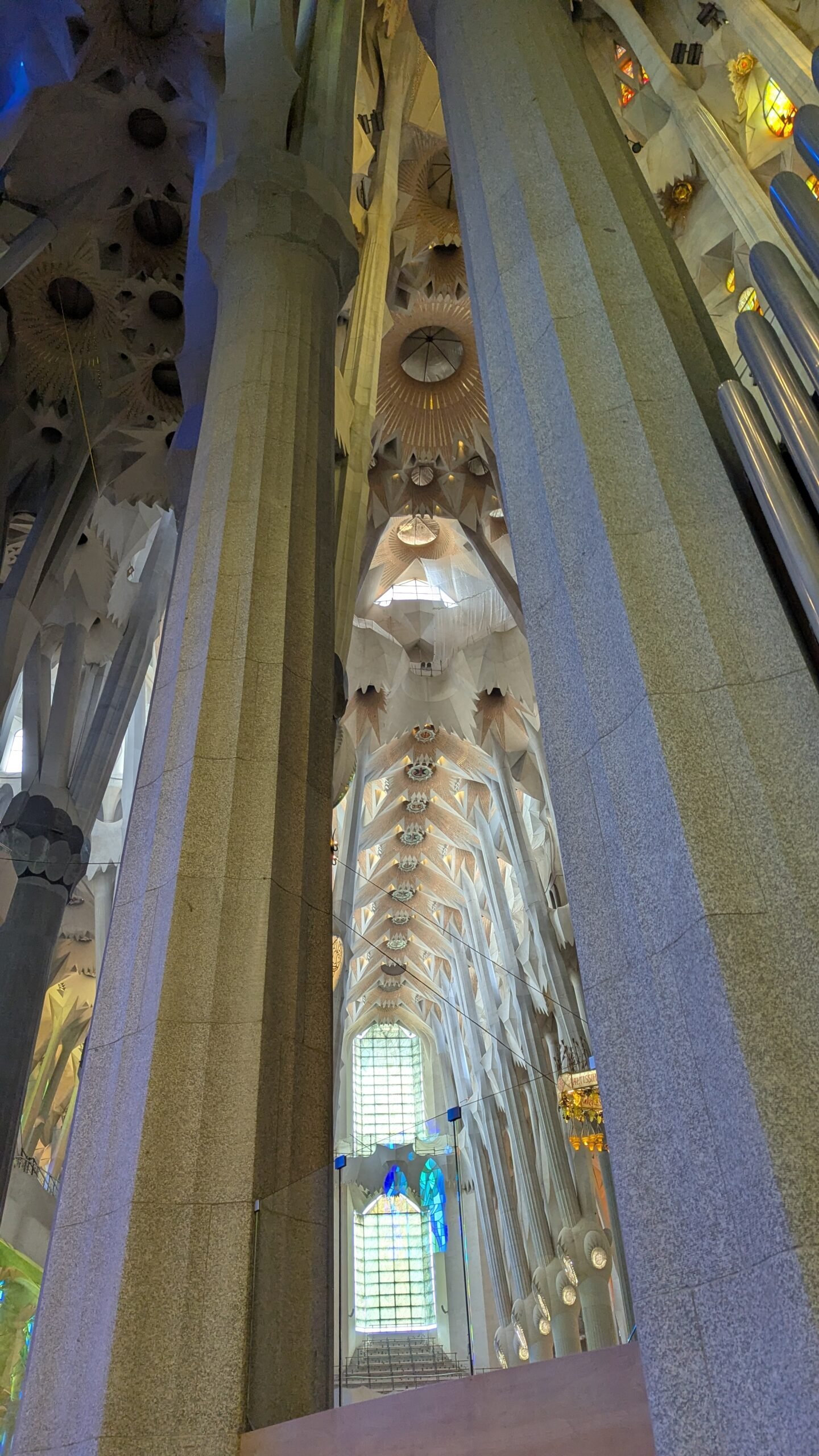
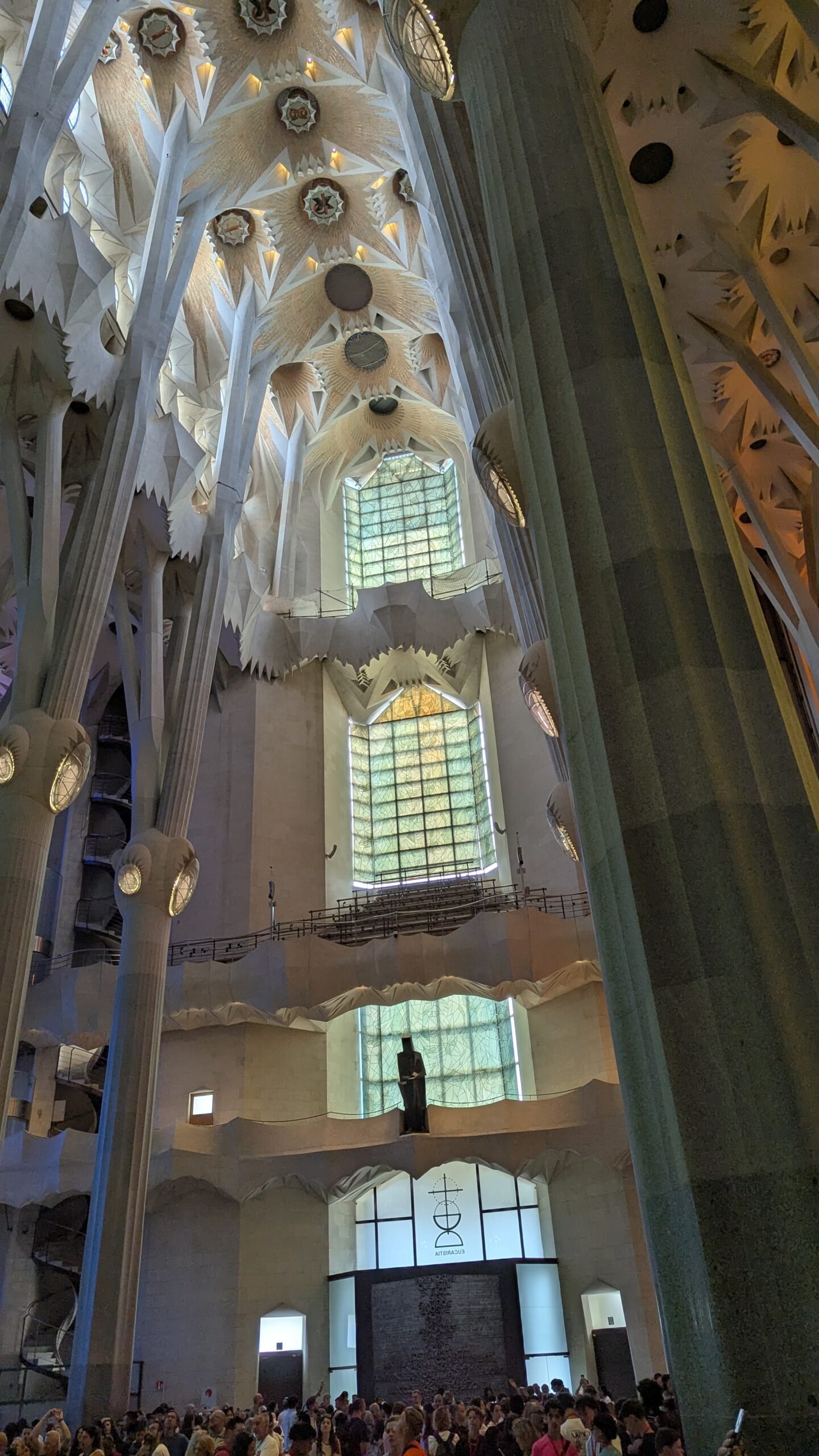
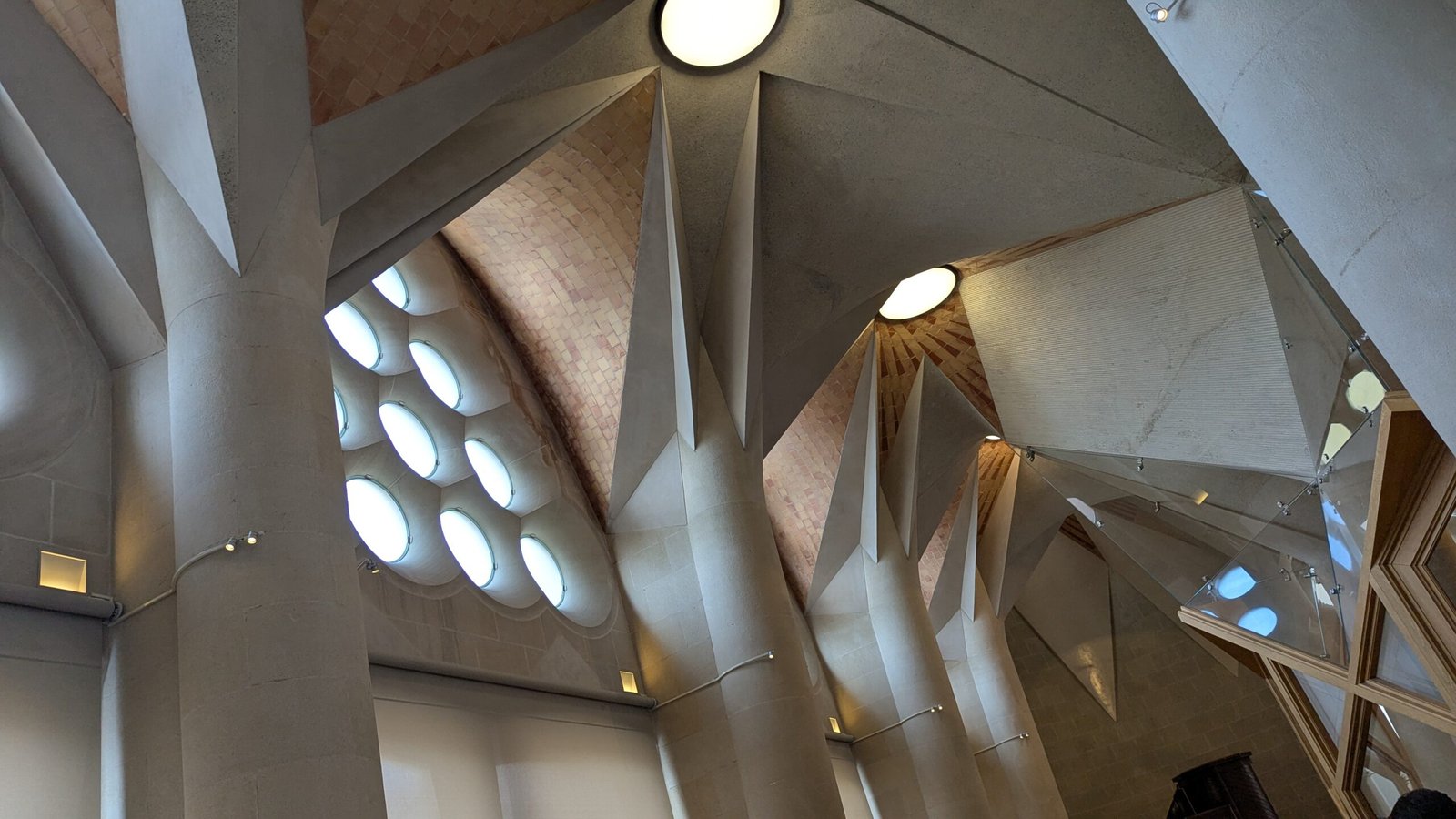
The interior spaces are defined by an overwhelming verticality, as the forest of organic stone columns draws the eye upwards to the light pouring in through the carefully sculpted skylights and clerestories.
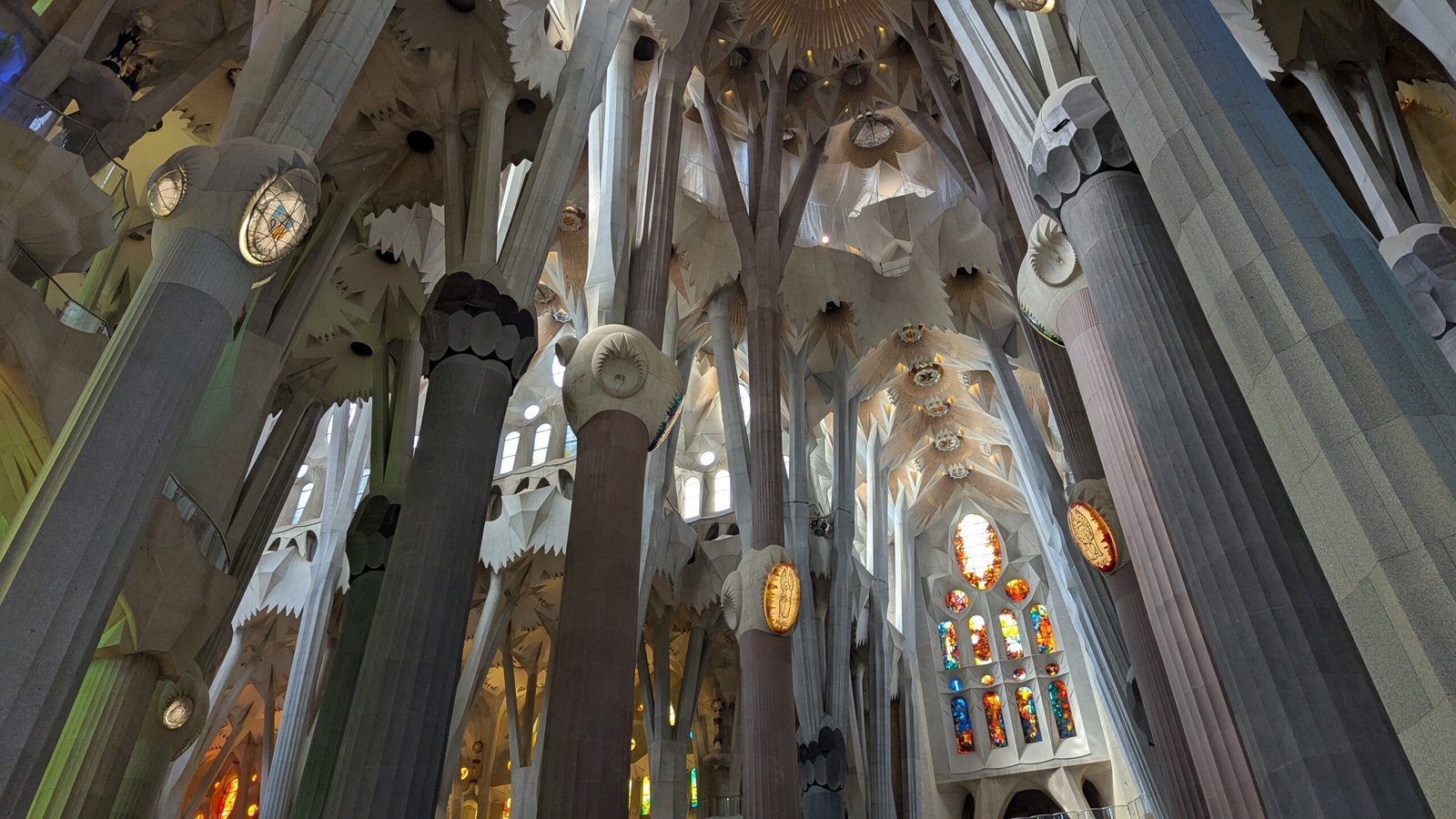
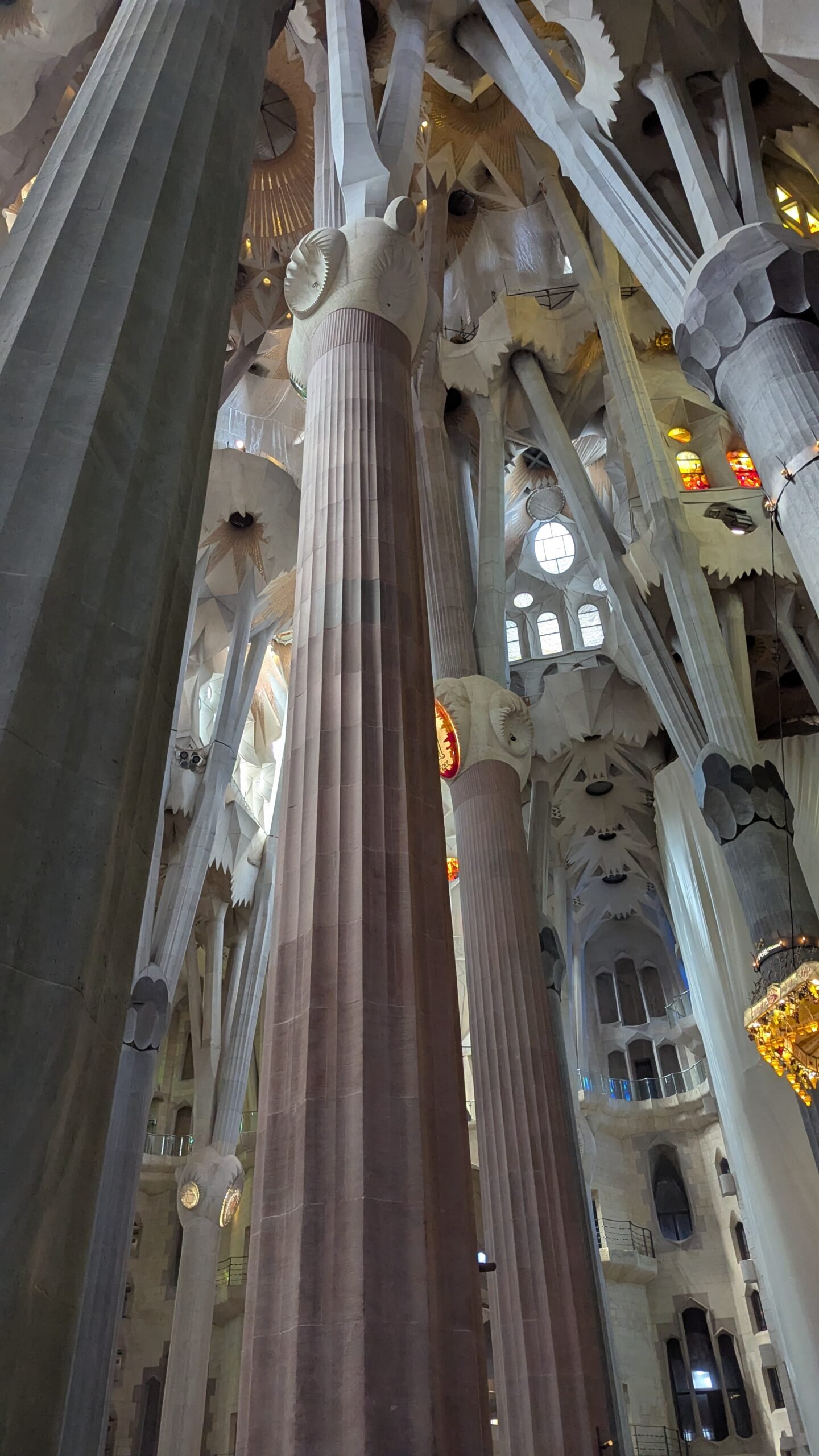

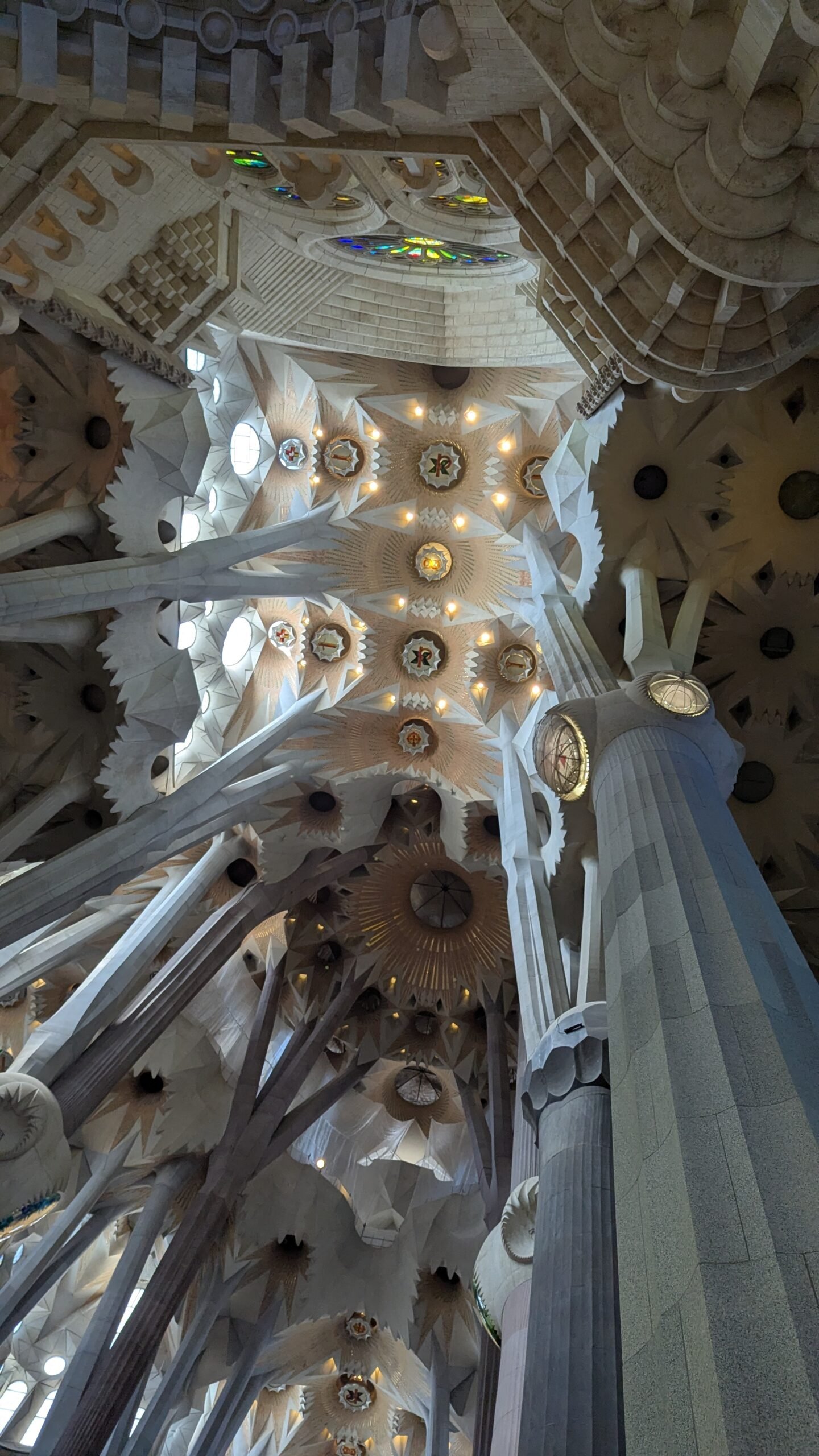
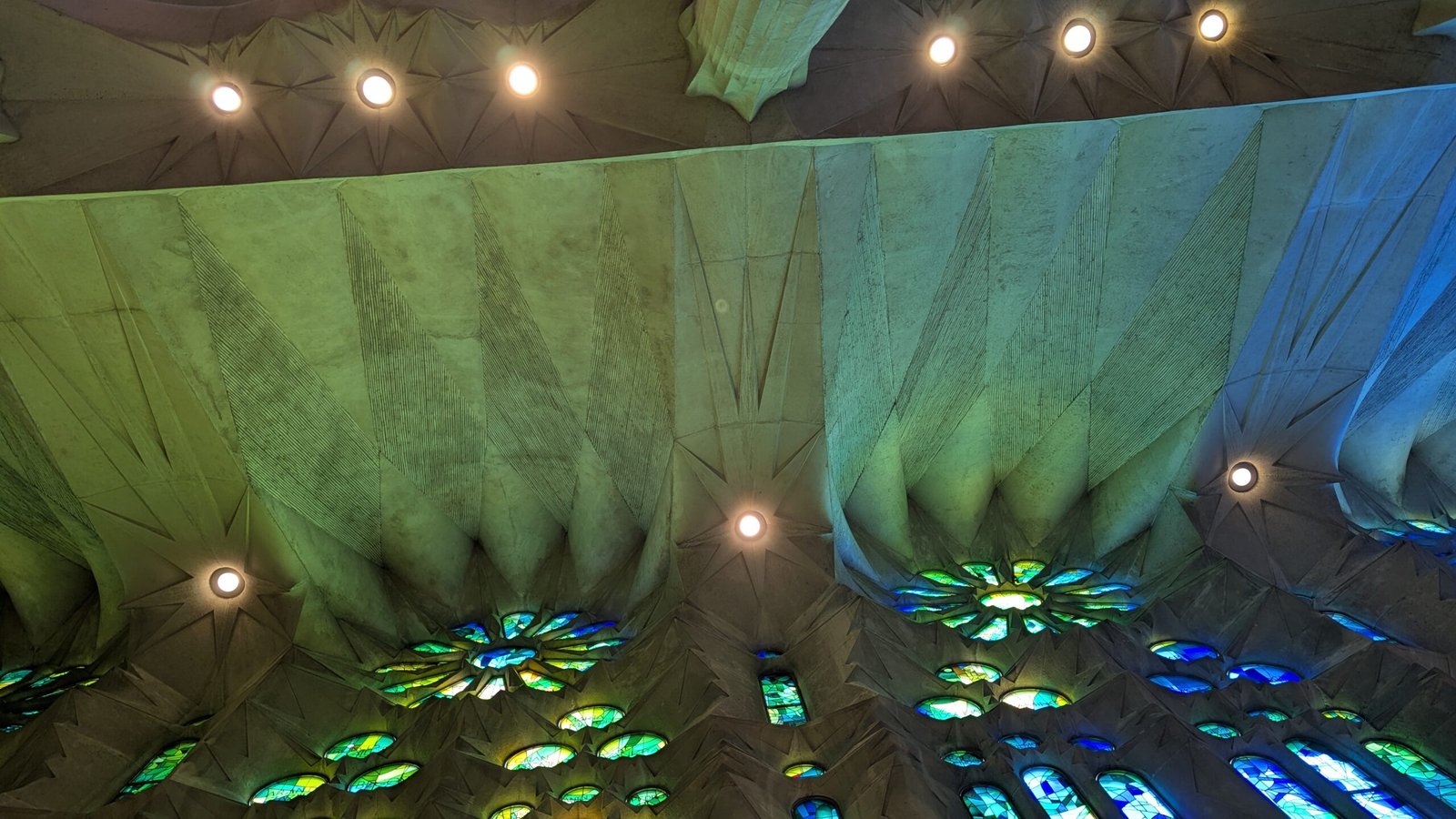
The interior is bathed in light despite the reality that many of the vaulted skylights and laylights remain concealed by construction of the towers above.


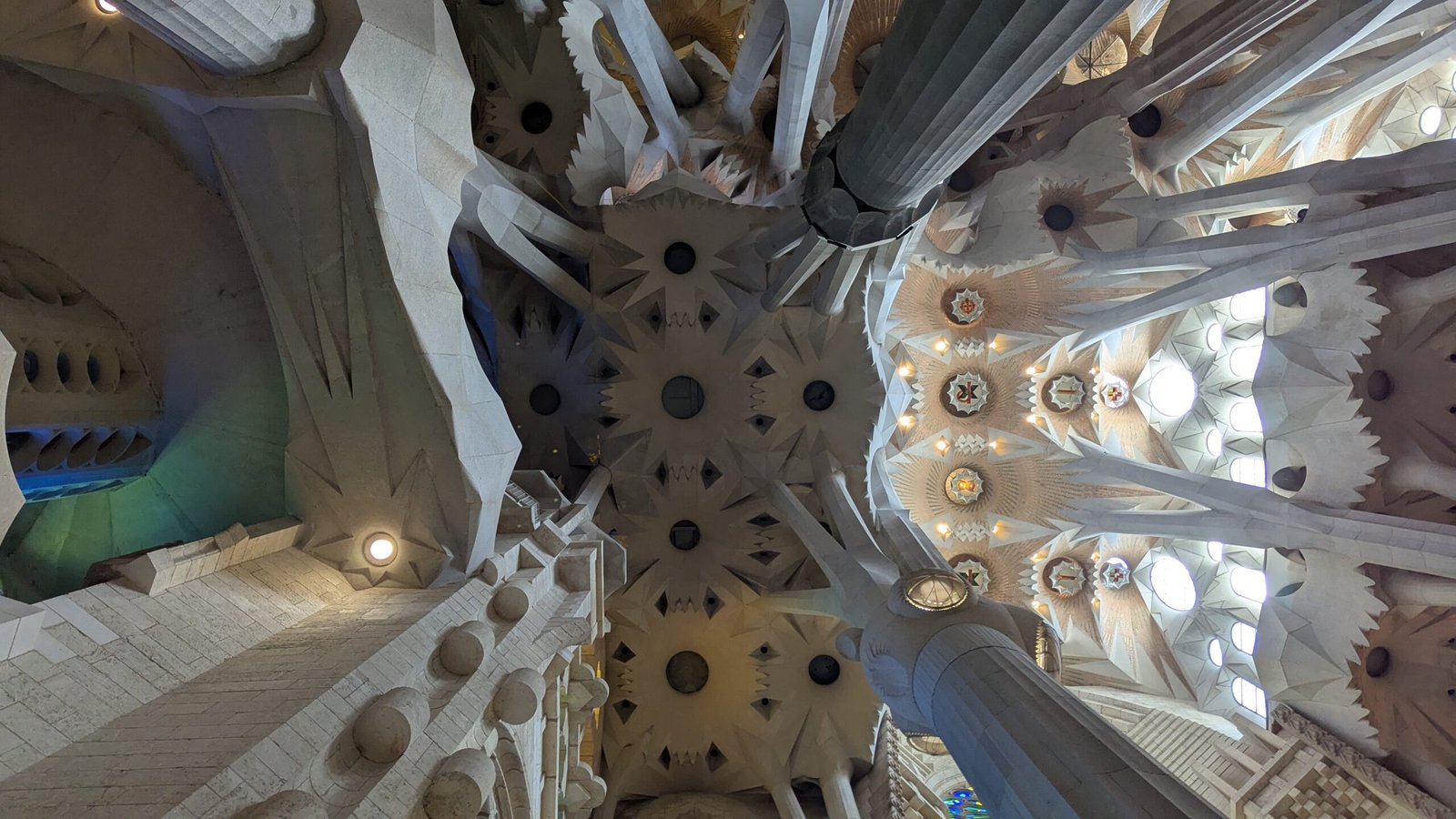
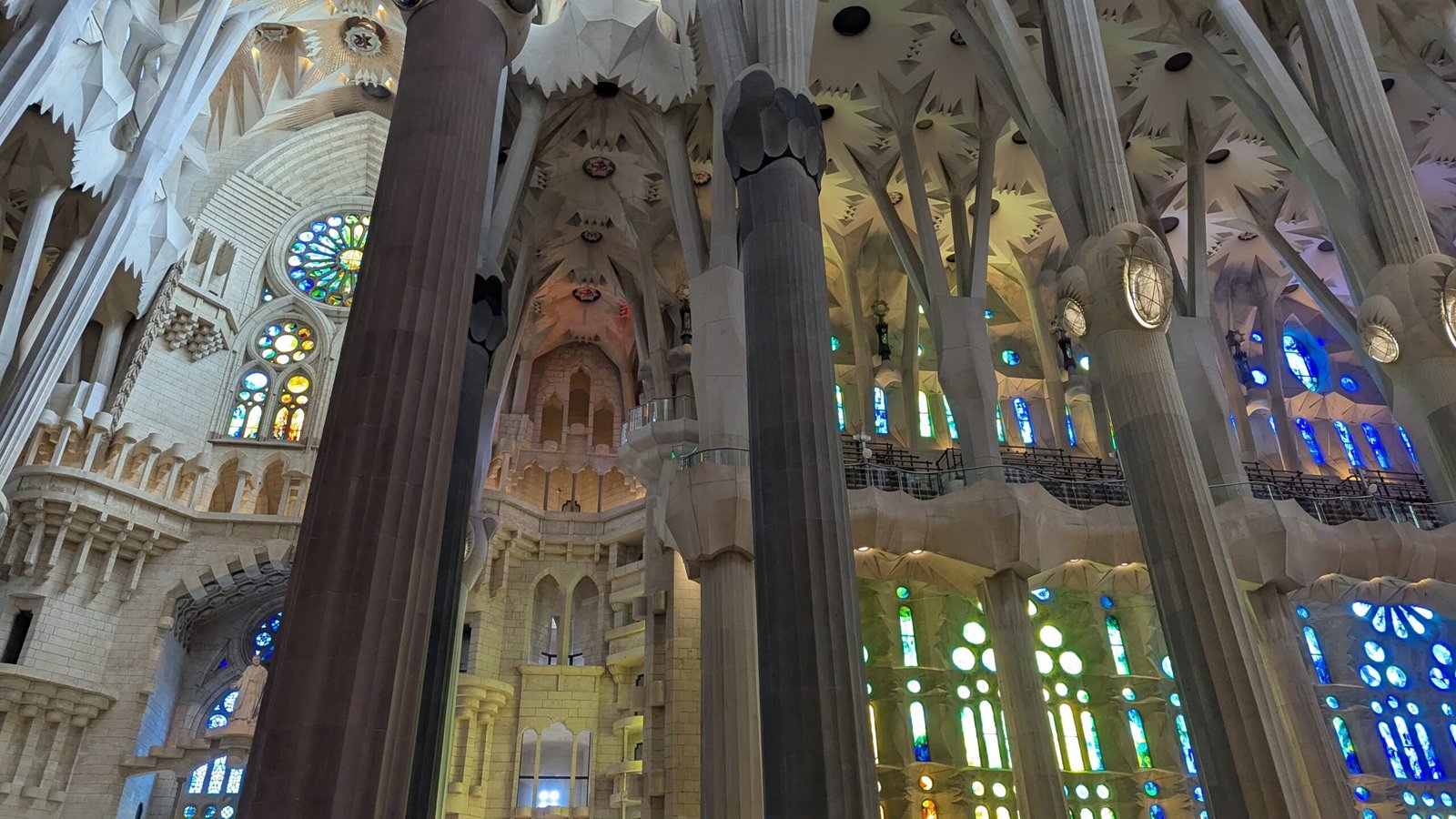
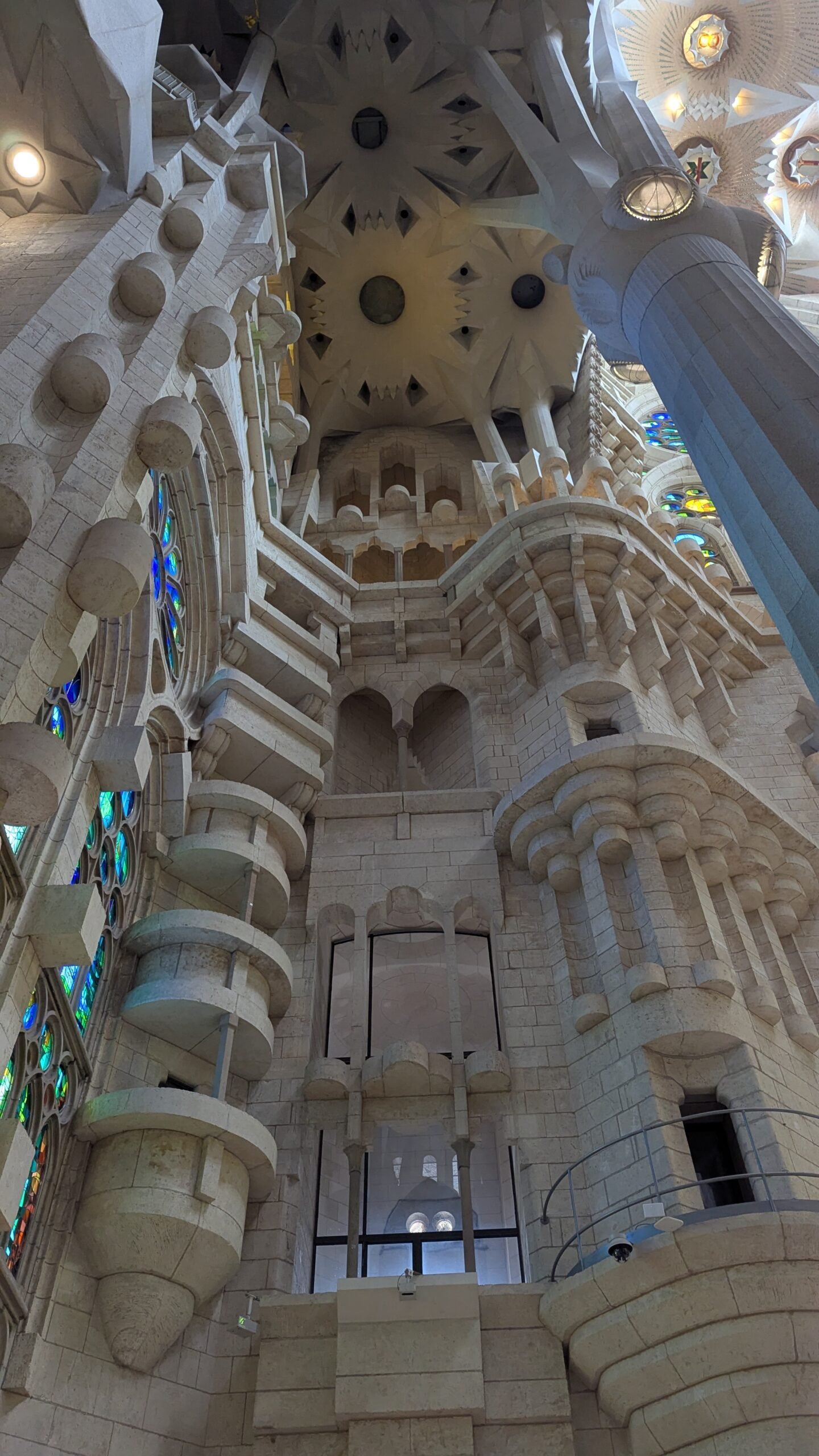



Interior of the Apse & Ambulatory



Interior Nave & Aisles
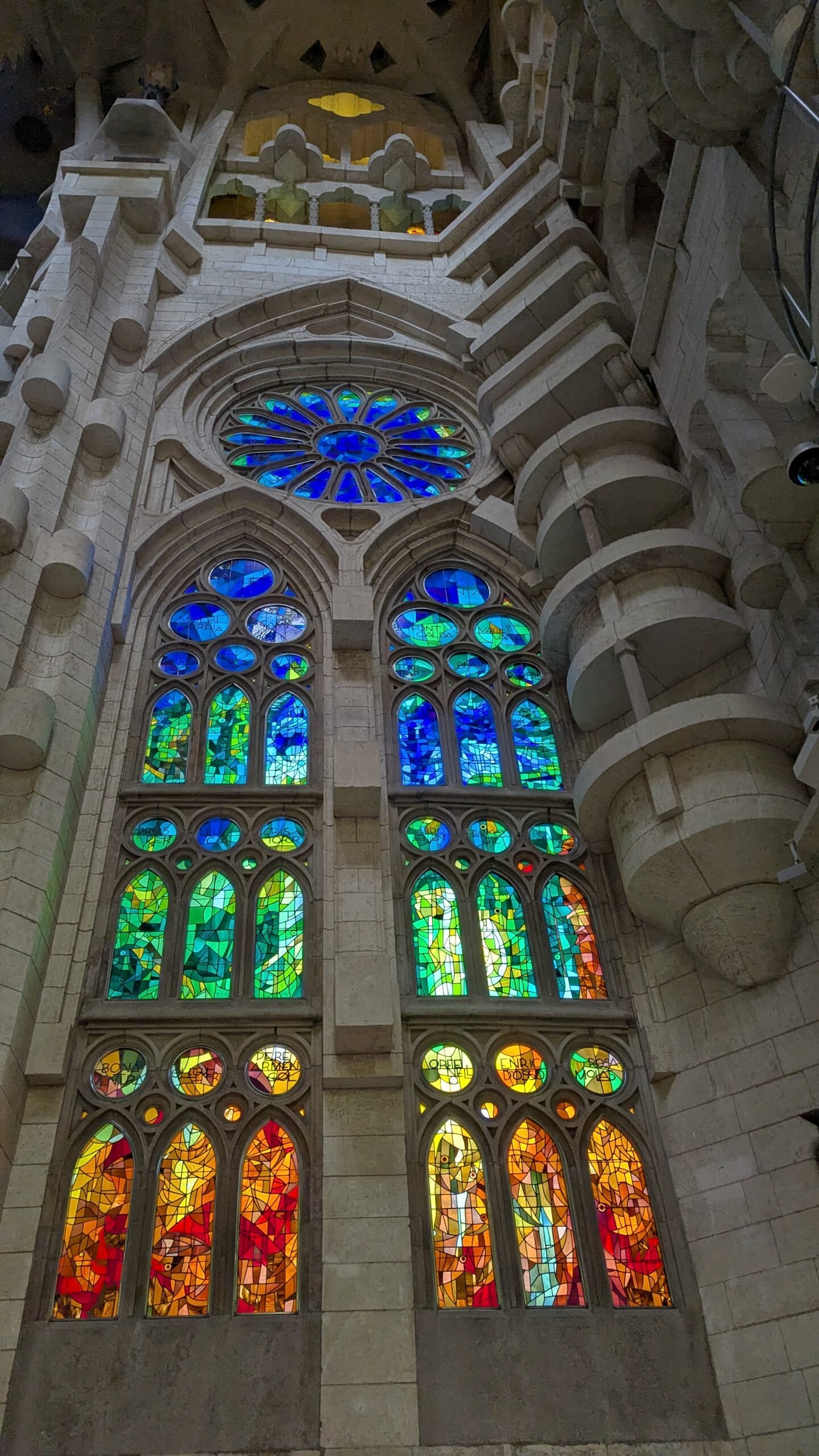
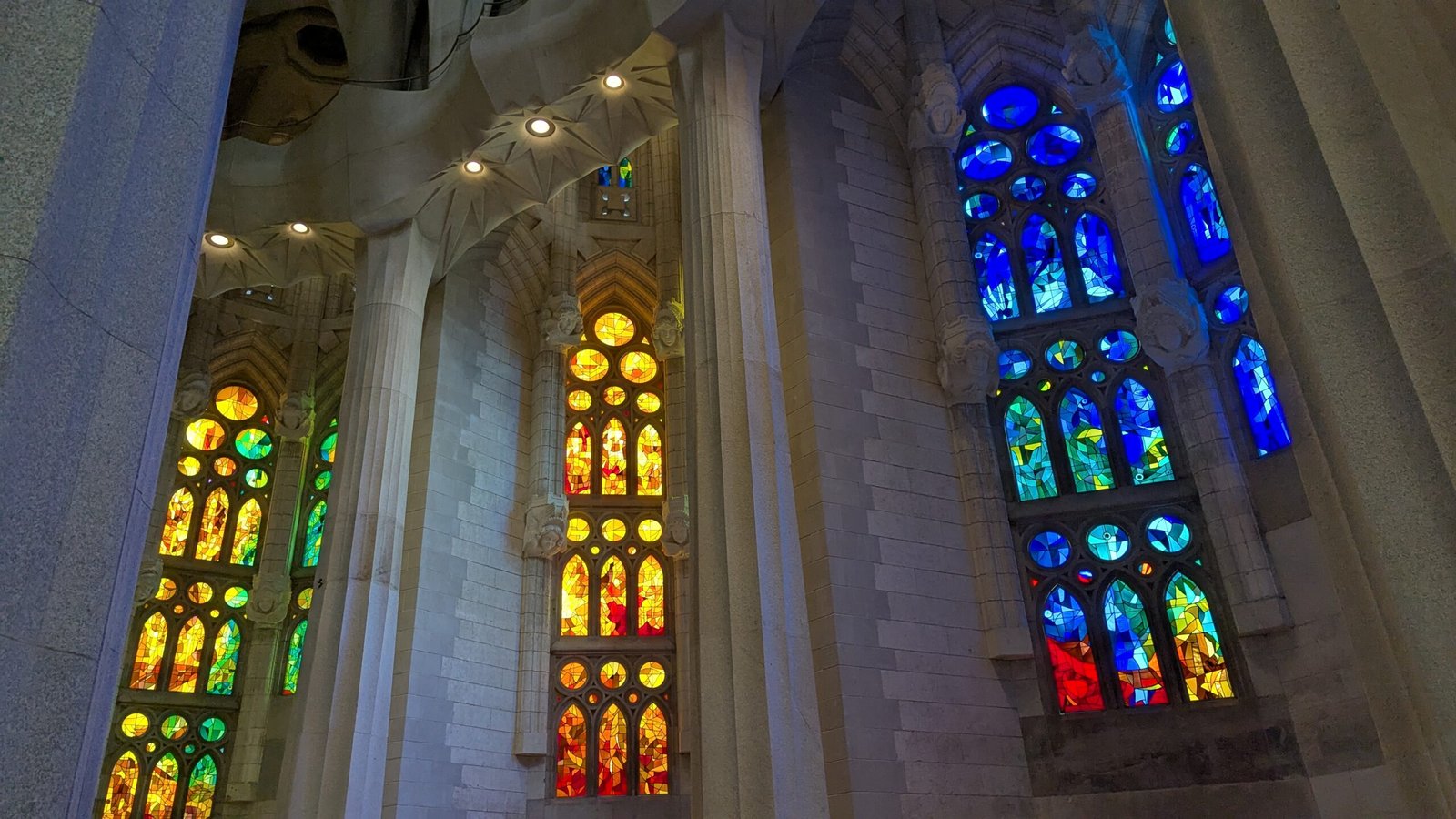
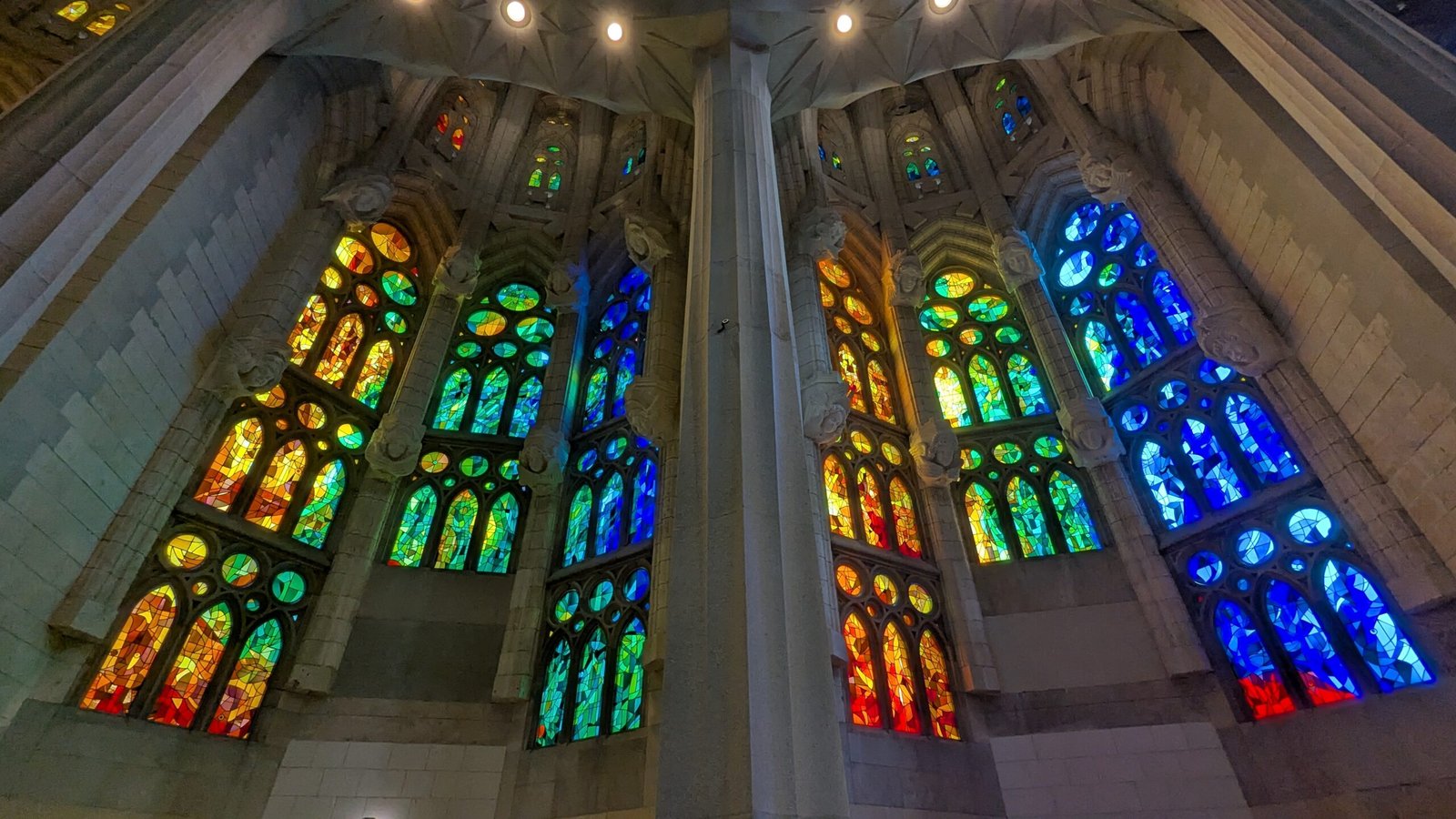
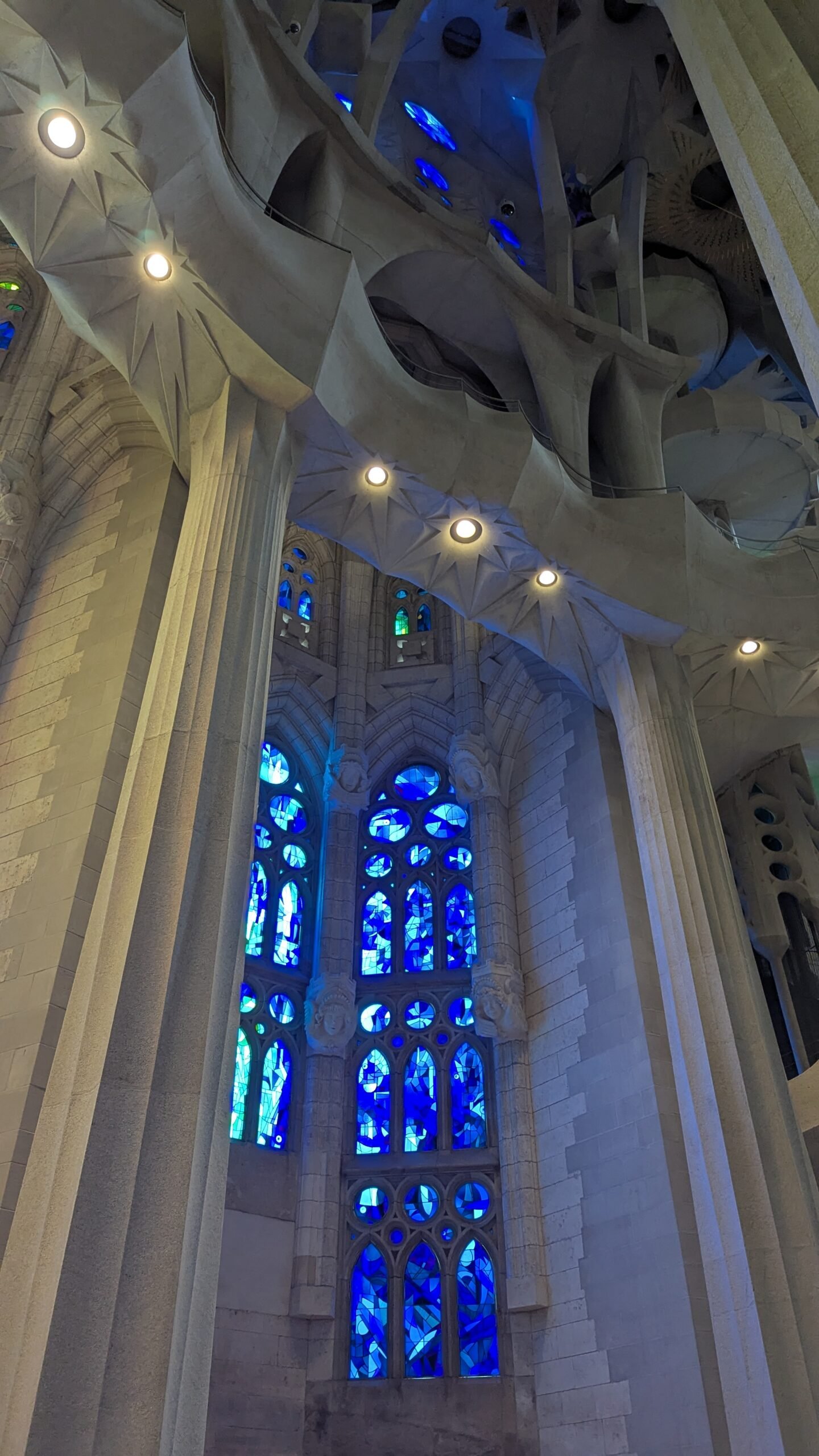
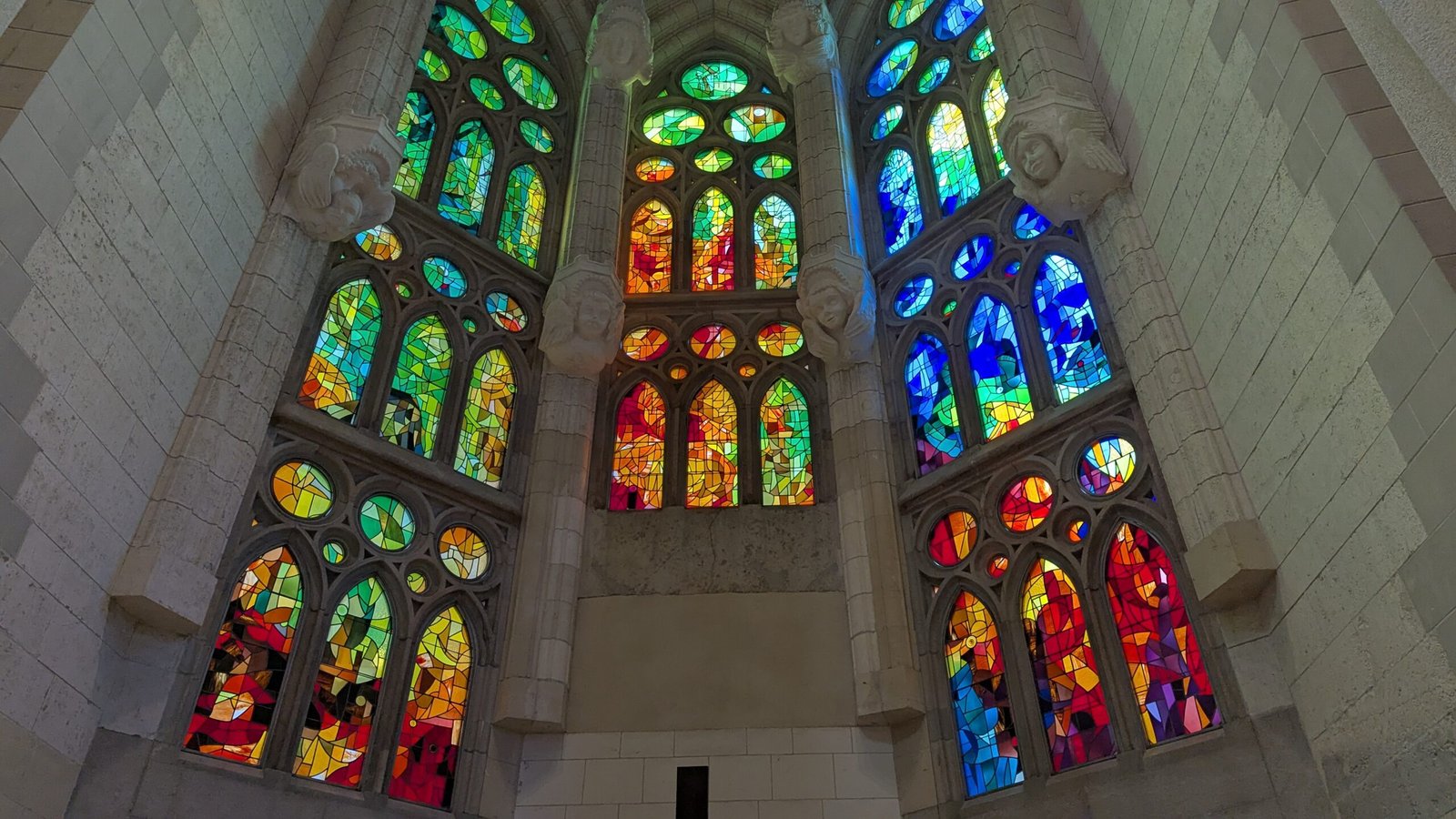
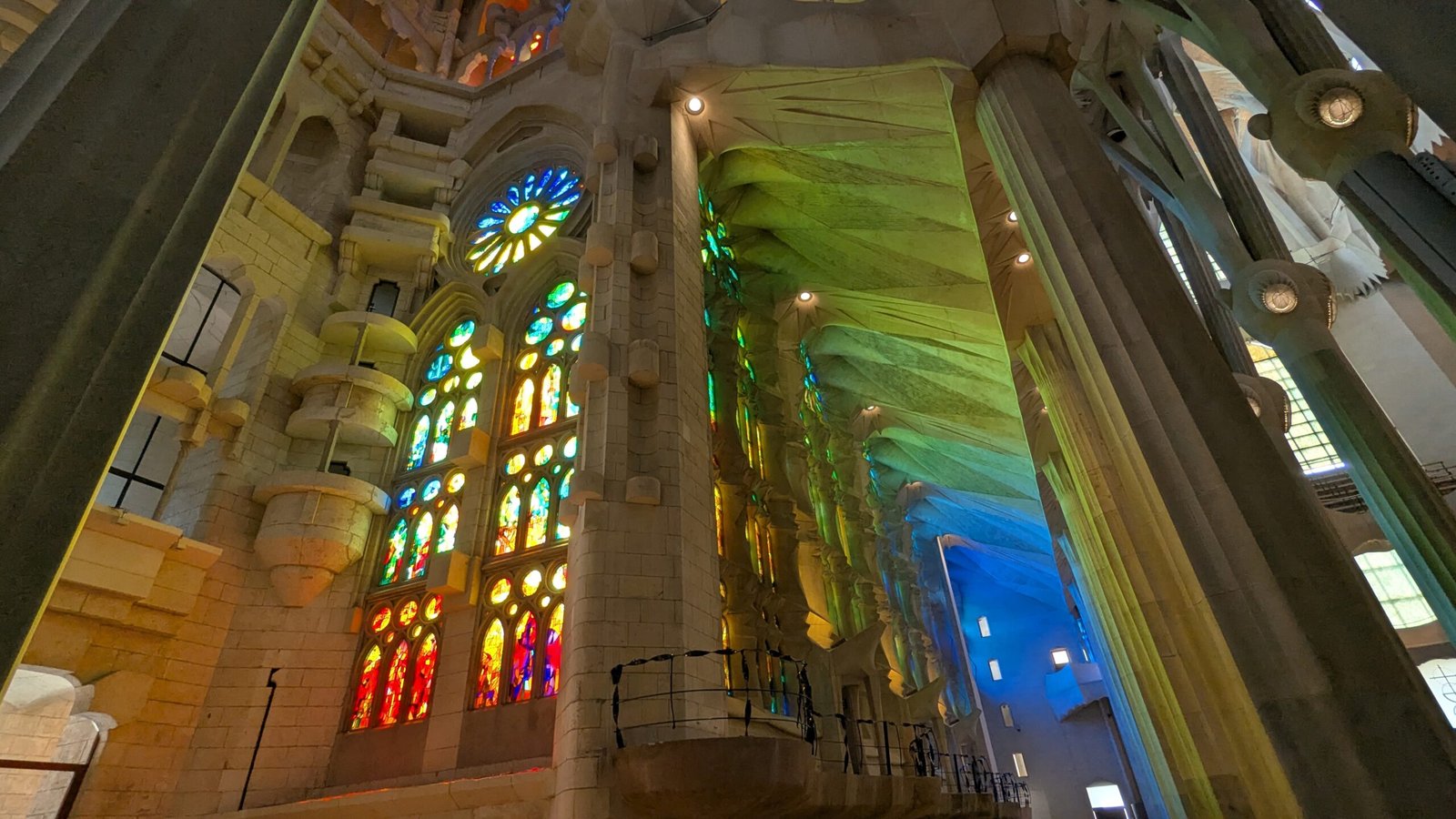
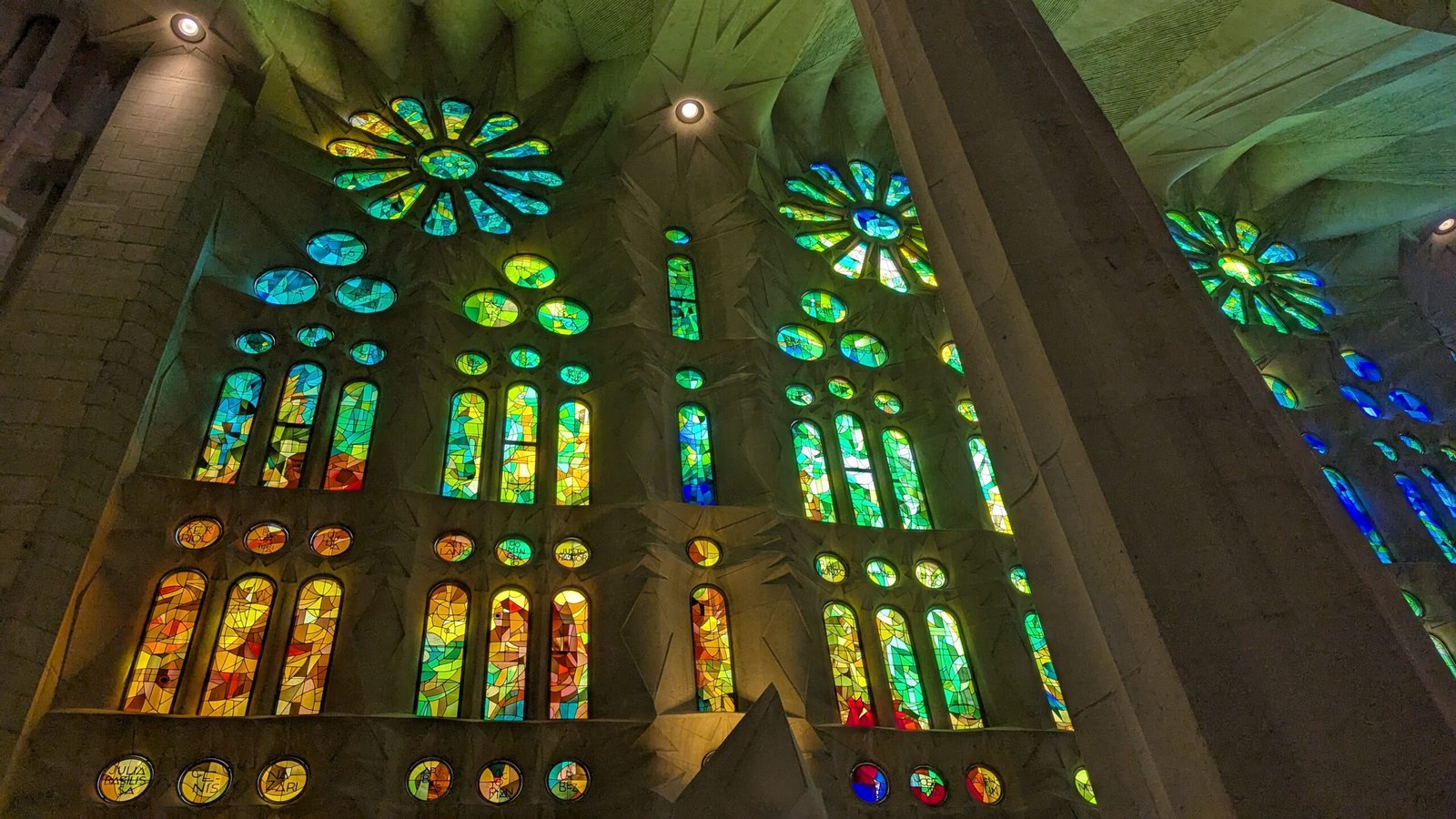
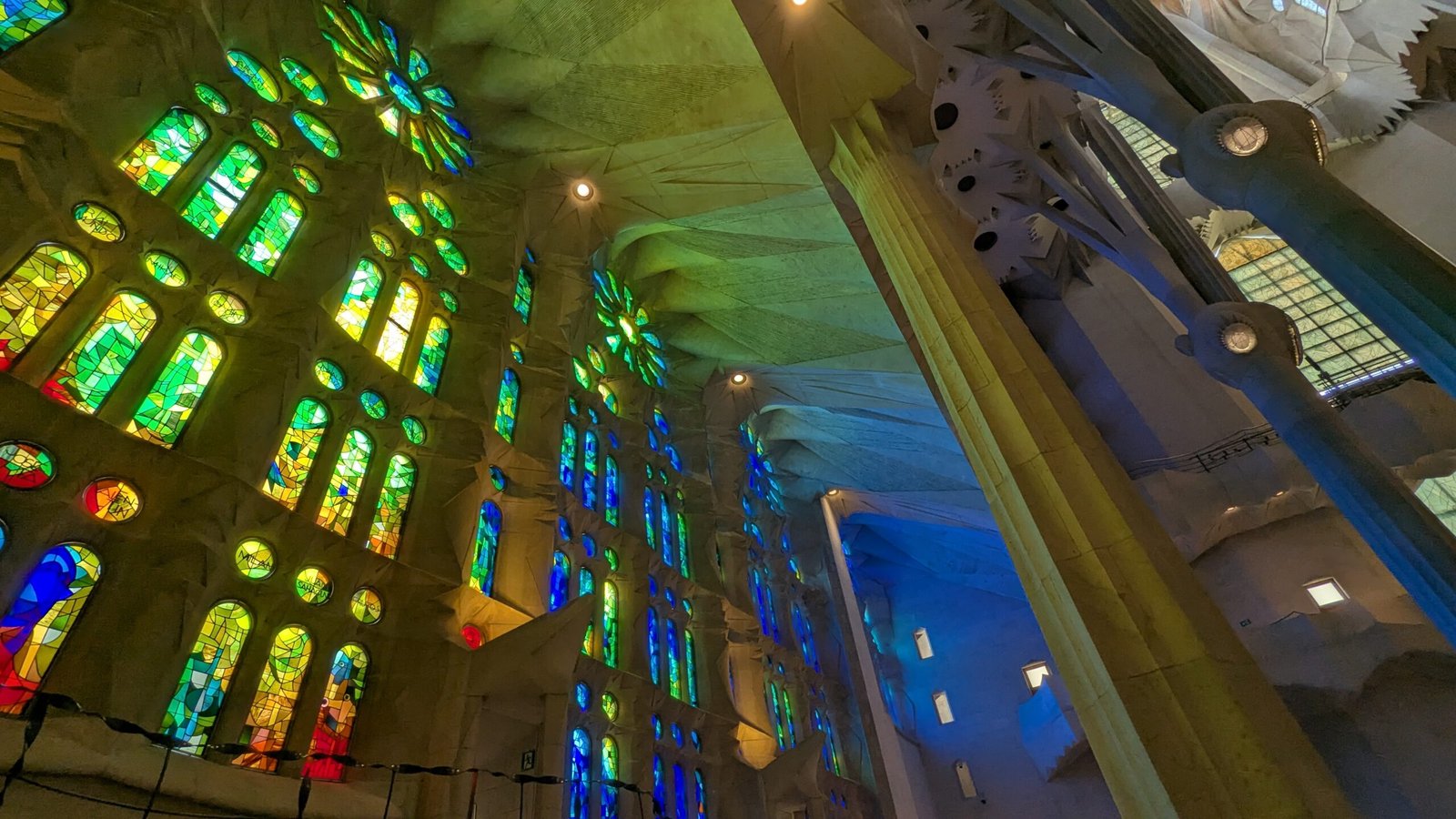
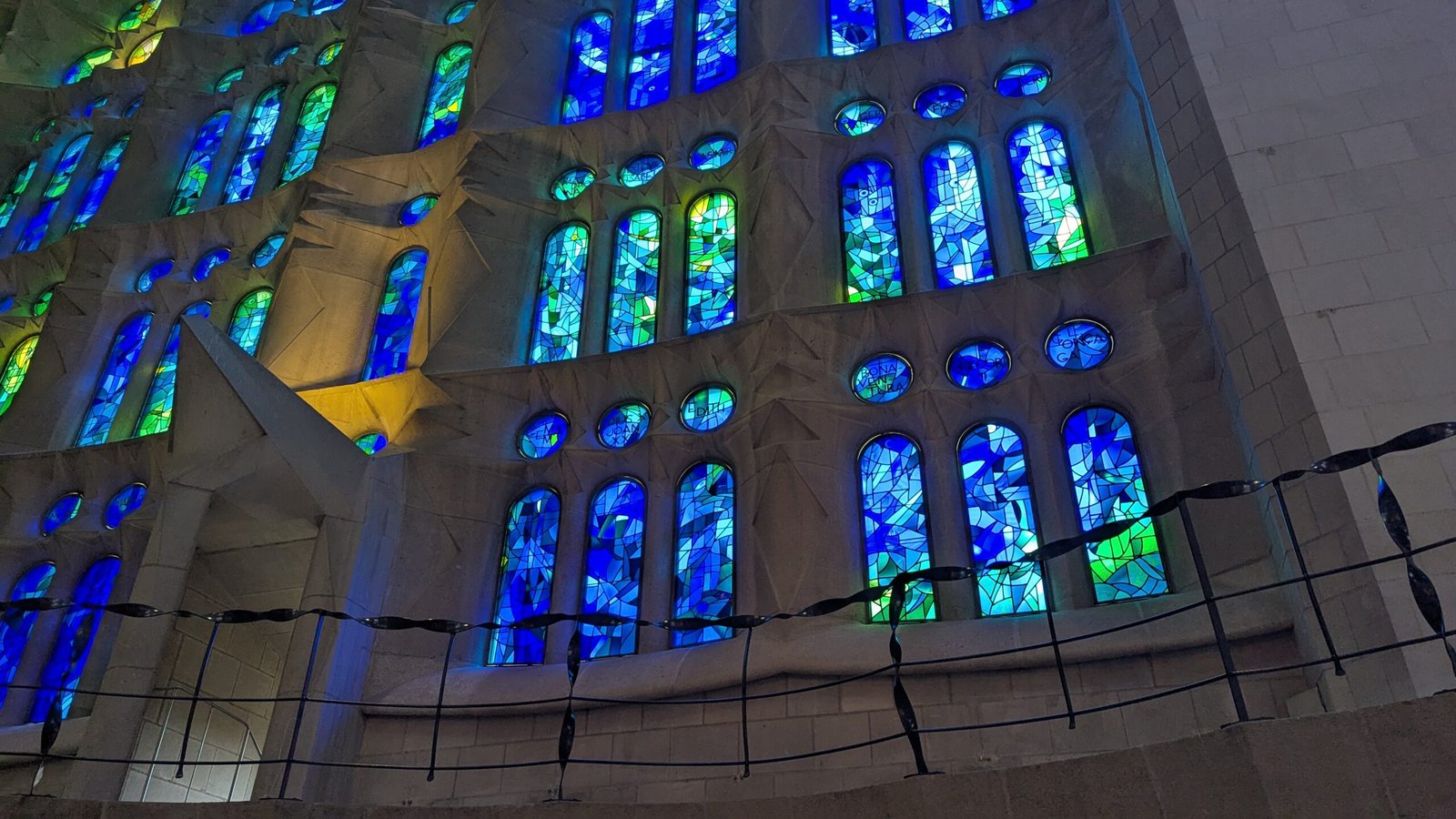
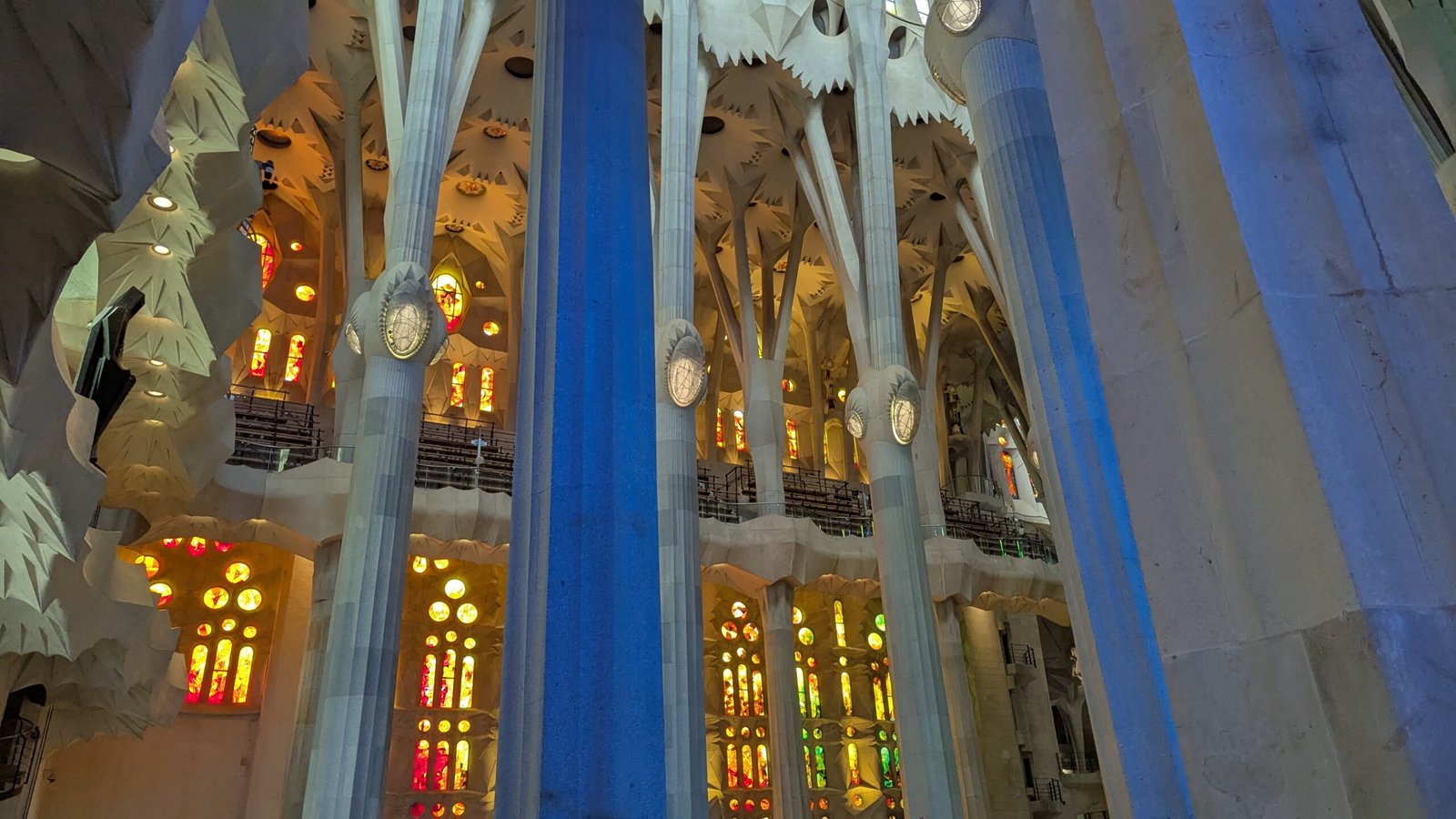
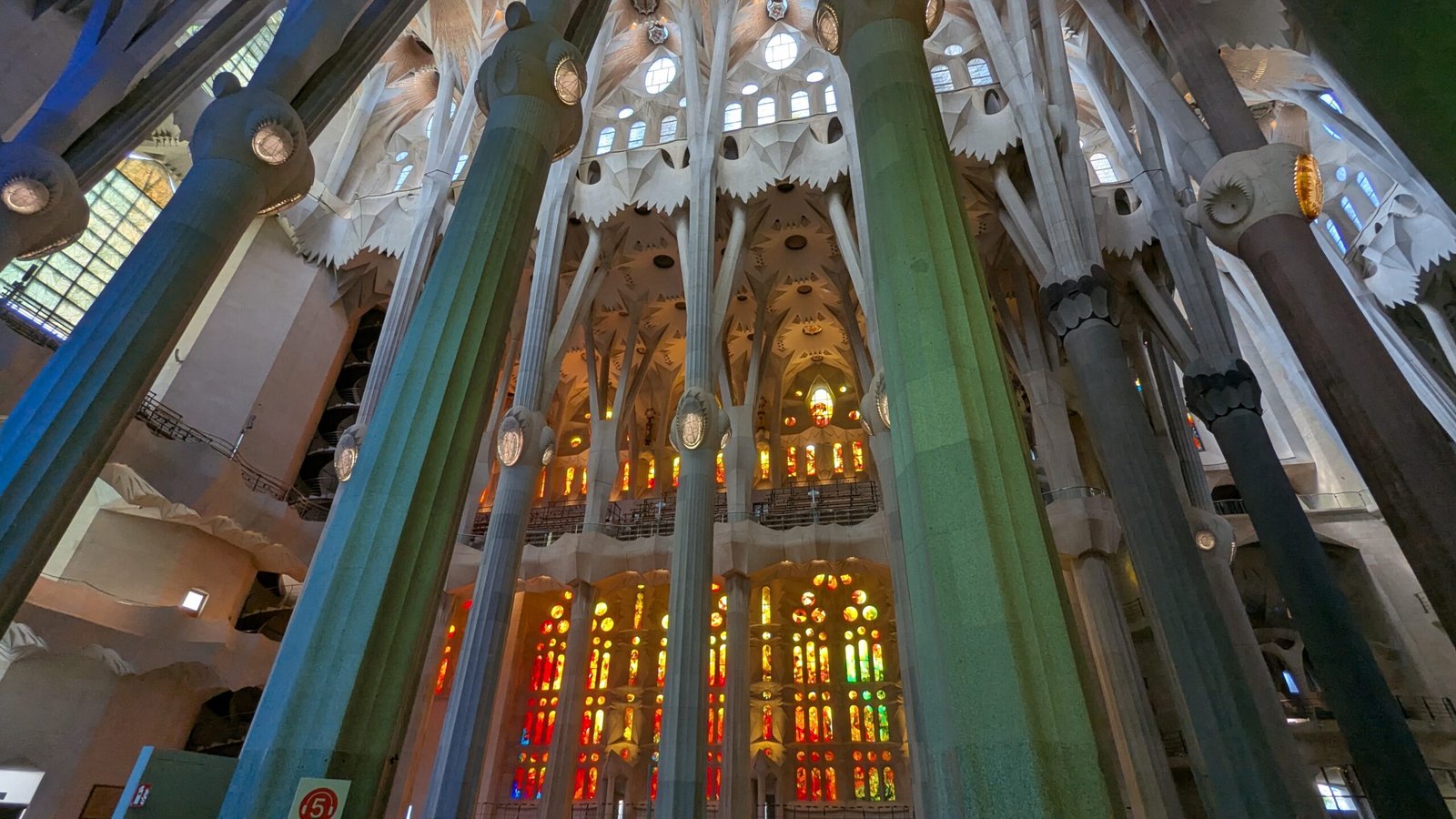
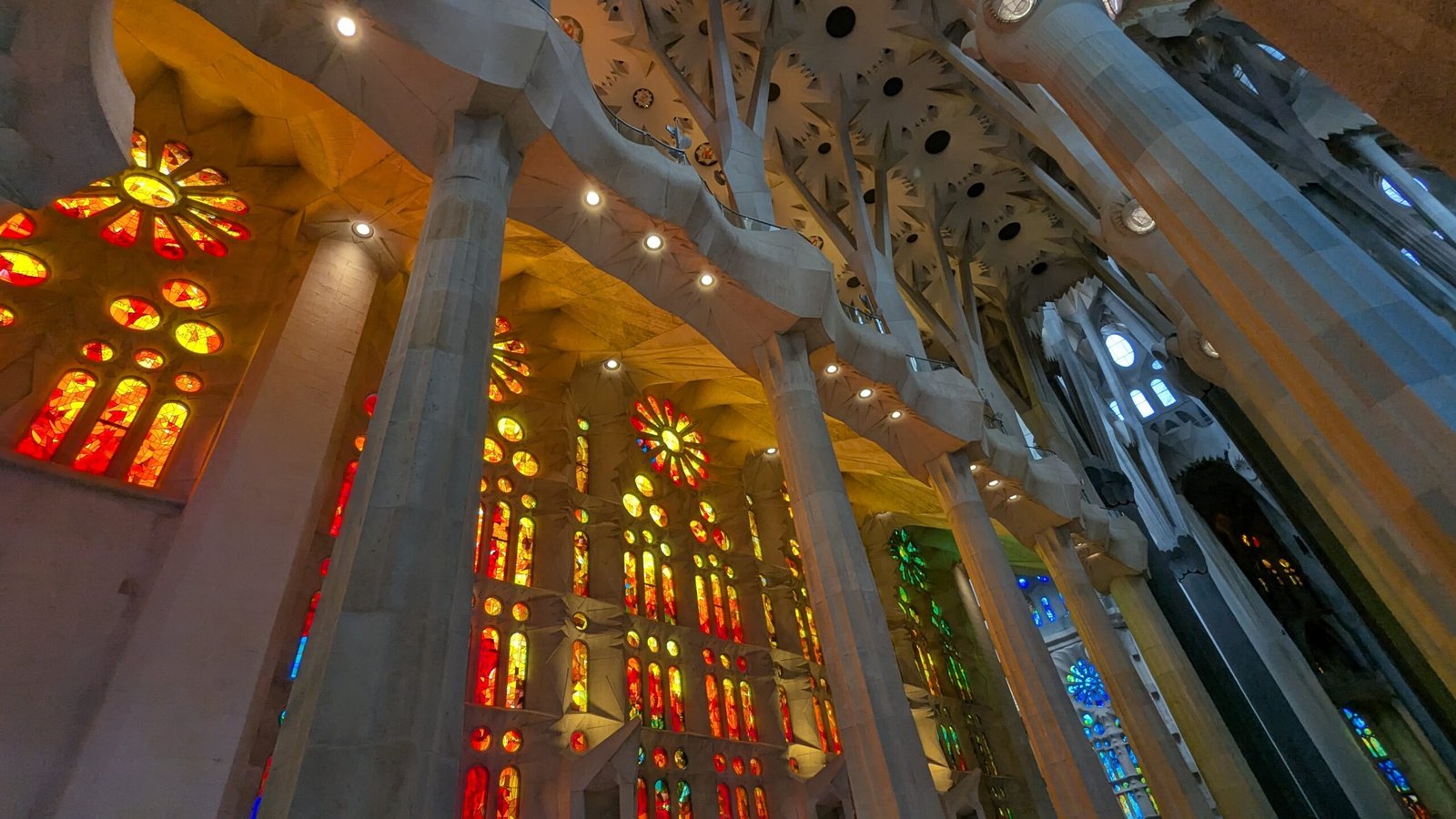
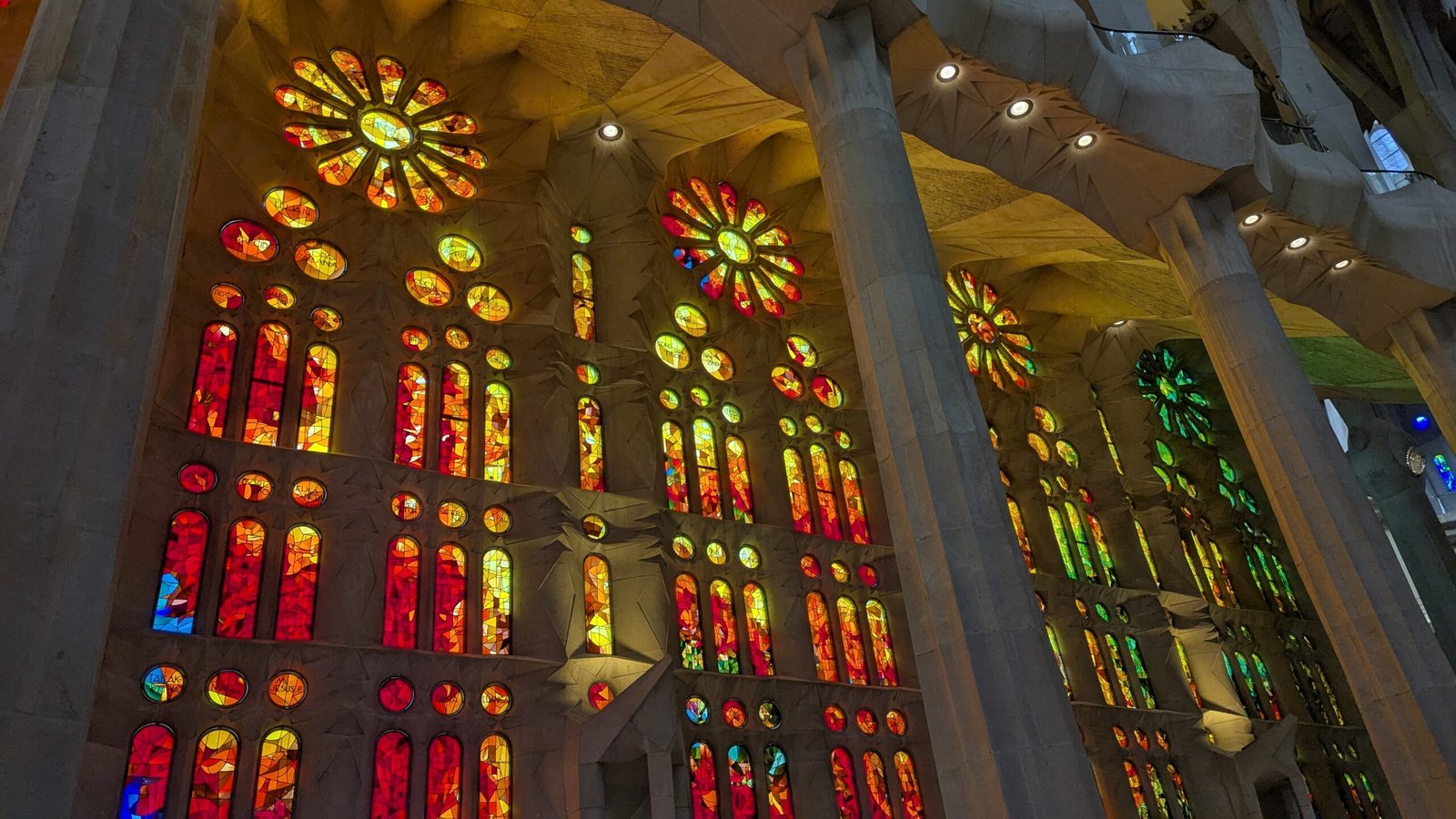
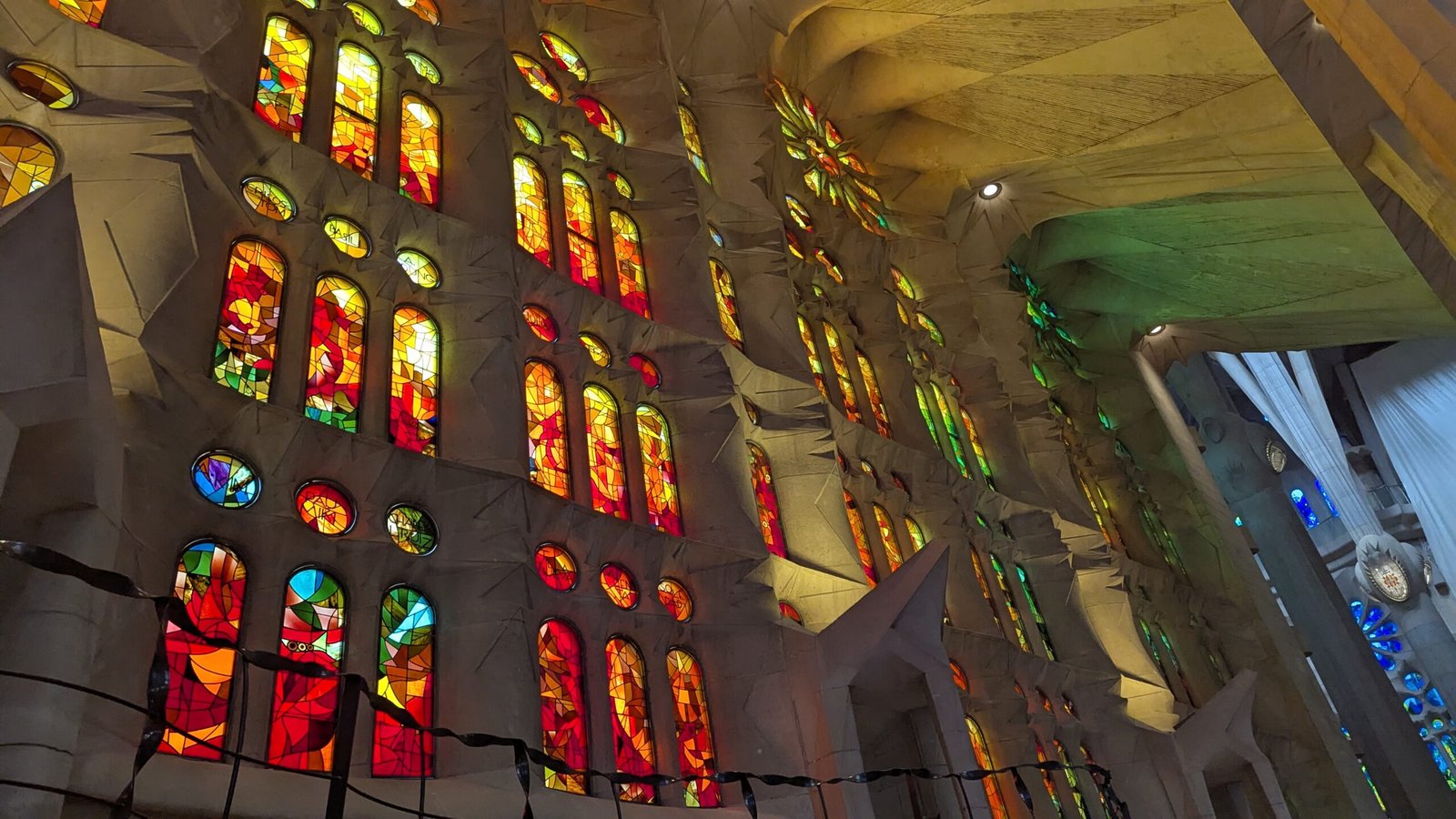
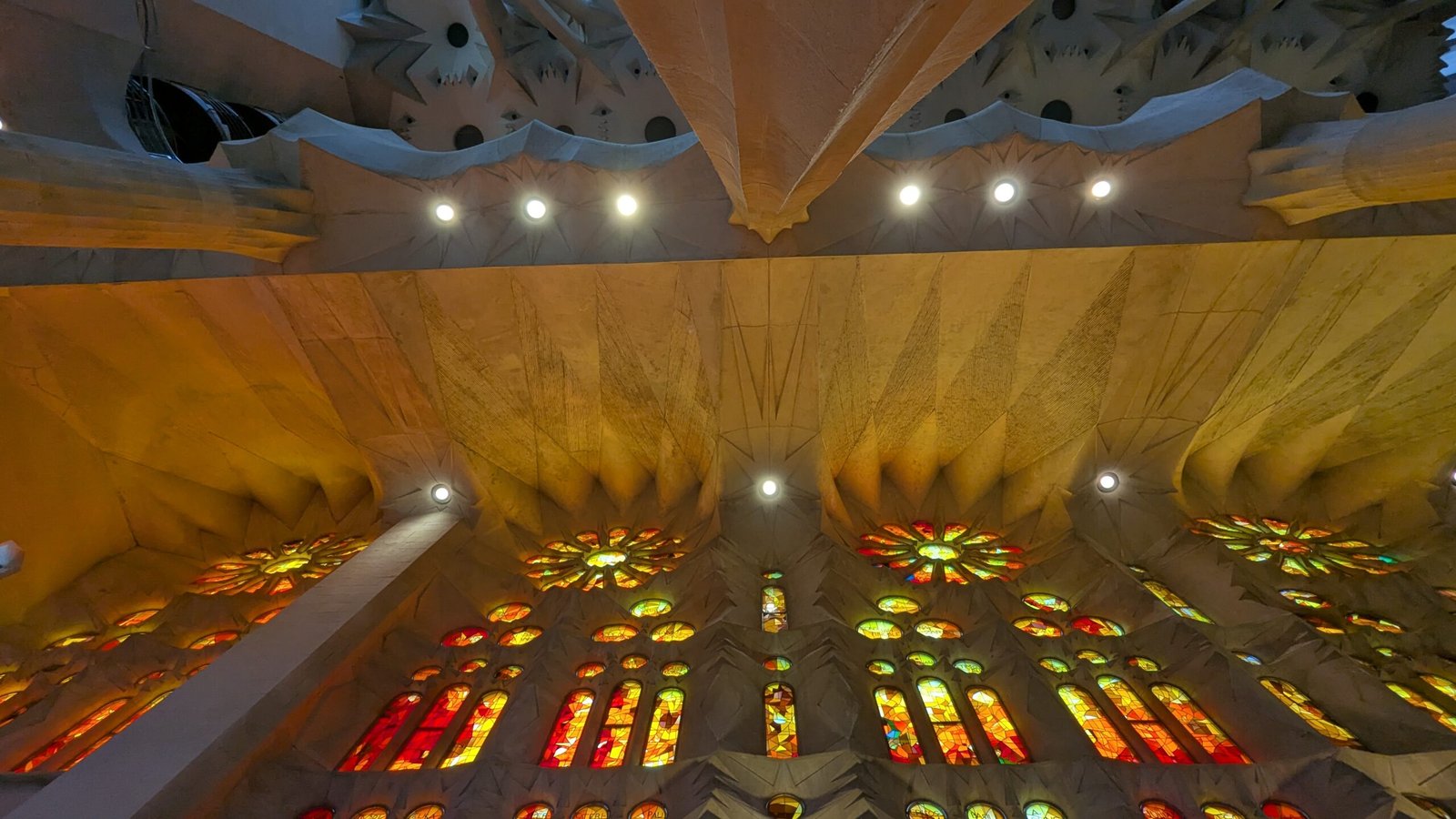
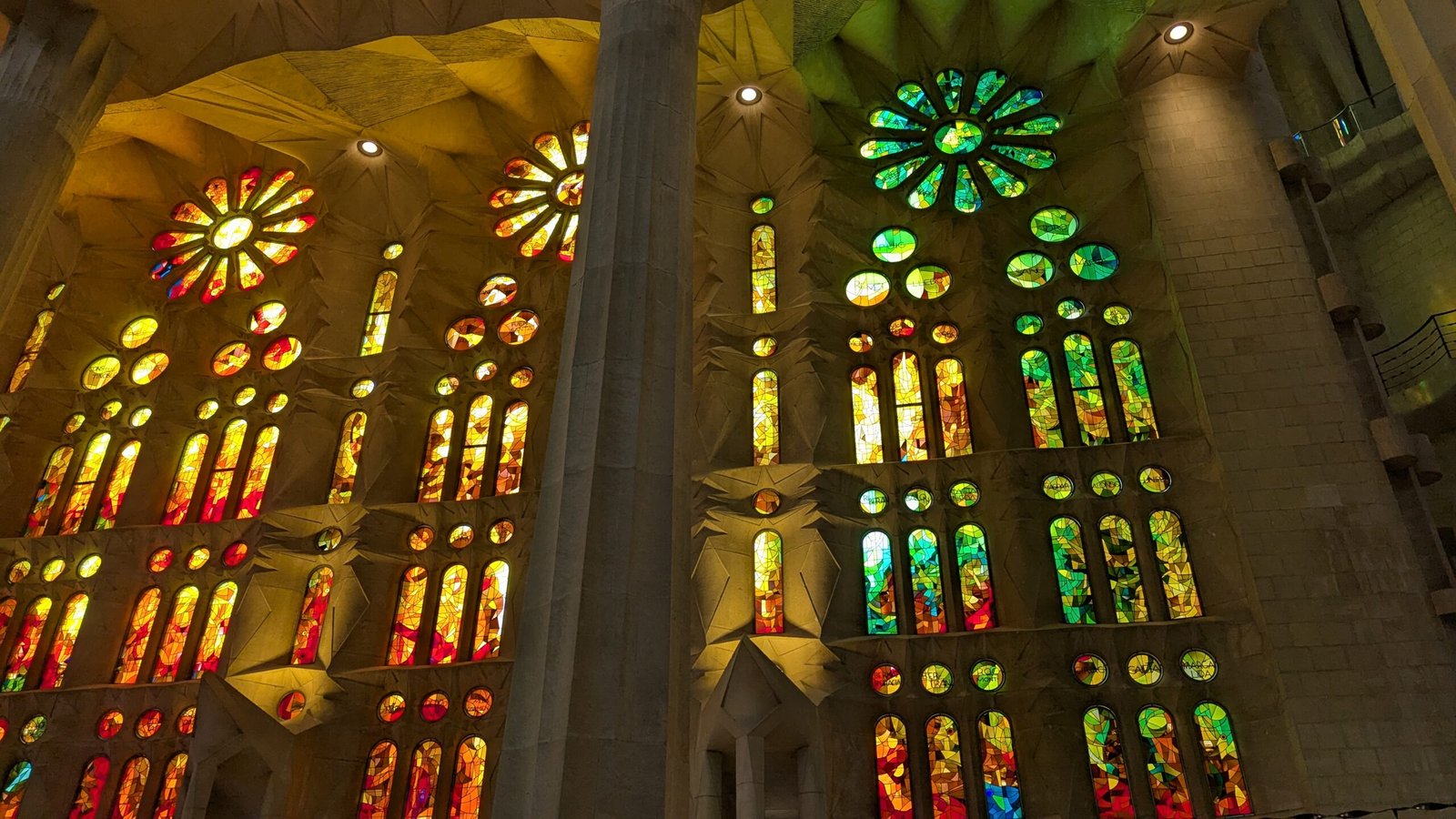
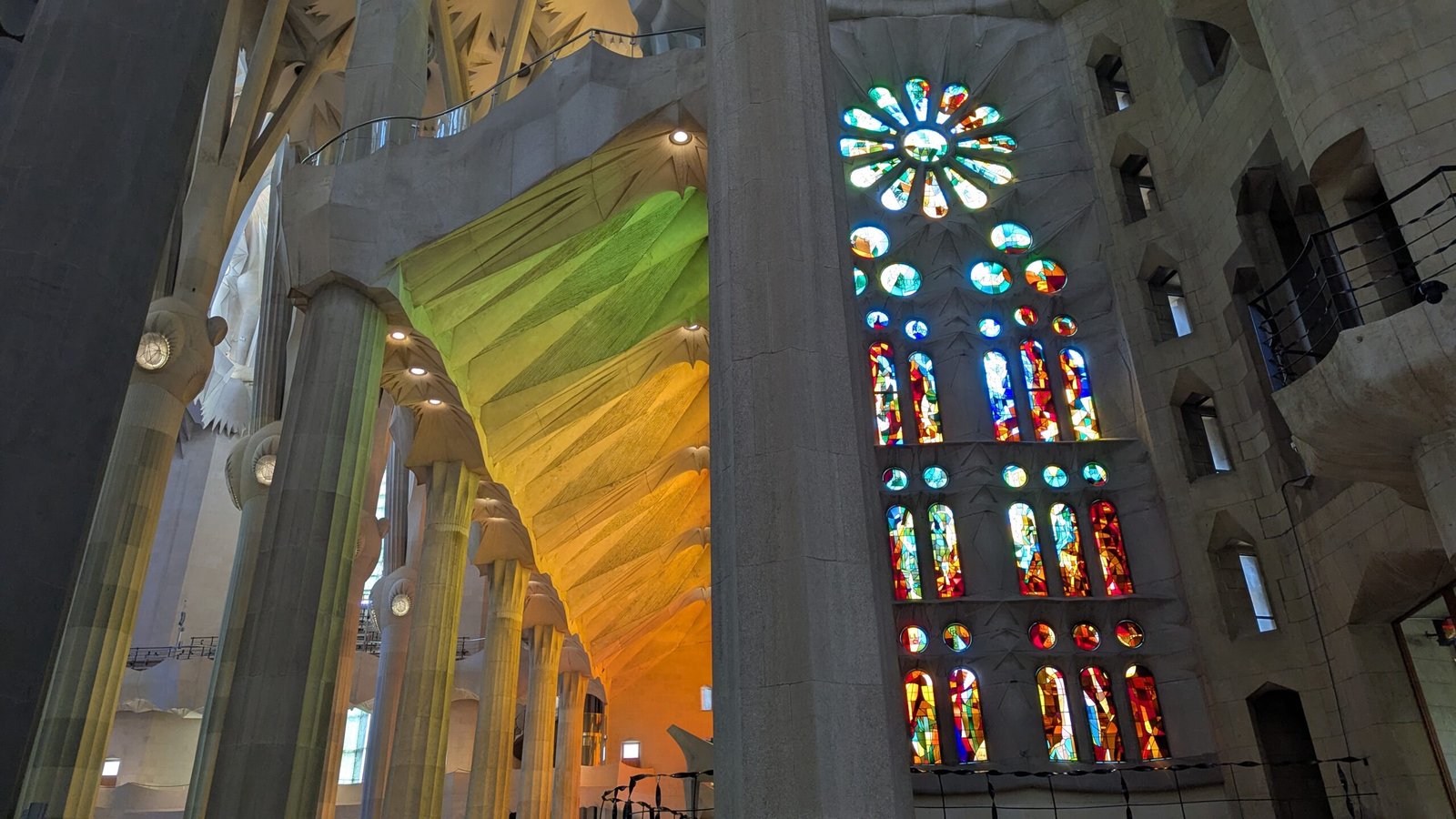
Contemporary stained glass adds saturated color, bathing the neutral stone with an abundance of saturation associated with Gaudí’s singular style.





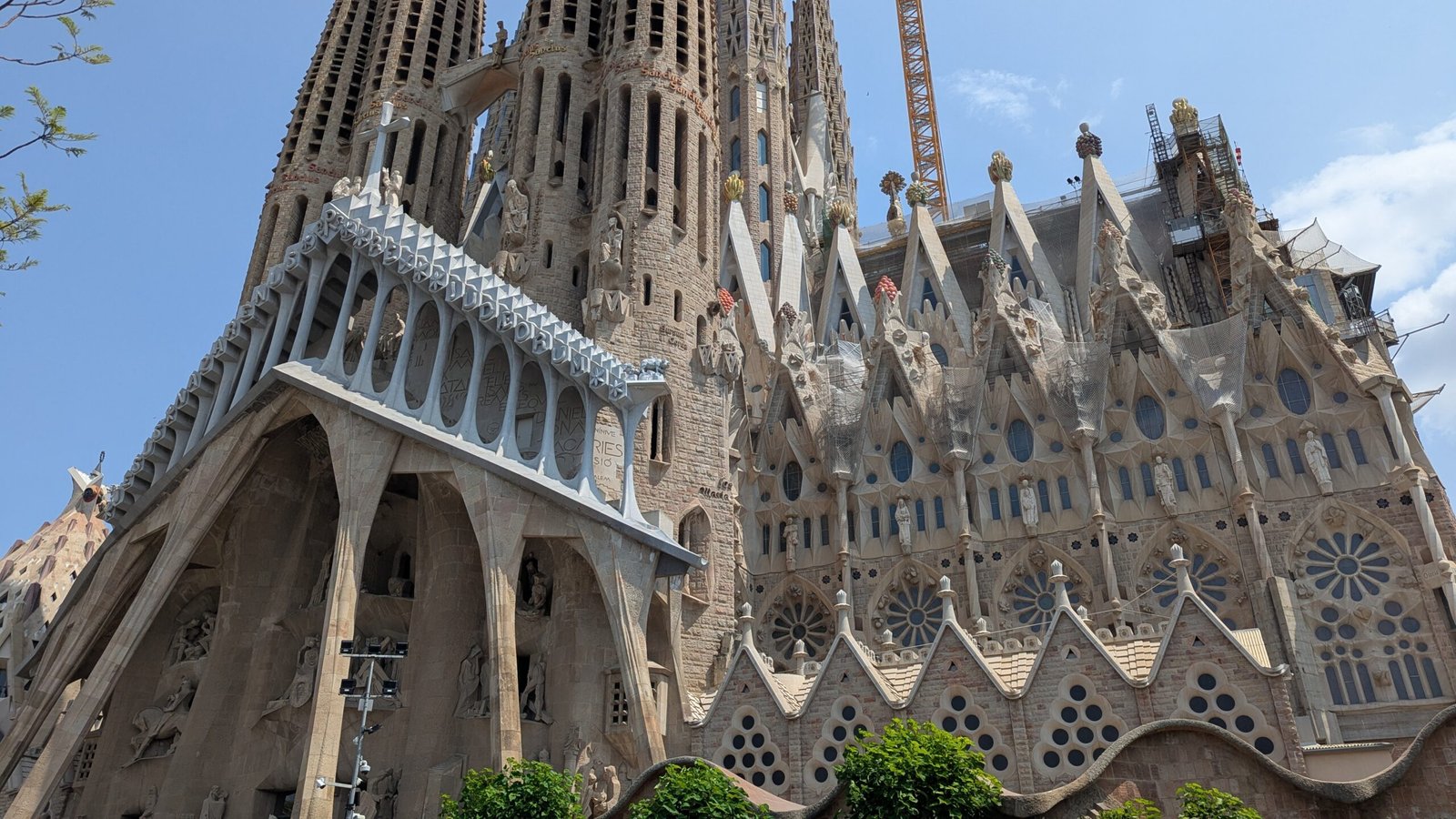
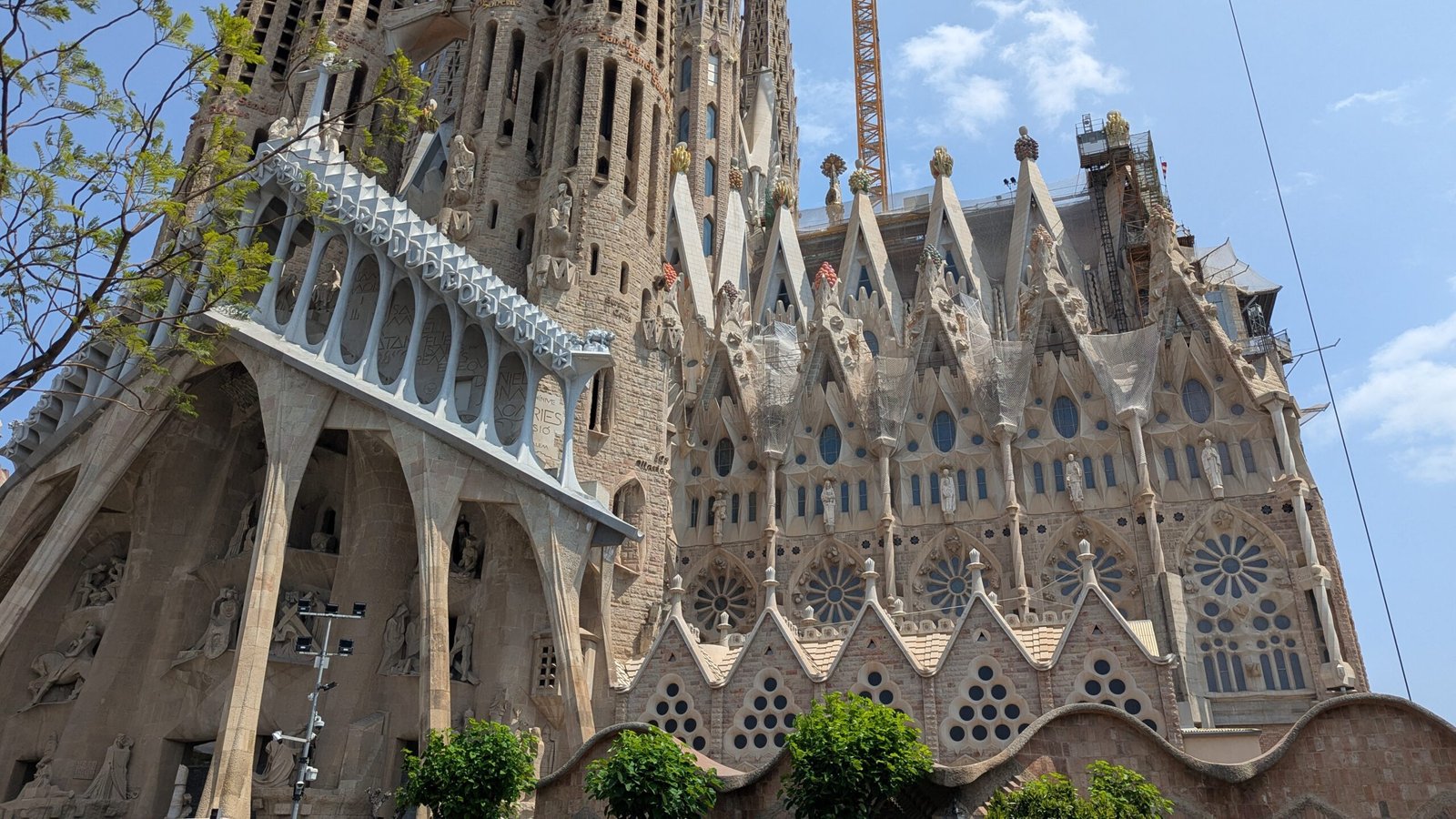
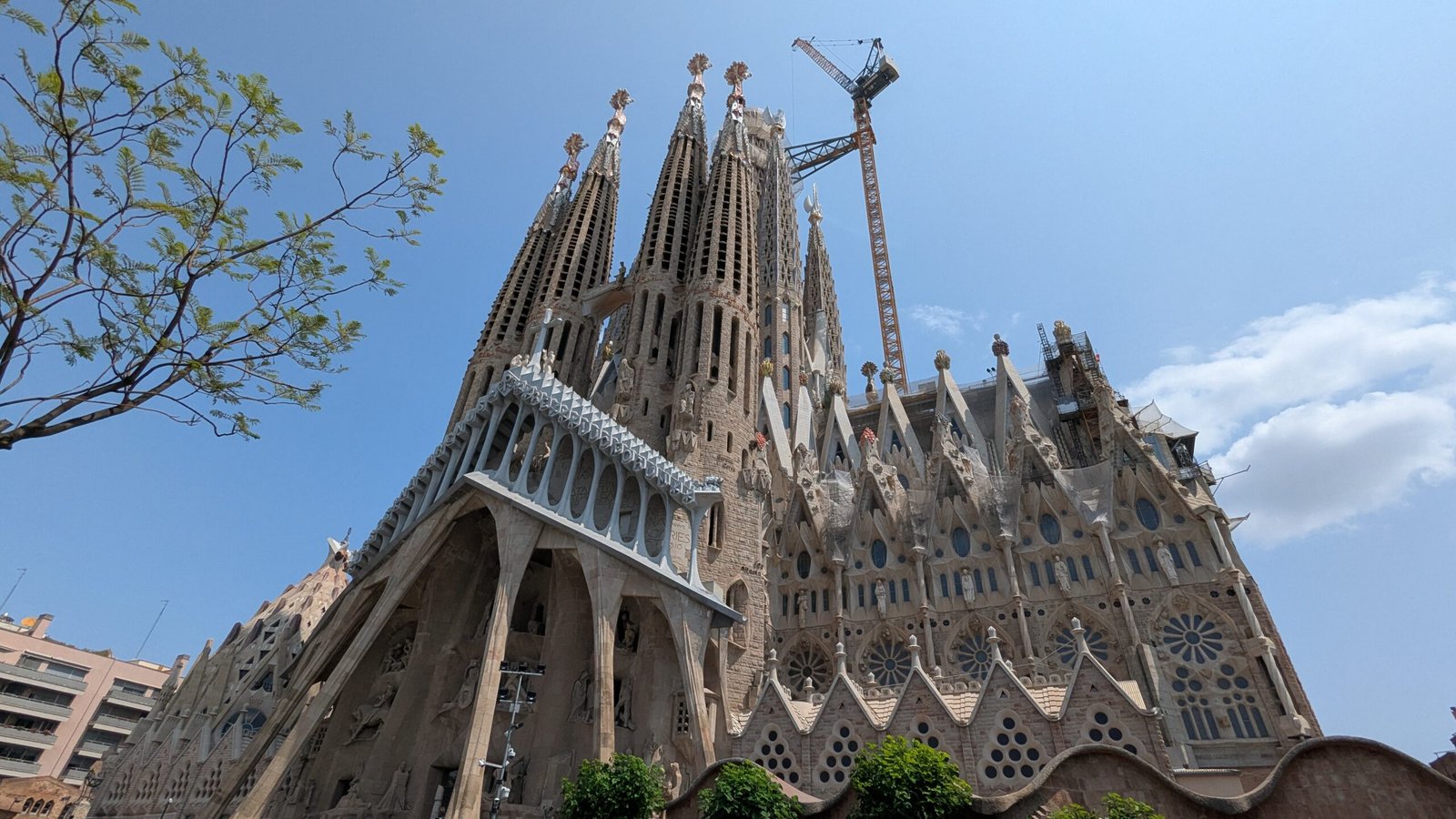
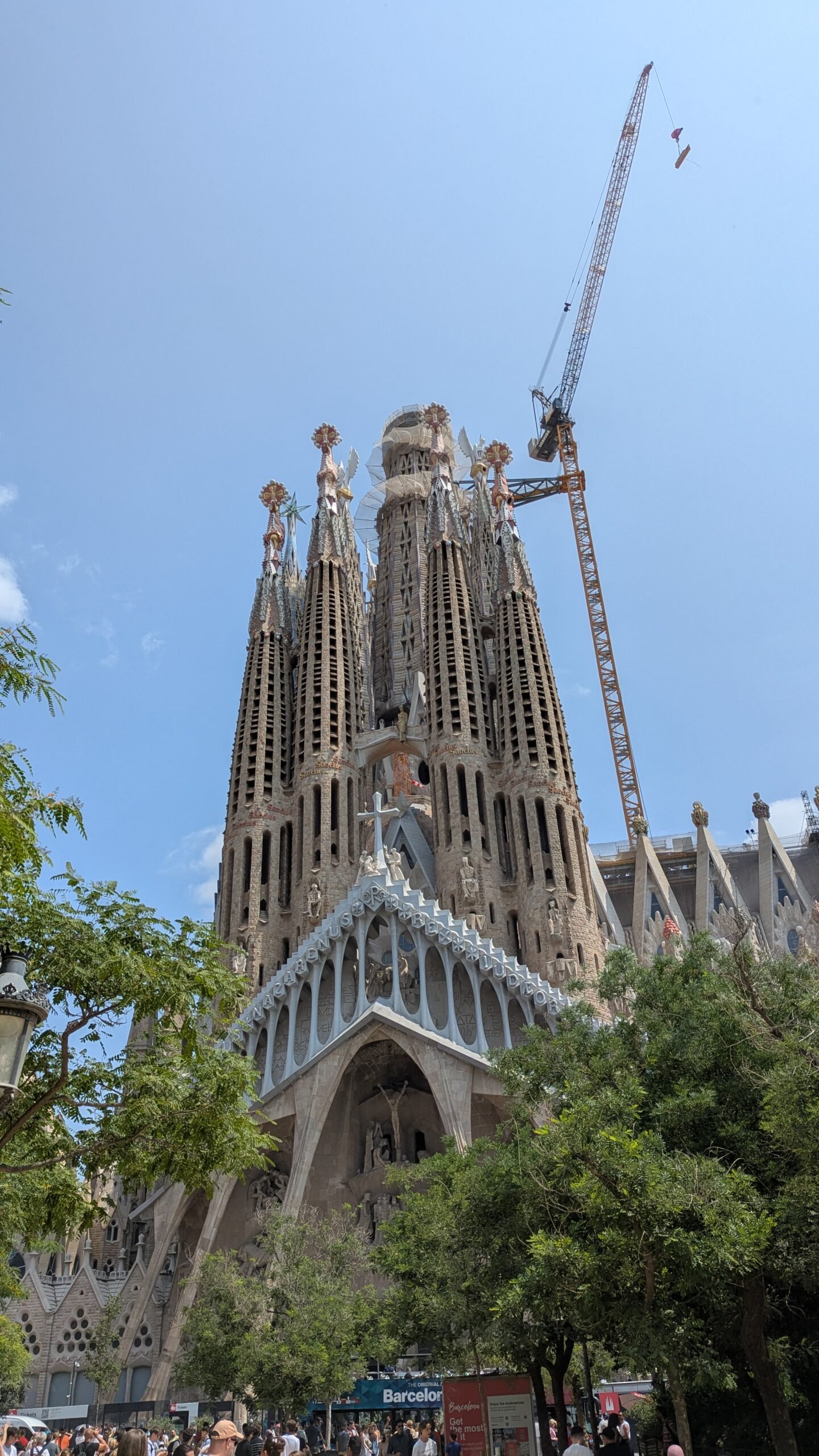
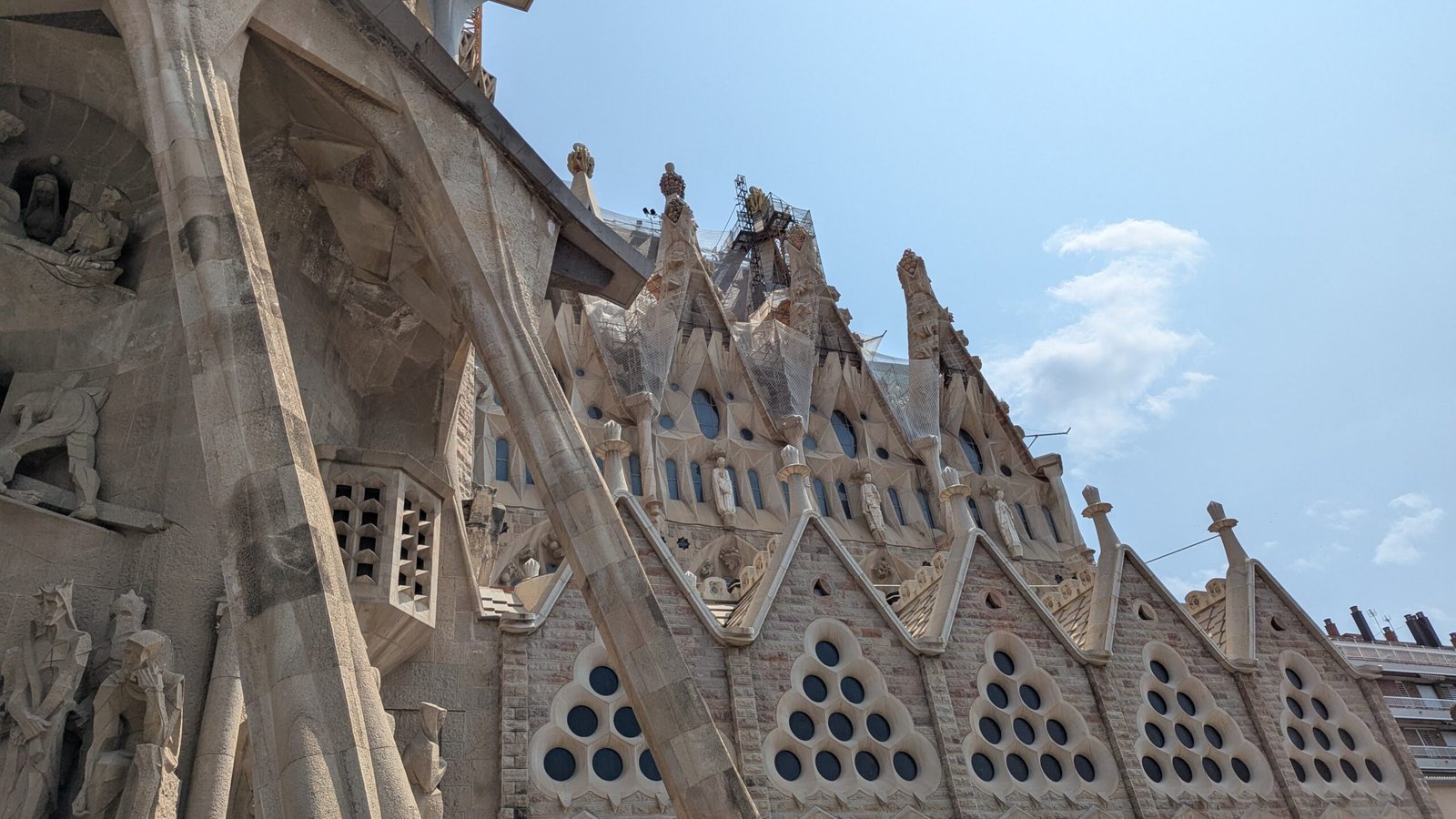
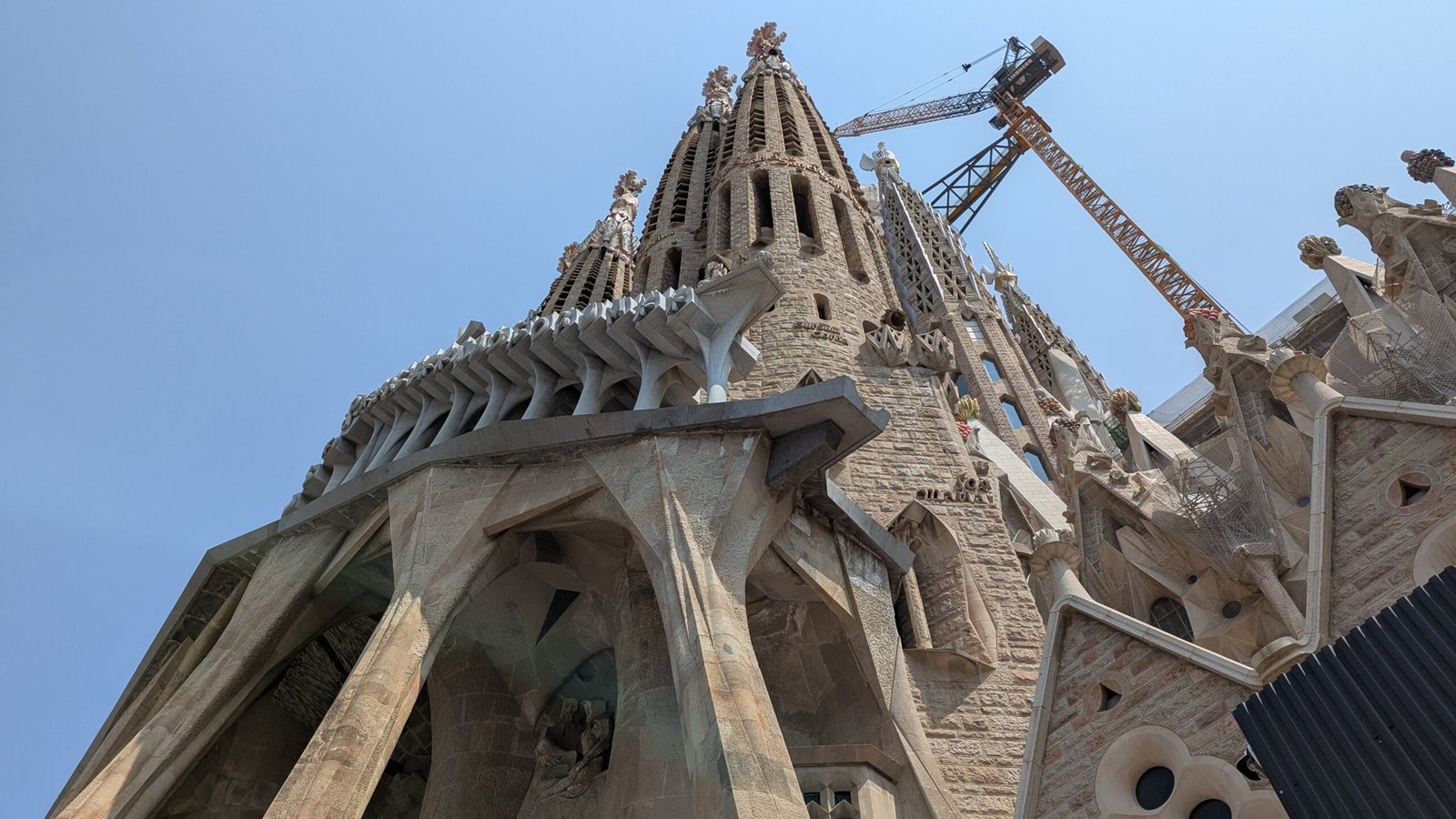
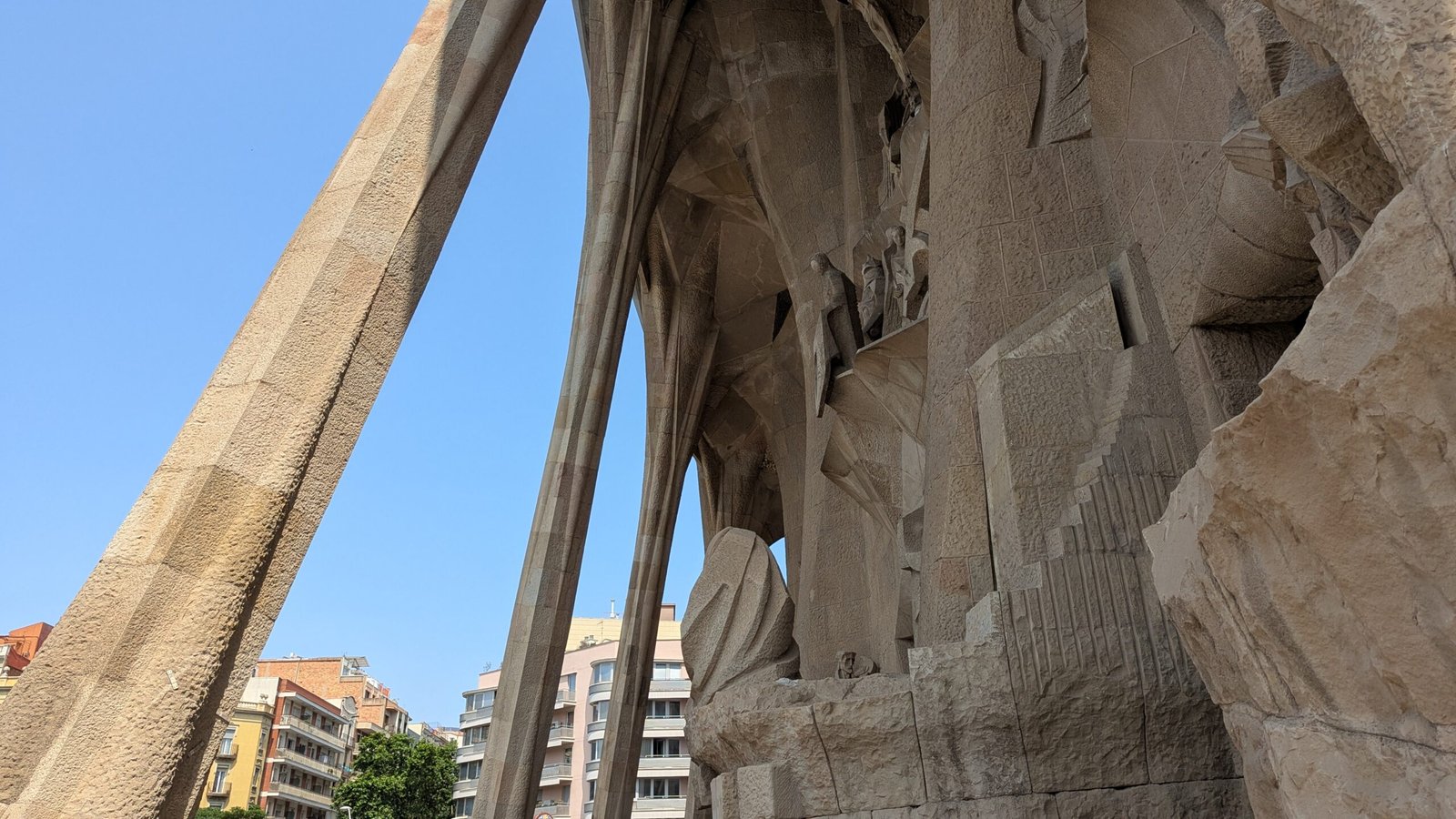
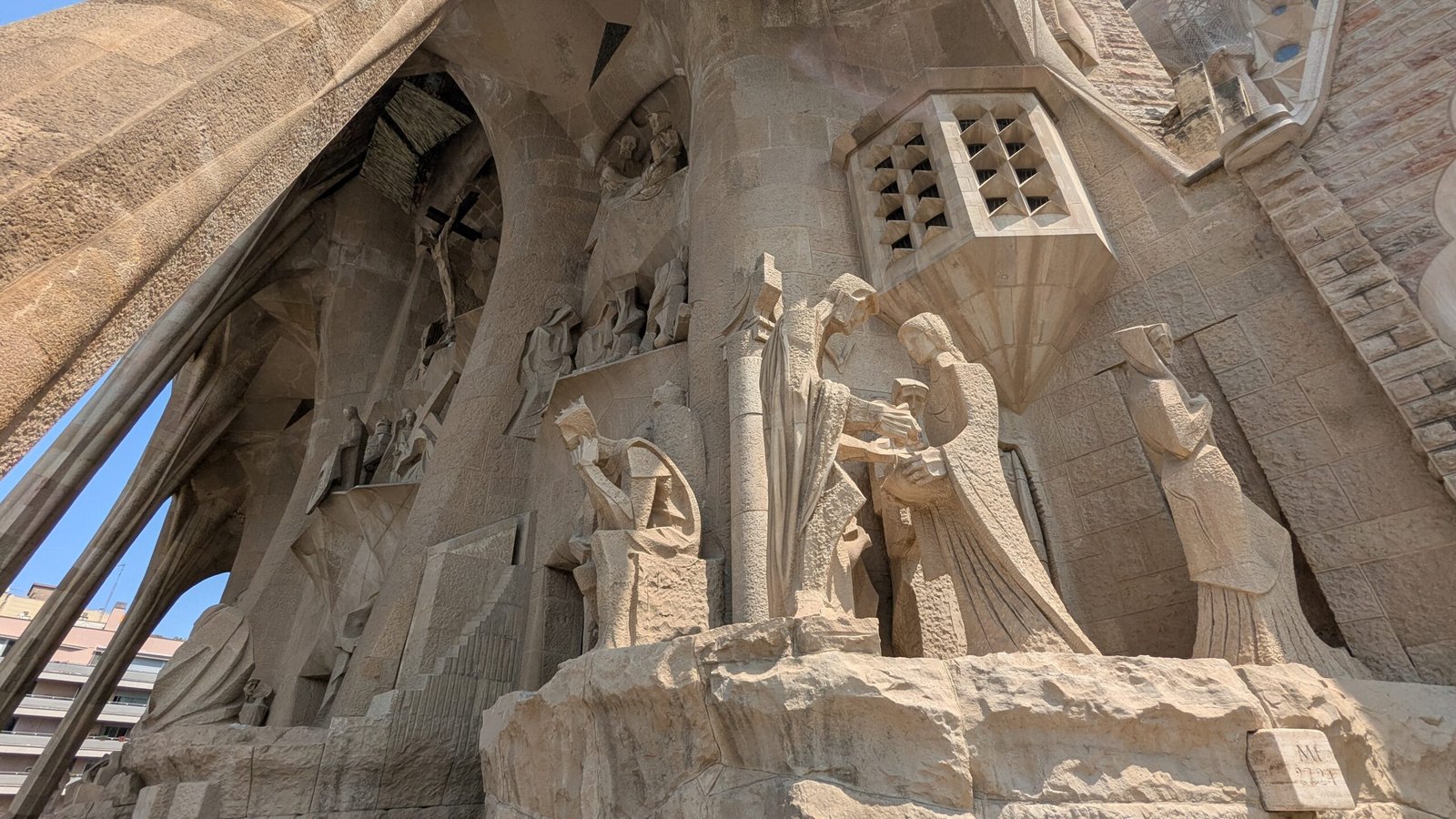
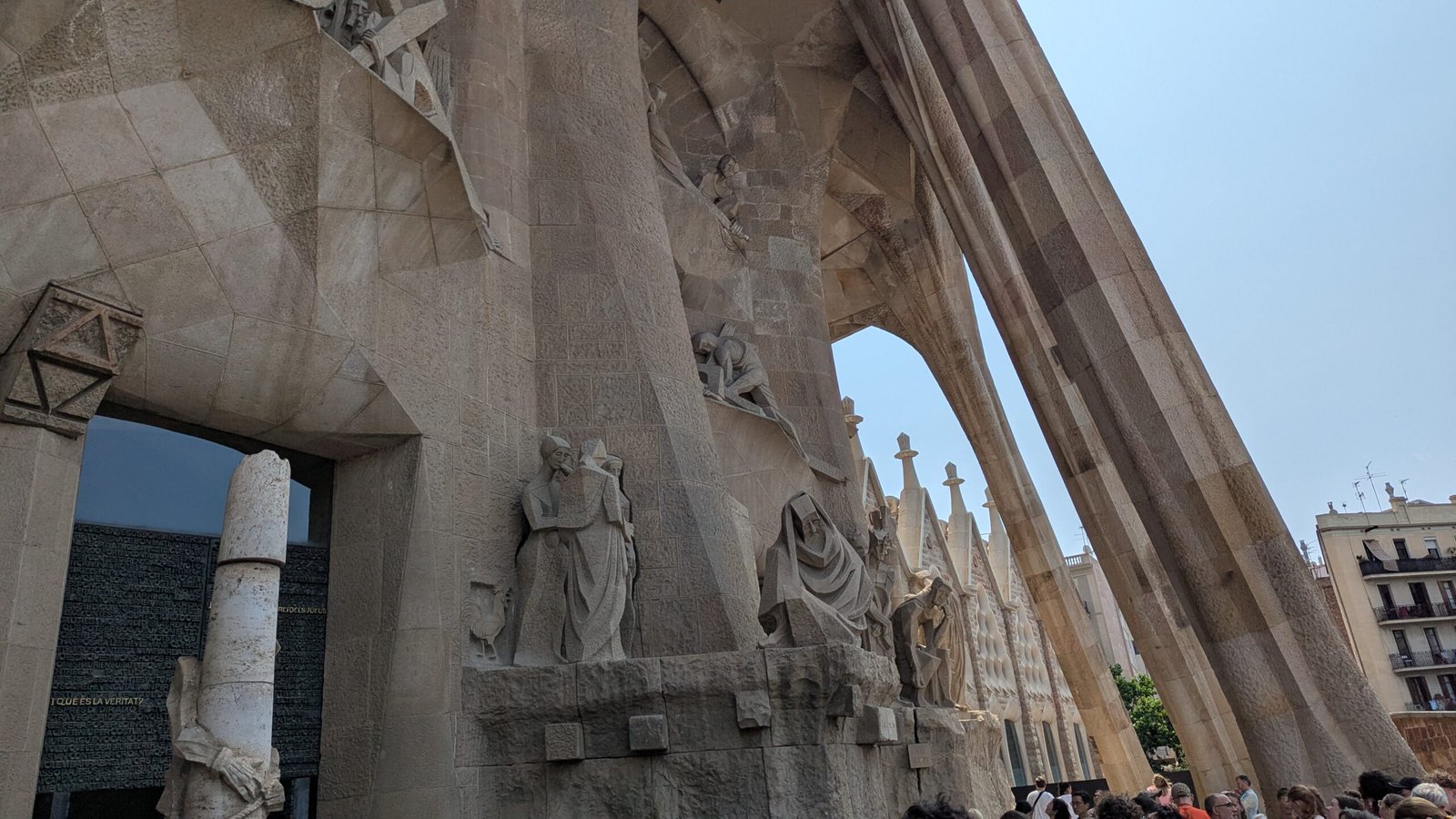
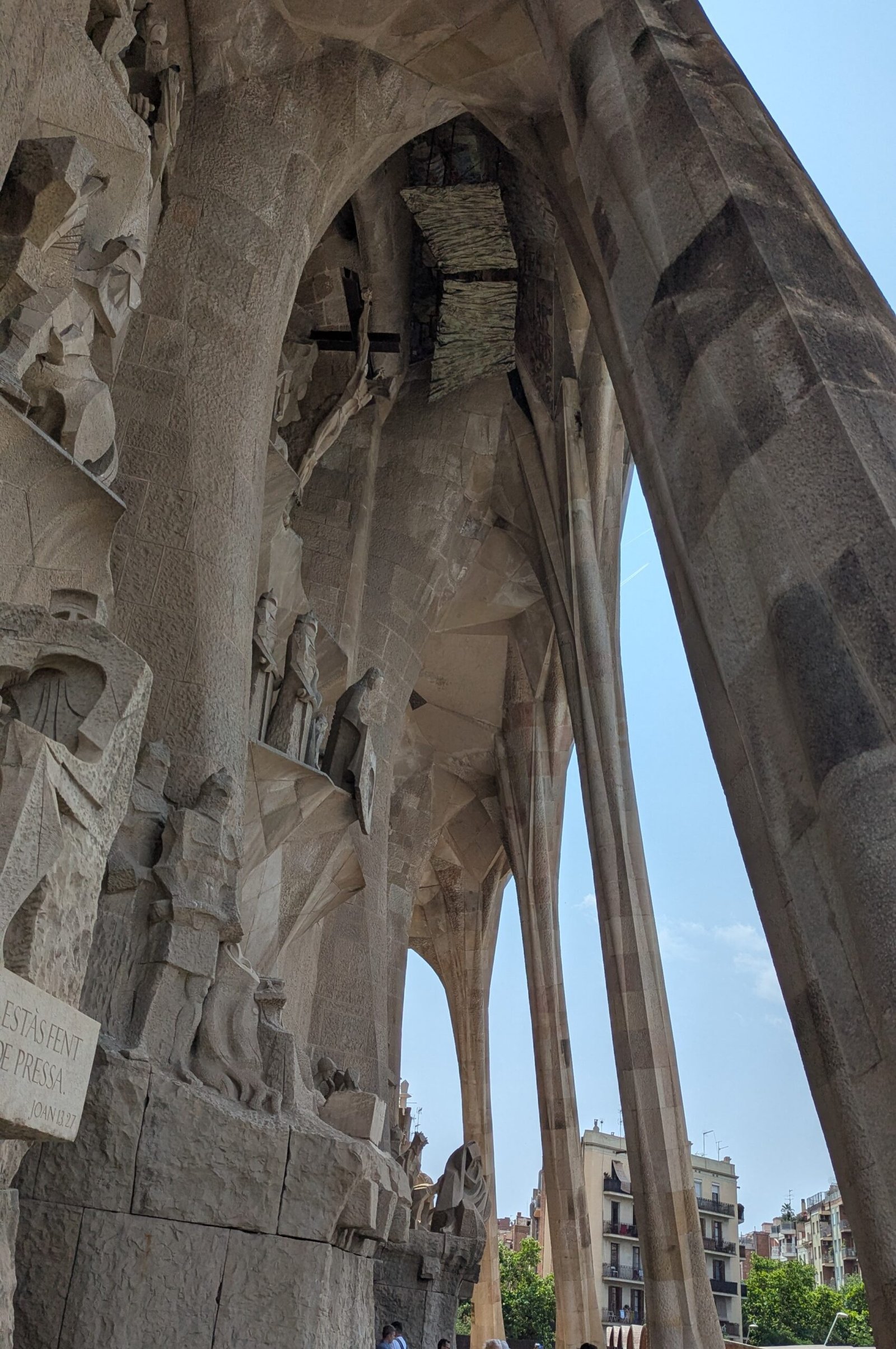
The Passion Façade
The west-facing passion façade features harsh forms and geometric sculptures. Its arrangement toward the setting sun is the subtlest of its references to death, with the bone-like columns of the portico masking the more descriptive sculptures in deep shadows.






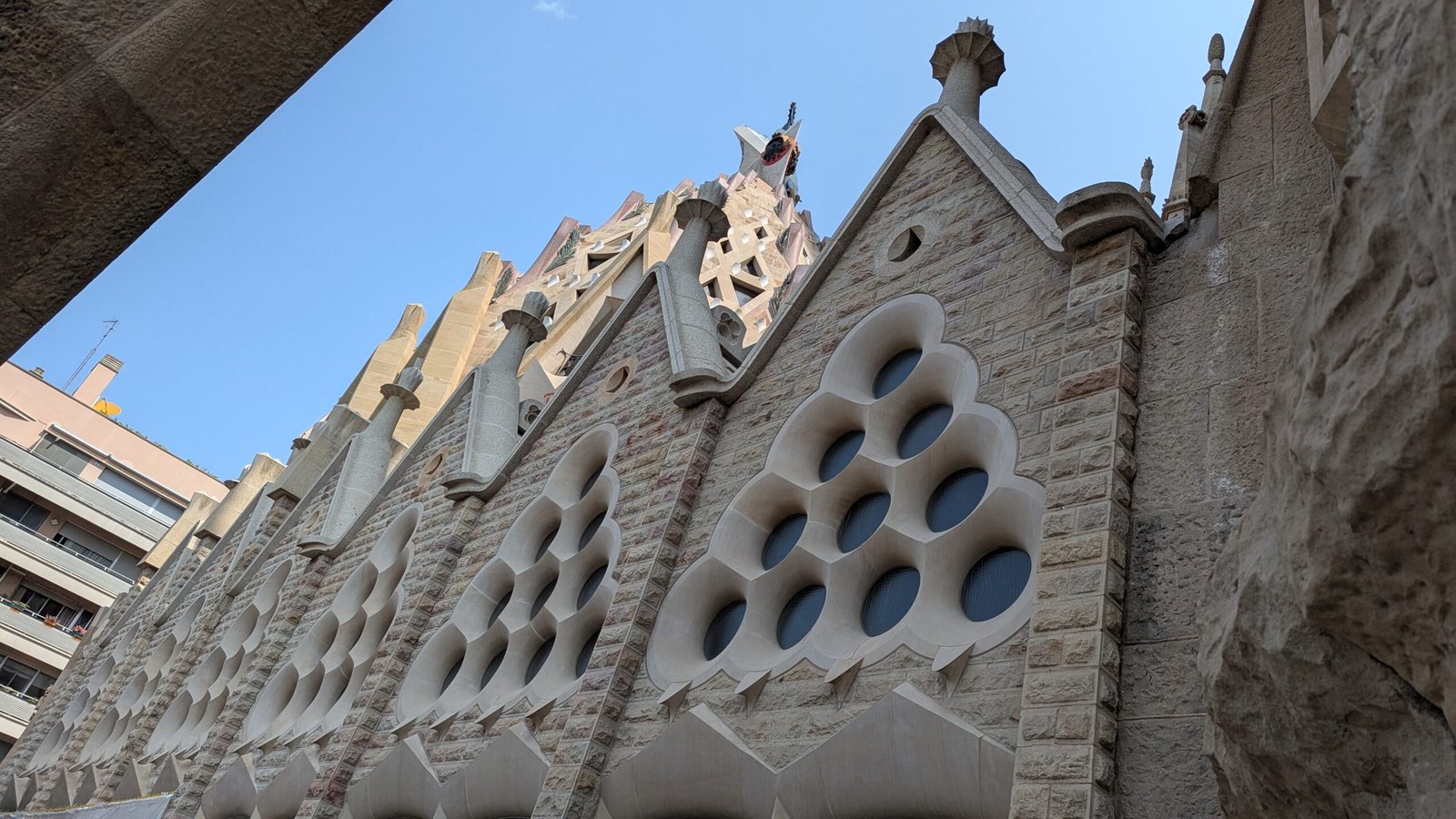
The Cloister



Leave a Comment